
Protecting Your Landscape Through a Massachusetts Winter
Most of the damage you find in April was preventable in November. Here is the short list of things that actually matter.
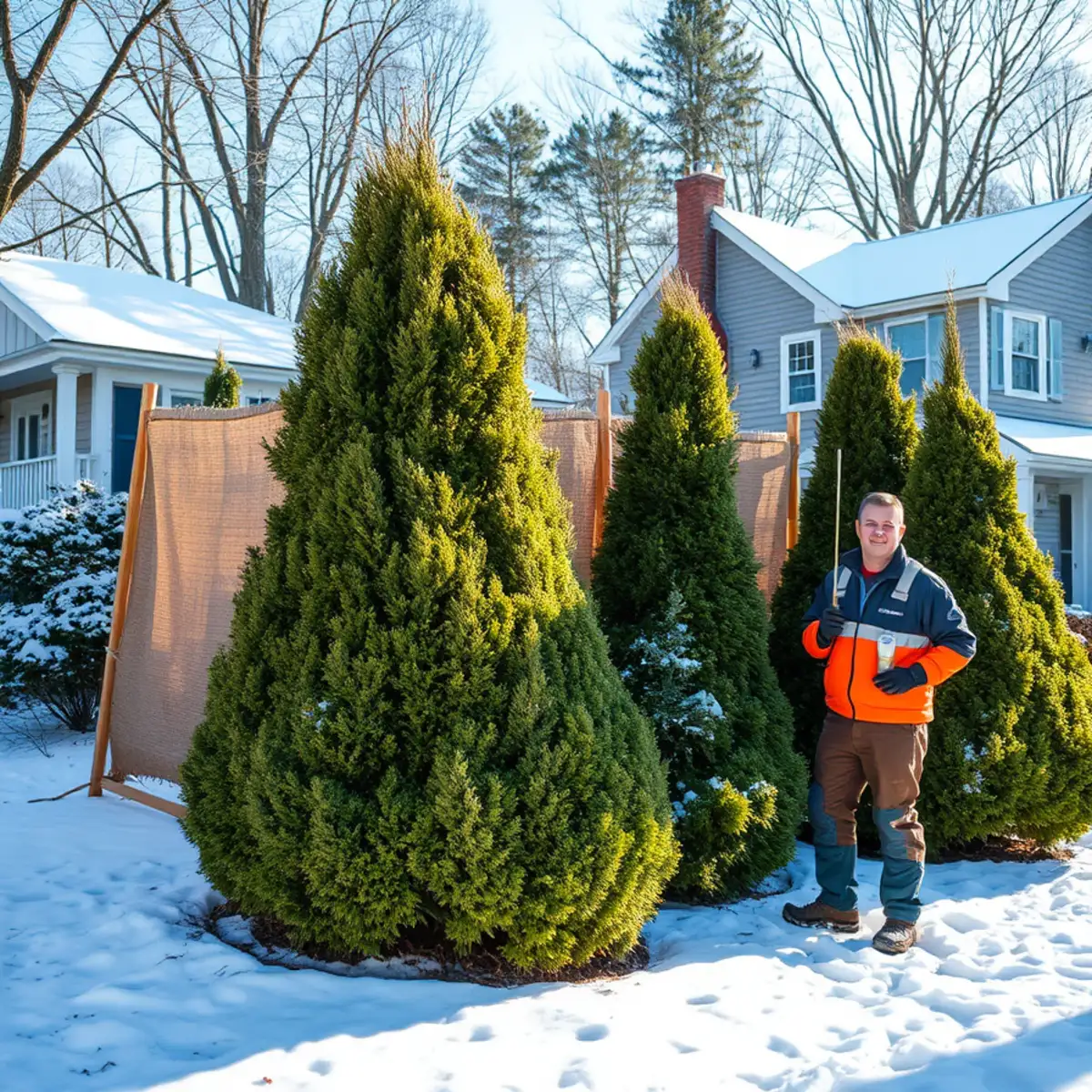
Every April we walk properties and find the same four categories of winter damage. All four are preventable, and the prevention takes an afternoon in November.
1. Salt damage

Chloride is the most destructive thing that happens to a South Shore landscape in winter, and it comes from two directions: what the town applies to the road, and what you apply to your own walkways.
What it does
Salt in soil pulls water out of roots by osmosis, which is why salt-damaged plants show drought symptoms in the middle of a wet spring. Sodium also displaces calcium and magnesium in the soil, degrading structure. Airborne salt spray coats evergreen foliage and desiccates it directly.
Prevention
- Use calcium chloride or magnesium chloride on walkways beside beds — both work at lower temperatures than rock salt and need less material
- Apply before the storm when possible; preventing an ice bond takes a fraction of the product that breaking one takes
- Use sand for traction on days too cold for any product to melt effectively
- Keep snow piles that contain road salt off planting beds and turf you care about
- Plant salt-tolerant species along road frontages — bayberry, rugosa rose, juniper, inkberry, ornamental grasses
Remediation in spring
Flush affected areas heavily with water to leach chloride down past the root zone, then apply gypsum, which supplies calcium that displaces sodium without raising pH. Reseed the dead strips. Do this every spring along road frontages and you stop replacing the same plants every few years.
2. Snow and ice load
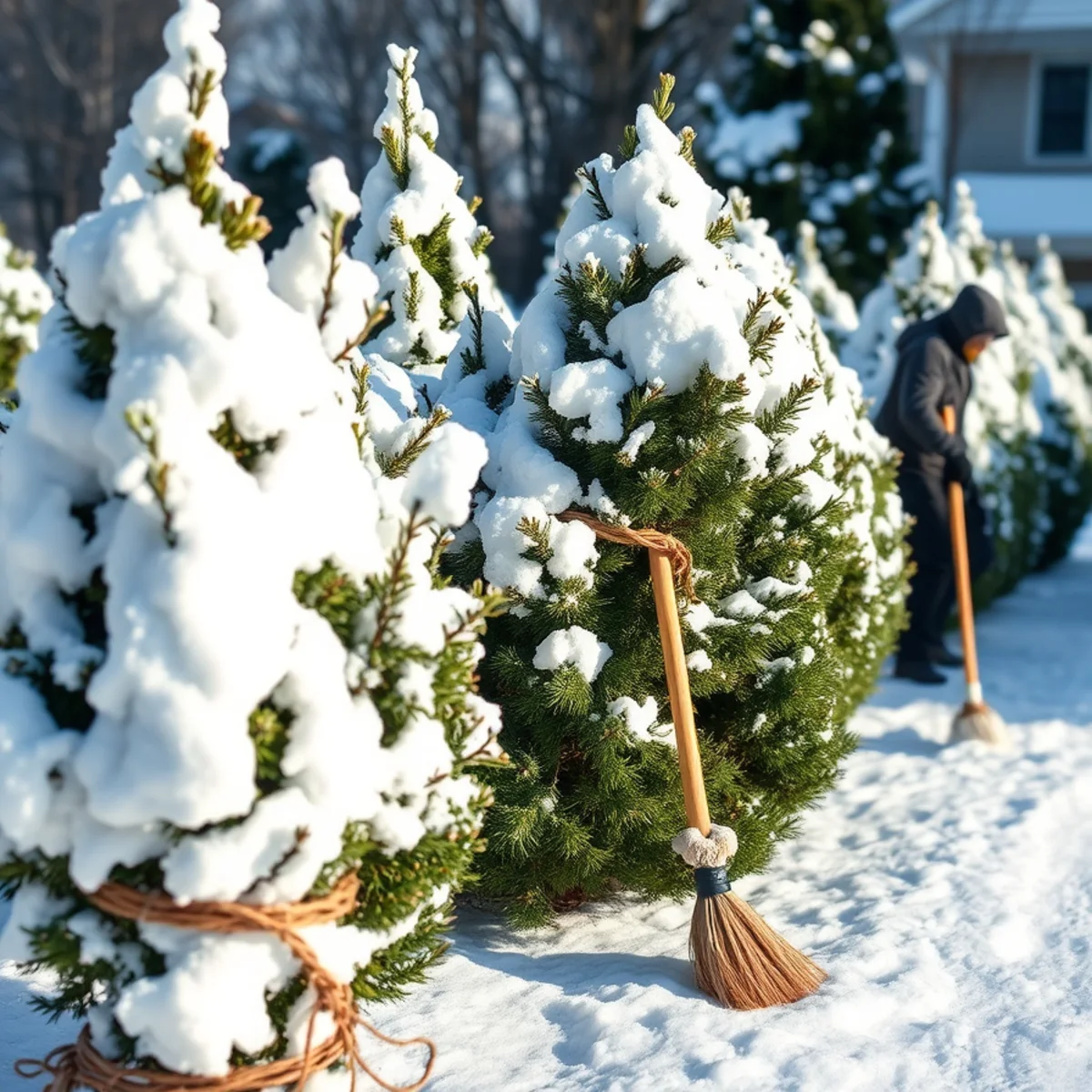
Heavy wet snow splits multi-stemmed shrubs open at the base and snaps branches on upright evergreens. Arborvitae and columnar junipers are the usual victims because their form catches and holds snow.
Prevention is straightforward: tie upright multi-stemmed evergreens loosely with soft twine in a spiral from the base up before the first heavy storm. It holds the stems together so they cannot splay apart under load. Remove it in spring.
3. Plow and snow-stacking damage

This is the most common damage we see, and it is the easiest to prevent.
A plow blade dropped a few inches off the pavement takes sod, loam, and often irrigation heads with it. In the dark under eight inches of snow, an operator who has never seen the property in daylight is guessing where the driveway ends.
Stakes along the driveway edges and at every obstacle solve nearly all of it. Cheap, fast, and they take twenty minutes. Any contractor doing your snow removal should be walking the property in the fall and marking it — that is exactly why having the same crew that mows your lawn plow your driveway is worth something.
Where snow gets stacked matters just as much. Piled onto foundation plantings it breaks branches and crushes evergreens under compacted weight. Piled at the low end of a driveway it melts back across and refreezes every night. Agree on stacking areas before the season starts.
4. Winter burn and desiccation
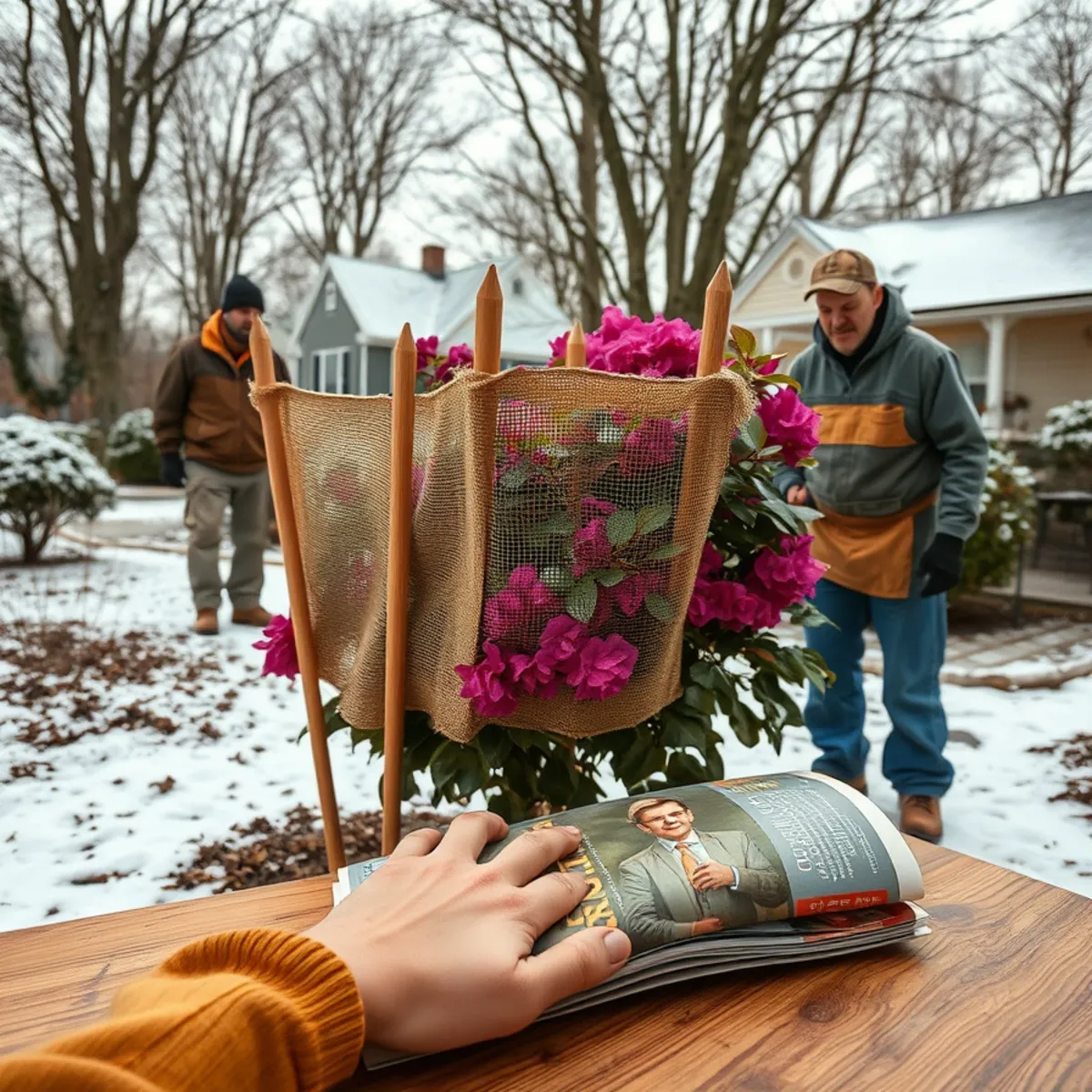
Broadleaf evergreens — rhododendron, holly, boxwood, cherry laurel — keep their leaves through winter and keep losing moisture through them. When the ground is frozen, roots cannot replace that moisture, and the foliage browns from the edges in.
Wind makes it worse by accelerating moisture loss, and on the coast salt spray adds direct injury. That is why a rhododendron that thrives in Norwell can look scorched in Scituate.
Prevention:
- Water deeply in late fall right up until the ground freezes — a well-hydrated plant going into winter handles it far better
- Maintain two to three inches of mulch to moderate soil temperature and slow moisture loss
- Use burlap screens on the windward side of exposed plants — screens, not wrapping, so air still circulates
- Apply anti-desiccant sprays in late fall and again in a January thaw on high-value exposed specimens
- Long term, site broadleaf evergreens where they are sheltered, and use salt- and wind-tolerant species on exposed positions
Frost heave
Repeated freeze-thaw cycles physically push shallow-rooted perennials up out of the soil, exposing crowns and roots to cold and drying air. Newly planted perennials from that fall are the most vulnerable because they have not rooted in.
A layer of mulch applied after the ground freezes — not before — keeps soil temperature steady and prevents the cycling that causes it. The timing is counterintuitive but important: the goal is to keep the ground frozen, not to keep it warm. In spring, walk the beds and press any heaved plants firmly back down.
The November checklist
- 1Final mow at about two and a half inches
- 2Complete fall cleanup and leaf removal, including beds and tight spots
- 3Deep-water evergreens until the ground freezes
- 4Tie upright multi-stemmed evergreens with soft twine
- 5Set burlap screens on exposed broadleaf evergreens
- 6Stake driveway edges and obstacles before the first storm
- 7Winterize irrigation with compressed air
- 8Drain and store hoses; shut off exterior spigots
- 9Confirm snow contract, trigger depth, and stacking locations
- 10Mulch beds after the ground freezes to prevent heaving
None of it takes long. All of it saves work and money in April.
Frequently Asked Questions
You cannot stop the town from salting, but you can flush the affected strip heavily with water in early spring to leach chloride below the root zone, apply gypsum to displace sodium, and reseed. Longer term, switch road-frontage plantings to salt-tolerant species so you stop replacing them.
Screen rather than wrap. Burlap on the windward side blocks wind and salt spray while still allowing air circulation. Wrapping a plant tightly traps moisture against foliage and can cause more problems than it prevents.
After the ground freezes, not before. The goal is keeping soil consistently frozen rather than cycling between freeze and thaw. Mulching too early keeps soil warm, delays dormancy, and can attract rodents into the beds.
Want this handled for you?
We do this work across Whitman and the South Shore every week. Call (323) 606-0255 for a free on-site estimate — we will tell you honestly what your property needs.