
Whitman, MA · Late April–June · Late Aug–October
New Lawn Installation in Whitman, MA
Sod for instant results, hydroseed for value, slice seeding for renovation — with the grading and loam depth the lawn actually needs.
5.0★
28 Google reviews
Not one below five stars
15+
Years in business
Serving the South Shore since 2010
Free
On-site estimates
Written scope, firm number
12
Months a year
Lawn care through snow removal
Overview
New Lawn Installation: Sod & Hydroseeding in Whitman, MA
There is a point where a lawn stops being worth patching. When more than about half of it is weeds, moss, or bare soil, another season of fertilizer and spot seed is money spent on maintaining a problem.
A full lawn installation resets everything: the grade, the soil, and the grass species. Done right, it is the last time you have to think about it for a very long time. Done as a surface treatment over the same compacted, acidic soil that killed the last lawn, it fails on schedule.
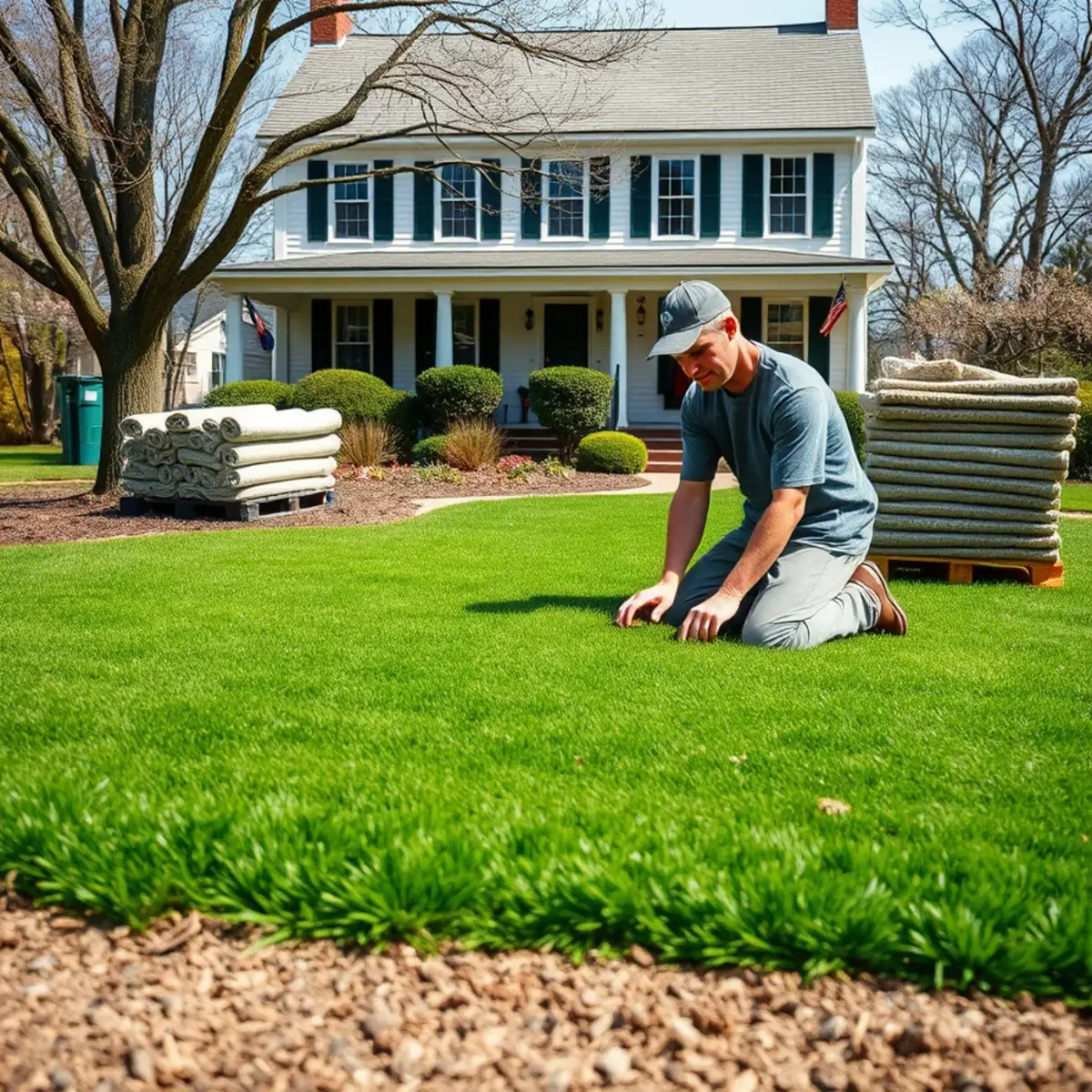
We install sod, hydroseed, and slice-seed renovations across Whitman and the surrounding towns. Which one is right depends on your budget, your timeline, and how much traffic the lawn takes.
What's included
- Removal or kill-off of the existing lawn and weed population
- Grading for positive drainage away from the house and out of low spots
- Soil testing and pH correction — critical in our naturally acidic soils
- Screened loam brought in to a workable depth where the existing soil is thin
- Tilling and amendment with compost where the soil needs organic matter
- Starter fertilizer worked into the seedbed
- Sod installed with tight, staggered seams and rolled — or hydroseed applied with tackifier and mulch slurry
- Seed blends chosen for your specific sun, shade, and traffic conditions
- Watering guidance, and irrigation or timer setup if you want it
- Follow-up visit to check establishment
What we see
Why lawns fail in this part of Massachusetts
Before we install a new lawn we want to know what killed the old one, or the new one goes the same way.
Soil pH sitting well below 6.0
Southeastern Massachusetts soils are naturally acidic, and acidic soil locks up nutrients so the grass cannot use the fertilizer you are paying for. This is the number one reason a fed lawn still looks starved. A soil test costs almost nothing and answers it.
Two inches of loam over compacted fill
Extremely common on houses built in the last forty years. The topsoil layer is barely deep enough to hold roots and there is a compacted hardpan underneath. Grass survives spring and dies in the first dry August.
Full-sun seed under an oak canopy
Kentucky bluegrass needs sun. Plant it under mature trees and it thins out every year no matter what you feed it. Shaded lawns want fine fescue.
Low spots that never drain
Grass drowns in standing water almost as readily as it dies in drought. If the grade holds water, that is a grading job before it is a seeding job.
Seeding at the wrong time
Seed put down in June germinates into the worst possible conditions: heat, drought, and peak crabgrass competition. Late August through September is the window where new grass has everything working for it.
New Lawn Installation: Sod & Hydroseeding in action
Our process
How we install a lawn
The prep is the job. The sod or seed is the last two hours of it.
- 1
Test and evaluate
Soil test for pH and nutrients, an honest look at drainage and sun exposure, and a conversation about how the lawn gets used — kids, dogs, and parking all matter.
- 2
Remove the old lawn
Sod-cut and haul, or a kill-down for heavy perennial weed populations. Leaving established quackgrass or nutsedge in the ground guarantees it comes back through the new lawn.
- 3
Fix the grade
Water gets pitched away from the foundation and out of the low spots. This is far easier now than after there is turf on it.
- 4
Build the soil
Screened loam brought in where needed, compost tilled in for organic matter, lime to correct pH, and starter fertilizer worked into the top few inches. We want a seedbed several inches deep, not a dusting.
- 5
Final grade and rake
Rocks and debris removed, surface raked smooth and lightly firmed. Every dip you leave here is a dip you mow around forever.
- 6
Install
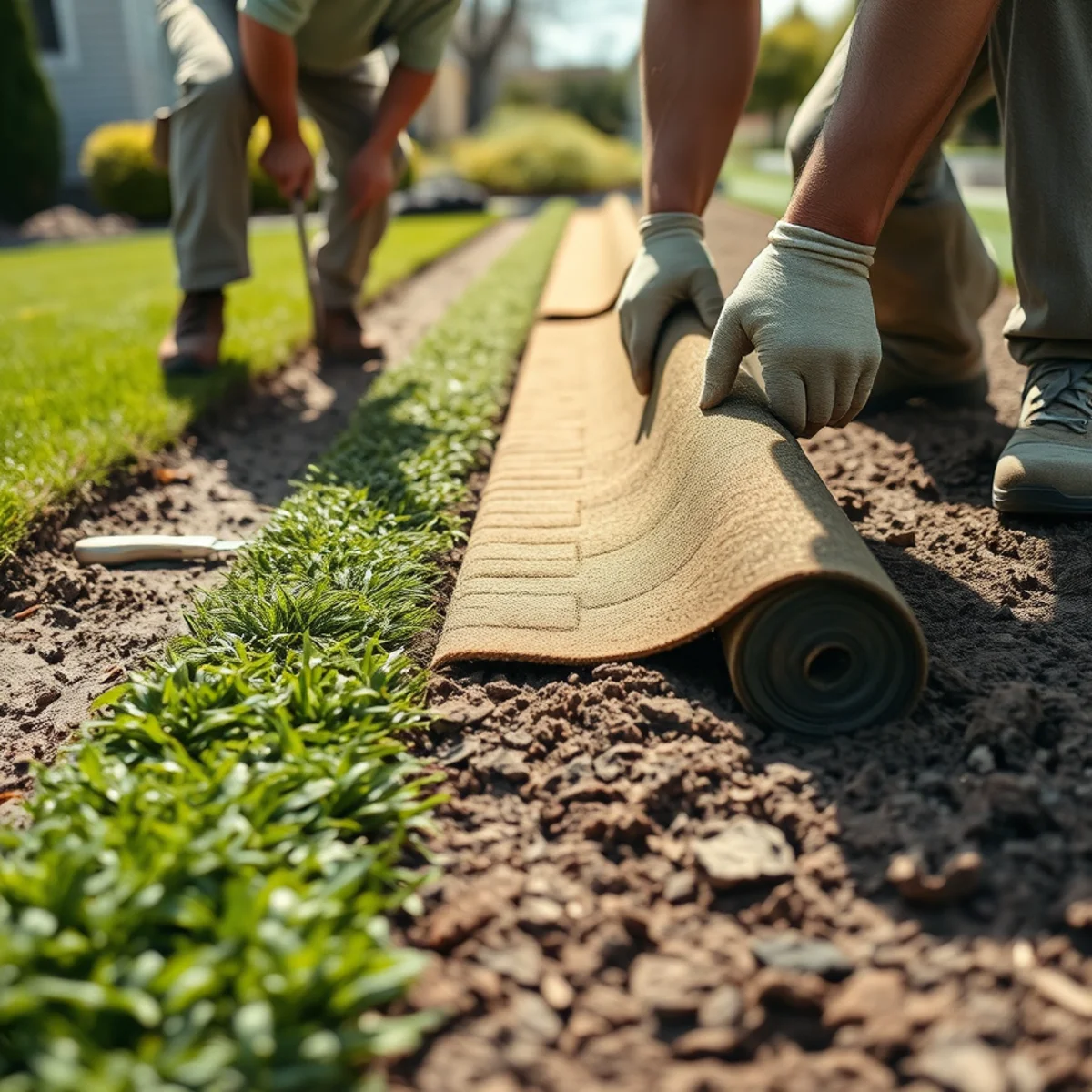
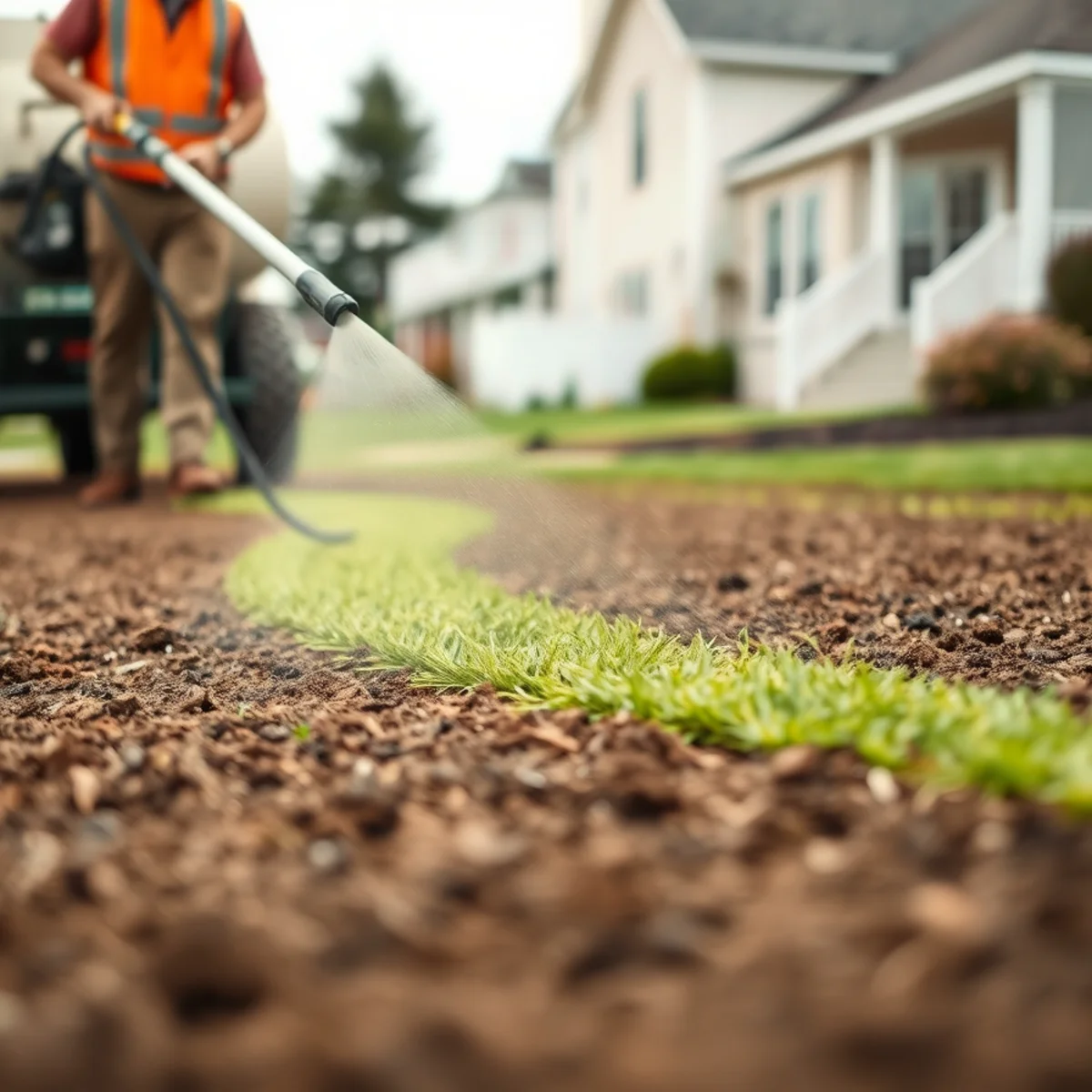
Sod laid in a staggered brick pattern with seams tight, then rolled to press roots into contact with the soil. Hydroseed sprayed as a slurry with mulch and tackifier for even coverage and erosion resistance on slopes.
- 7
Water plan
This is where new lawns are won or lost. We set out an exact watering schedule, and if you want sprinklers and timers installed so it is not on you to remember, we handle that too.
- 8
Follow up
We come back to check germination and knitting, and to advise on the first mow — which should happen when the grass is about a third taller than its target height, with a sharp blade.
Local expertise
Choosing the right grass for a Whitman property
Seed blend selection gets treated as an afterthought and it should not be. It is the decision that determines whether the lawn thrives on the site you actually have.
Kentucky bluegrass gives you the dense, deep-green, self-repairing lawn most people picture. It spreads by rhizomes so it fills in its own damage, which makes it excellent where kids and dogs are hard on it. It needs full sun, regular water, and more nitrogen than the alternatives. Under trees it is the wrong plant.
Perennial ryegrass germinates fast — days, not weeks — which is why it appears in nearly every blend. It provides quick cover while slower species establish. It does not spread, so it thins over time unless overseeded.
Fine fescues are the honest answer for the shady lawns that are everywhere in Whitman, under the oaks and maples on the older streets. Creeping red, chewings, and hard fescue tolerate low light and low fertility and use less water. They are less traffic-tolerant, so they suit a shaded side yard better than a play area.
Tall fescue has become the pragmatic choice for a lot of properties. Modern turf-type tall fescues root deep, handle drought and heat far better than bluegrass, take traffic, and tolerate partial shade. They are noticeably coarser in texture, which some people notice and most do not.
Most of the lawns we install are blends chosen for a specific yard — bluegrass and rye in the sunny front, a fescue-heavy blend for the shaded back, sometimes two different mixes on one property. A single bag of contractor mix spread across every condition is how you end up with a lawn that looks great in one section and struggles in three.
Why Giachetto Landscape
Why our lawns take
15+ years on South Shore properties, 5.0 stars from 28 Google reviews, fully insured, and the owner on the job rather than behind a desk.
We find out what killed the last one first
Usually pH below 6.0, two inches of loam over compacted fill, sun-blend seed under an oak canopy, or a grade that holds water. Install a new lawn over the same conditions and it fails on the same schedule.
The prep is the job
Soil test, old lawn and perennial weeds removed, grade corrected, screened loam brought in to a workable depth, compost tilled through, lime to the tested rate, starter fertilizer worked in. Sod or seed is the last two hours.
A written watering plan, and help executing it
This is where new lawns are won or lost. We set out an exact schedule, and if you want sprinklers and timers installed so it is not on you to remember, we handle that too — the same thing Laurie described in her review.
Honest about method and timing
Sod costs several times hydroseed and gives you a usable lawn in weeks instead of months. Late August through early October beats spring by a wide margin. We will tell you which fits your property rather than which is the bigger invoice.
- 5.0 stars28 Google reviews
- 15+ yearsServing the South Shore since 2010
- Fully insuredCertificates on request
- Locally ownedBased at 23 Rowena Ave, Whitman
Honest pricing
Sod versus hydroseed: the real cost comparison
Sod costs more up front. Hydroseed costs less and takes longer. Here is what actually goes into each number.
Square footage
The base driver for both methods. Sod material is a fixed cost per square foot; hydroseed material is a fraction of that.
How much loam has to be trucked in
Often the largest single line item. A property with four inches of decent existing soil needs far less than one sitting on fill.
Grading and excavation work
Simple regrading is quick. Correcting a real drainage problem is its own project.
Old lawn removal and disposal
Sod-cutting and hauling the existing turf adds material handling and dump costs.
Slope
Steep areas favor sod or hydroseed with heavy tackifier, because plain broadcast seed washes off in the first storm.
Irrigation
A new lawn needs consistent water for weeks. If you do not have irrigation, budget for either sprinklers and timers or a serious personal commitment.
Rough rule of thumb: sod runs several times the installed cost of hydroseed but gives you a usable lawn in two to three weeks instead of two to three months. Sod is the better choice on slopes, in high-traffic front yards, and when you are selling the house. Hydroseed wins on large areas and tight budgets.
Social proof
28 Reviews, 5.0 Stars
Every review on our Google Business Profile is five stars. Here is a sample.
Read them on Google“The Giachetto Landscape crew did an absolutely incredible job on a big spring cleanup at our home. The yard was a mess, and there wasn't a single leaf or stick left in any nook or cranny once they were done. They were efficient, respectful, fast, and reasonably priced. We're blown away by how hard they worked. There are so many landscaping companies to choose from, and we couldn't be happier to have found such an amazing crew! 10/10!”
Mia Gallo· Google review
“Chris did an amazing job installing my new lawn with sod. From him being readily available to take a look at my job in the beginning, to providing me a prompt, competitive quote, to the pulling up of my old weed filled lawn, hand laying the new sod, and setting up of the sprinklers/timers to water the lawn, he has been a pleasure to work with. He also pulled out a large shrub and planted a smaller one, as well as re-mulched. He is professional, responsive to all questions, easy to work with, and a hard worker. I highly recommend him for any landscape project you may have.”
Laurie K· Google review
Answers
New Lawn Installation: Sod & Hydroseeding: Common Questions
Specific to new lawn installation: sod & hydroseeding on South Shore properties.
Late August through early October is the best window by a wide margin. Soil is still warm so seed germinates fast, air temperatures are dropping, rainfall is more reliable, and crabgrass is done for the year. Spring — late April into early June — is the second-best option. Midsummer installs are possible with sod and irrigation but they fight the weather the whole way.
Light foot traffic after about two weeks, once it has rooted and no longer lifts at a corner. Normal use after three to four weeks. First mow when it reaches roughly three and a half inches, with a sharp blade and no turning on the wheels.
New sod needs to stay damp for the first two weeks — often twice daily in warm weather — then you taper to deeper, less frequent watering to drive roots down. Hydroseed needs the surface kept consistently moist until germination, which usually means light watering multiple times a day. This is the step that decides the outcome.
No, and any contractor who offers to should be a red flag. Sod needs direct soil contact to root. Laid over existing turf it sits on a layer of dying organic matter, roots poorly, and dries out. The old lawn comes out first.
A slice seeder cuts shallow grooves and drops seed directly into them, giving true seed-to-soil contact without stripping the lawn. When you have thirty to fifty percent decent turf left, slice seeding plus aeration and lime is often a far better value than a full replacement.
Related services and articles
Related services
Core Aeration & Overseeding
The highest-return service on any established lawn. Pull the plugs, drop the seed, and watch a thin lawn fill in over the fall.
Irrigation & Sprinkler Systems
Watering set up so it works with your lawn instead of against it — deep, early, and only as often as the soil actually needs.
Fertilization & Weed Control
Programs built off a real soil test — not a bag schedule. Correct the pH first, then feed, then the weeds have nowhere to go.
Further reading
Sod vs. Hydroseed vs. Slice Seeding in Massachusetts
Sod costs more and works immediately. Hydroseed costs less and takes a season. Slice seeding is the option most people have never heard of.
Why Massachusetts Lawns Fail: Soil pH Is Usually the Answer
You can fertilize an acidic lawn four times a year and it will still look starved. Here is the chemistry, and the fix.
Where we do new lawn installation
New lawns get scheduled around the ground and the water supply. On well-water properties in Plympton, Rochester and Norfolk we push installs to early fall so rainfall carries more of the load. We install across the South Shore including Whitman, East Bridgewater and Halifax, where soil depth varies enough that we always check before quoting.
Free estimate
Request a Free New Lawn Installation Estimate
Tell us about the property and we will set up an on-site visit. Every request gets a reply within one business day.
- ✓Free on-site estimate with a written scope
- ✓5.0★ from 28 Google reviews
- ✓15+ years working South Shore properties
- ✓Fully insured — certificates available on request
Get New Lawn Installation Handled Properly
Call (323) 606-0255 to talk it through, or request a free on-site estimate and we will come look at the property.
- 5.0★ · 28 reviews
- 15+ years experience
- Fully insured
- Free on-site estimates