
Why Massachusetts Lawns Fail: It Is Usually the Soil pH
You can fertilize an acidic lawn four times a year and it will still look starved. Here is the chemistry, and the fix.
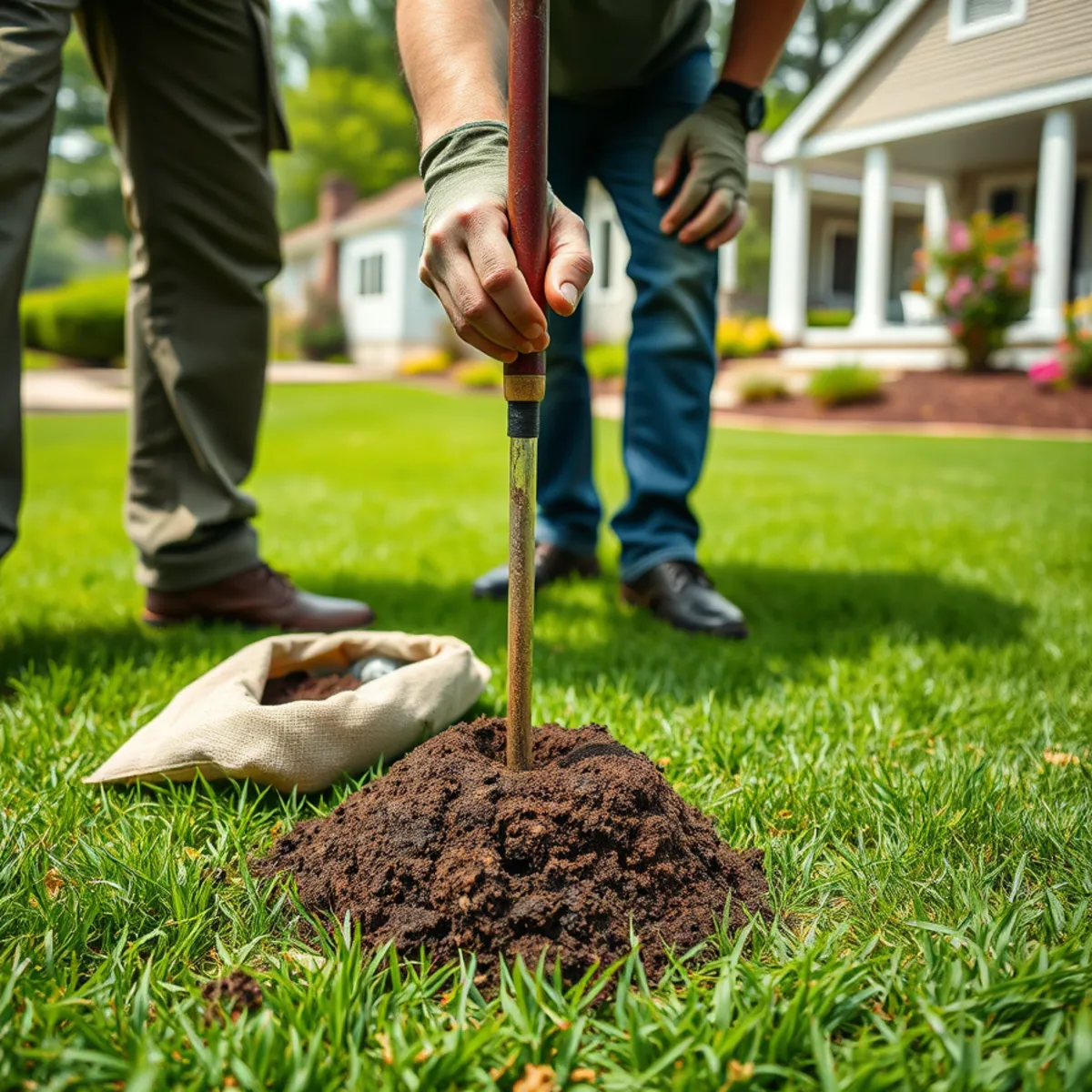
We get called to look at a lot of lawns that "just will not green up." The homeowner has been fertilizing for years, sometimes on a four-application program from a national company, and the lawn is still pale, thin, and full of moss and clover.
The first thing we do is pull a soil sample. More often than not, the pH comes back somewhere between 5.0 and 5.6. That single number explains everything.
What pH actually does to a lawn
Soil pH does not feed grass. What it does is control whether the nutrients in your soil are chemically available for roots to take up.
Cool-season turf wants a pH between roughly 6.0 and 7.0. In that range, nitrogen, phosphorus, potassium, calcium, and magnesium are all readily available. Drop below 6.0 and availability starts falling. At 5.5, a substantial share of the phosphorus in your soil is chemically bound to iron and aluminum in forms grass roots simply cannot use.
You can have plenty of nutrients in the soil and a lawn that is starving, at the same time, because of pH alone.
That is why the fertilizer is not working. The nutrients went into the ground and then became unavailable. You paid for them and the lawn cannot reach them.
Why our soil is acidic in the first place
Southeastern Massachusetts soil trends acidic for several reasons stacked on top of each other:
- The parent material — glacial till and sandy outwash derived from granite — is acidic to begin with
- Our rainfall exceeds evaporation, so calcium and magnesium leach steadily down out of the root zone
- Decomposing oak and pine litter is acidic, and this region has a great deal of both
- Conventional ammonium-based nitrogen fertilizers acidify soil as a byproduct of how they break down
Left alone, a lawn here drifts downward year after year. It is not a one-time problem you fix and forget — it is a slow, continuous process working against you.
What acidic soil looks like on the ground
Before the test comes back, these are the signs we look for:
- Moss taking hold, especially in shaded or damp areas — moss is perfectly comfortable at low pH where grass is not
- Heavy clover spread, which indicates low available nitrogen since clover fixes its own
- A pale, yellow-green color that does not respond much to feeding
- Sheep sorrel, plantain, and other acid-tolerant weeds outcompeting turf
- Thin, shallow-rooted grass that browns quickly in any dry spell
Getting a real soil test
The hardware store probe kits are not worth much. A lab test costs very little and gives you pH plus actual nutrient levels, organic matter percentage, and a lime recommendation calculated for your specific soil texture. The UMass Amherst soil testing lab is the standard reference around here and their reports are genuinely useful.
Pull samples from several spots across the lawn, four to six inches deep, and mix them. One sample from one corner tells you about that corner. Shaded areas and areas near a foundation often read differently from open lawn — concrete leaches lime, so soil right against a foundation can be surprisingly alkaline.
How lime works, and how slowly
Lime is calcium carbonate, or calcium magnesium carbonate in dolomitic form. It neutralizes soil acidity, and it is only sparingly soluble — which is the key thing to understand about it.
Lime moves down through soil at roughly an inch per year on its own. Broadcast onto the surface, it takes years to influence the root zone where it matters. That is why two things make an enormous difference to how fast it works:
- 1Apply in late fall, so winter freeze-thaw cycles and snowmelt physically work it downward through the season
- 2Apply immediately after core aeration, so it drops directly into open holes and reaches the root zone in weeks instead of years
That second point is why we bundle lime with fall aeration and overseeding rather than treating them as separate services. The aeration holes are a delivery system.
How much lime
The test tells you, and the answer depends heavily on soil texture. Sandy soil has low buffering capacity, so it shifts with less material — which also means it drifts back down faster. Clay-heavy soil resists change and needs considerably more lime to move the same amount.
Do not apply more than about fifty pounds per thousand square feet in a single application. If the correction needed is larger than that, it gets split across seasons. Overapplying does not speed it up; it just wastes material and can push pH too far the other way in sandy soil.
Then re-test
Every two to three years. Because the acidifying pressures never stop, a lawn corrected once will drift back down over the following decade if nobody checks. Testing on a cycle turns lawn care from guesswork into maintenance.
The order of operations
If your lawn is struggling, do these in order rather than all at once:
- 1Soil test — you cannot fix what you have not measured
- 2Correct pH with lime, applied in fall and after aeration
- 3Relieve compaction with core aeration, which also improves how everything else works
- 4Feed based on what the test showed, with the heaviest applications in fall
- 5Overseed with a blend matched to your actual light conditions
- 6Mow high and keep the blade sharp
Weed control comes last on that list deliberately. A thick, properly fed lawn on corrected soil crowds out most weeds on its own. Spraying a struggling lawn kills the weeds and leaves bare soil for the next round.
This is the sequence we run on lawn fertilization and weed control programs across Whitman, Pembroke, and the sandier towns south of us where pH problems are most pronounced.
Frequently Asked Questions
A lab soil test is the only real answer. Moss, heavy clover, and a pale lawn that does not respond to feeding are strong indicators, but the test gives you the actual pH and a lime rate calculated for your soil type.
Late fall is ideal so winter moisture and freeze-thaw work it into the soil over the following months. Applying immediately after core aeration is even better, because the open holes carry it straight to the root zone.
Better to separate them by a few weeks. Lime can react with some nitrogen sources and cause volatilization losses. Lime in late fall and fertilizer earlier in the fall is the cleaner sequence.
Want this handled for you?
We do this work across Whitman and the South Shore every week. Call (323) 606-0255 for a free on-site estimate — we will tell you honestly what your property needs.