
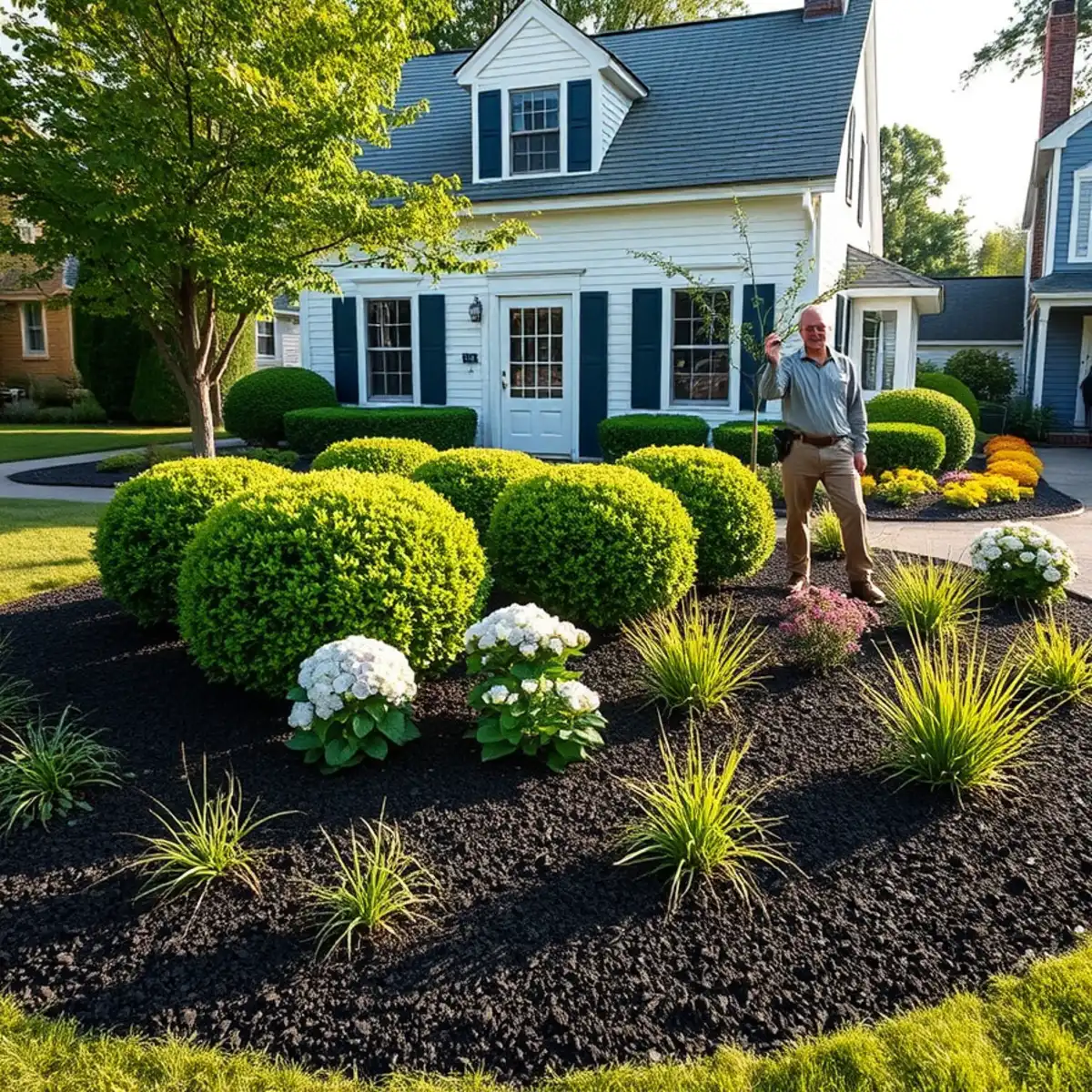
Whitman, MA · Spring & fall, by species
Landscape Design & Planting in Whitman, MA
Beds and foundation plantings designed around your actual light, soil, and how big things get in ten years — not how they look on the truck.
5.0★
28 Google reviews
Not one below five stars
15+
Years in business
Serving the South Shore since 2010
Free
On-site estimates
Written scope, firm number
12
Months a year
Lawn care through snow removal
Overview
Landscape Design & Planting in Whitman, MA
The most common mistake in residential planting is buying what looks good at the nursery in May and putting it wherever there is room. Three years later the arborvitae is over the window, the hydrangea never blooms because it is in full shade, and everything needs constant cutting back.
Good planting design is mostly a mature-size and light-conditions problem. Get those two right and the beds largely take care of themselves. Get them wrong and you have signed up for pruning as a permanent chore.
We design and install foundation plantings, garden beds, privacy screens, pollinator gardens, and full front-yard renovations across Whitman. Chris walks the property with you, looks at the light through the day, and picks plants that fit the space they will actually occupy.
What's included
- On-site design consultation and a walkable plan with plant locations staked out
- Light, drainage, and exposure assessment across the property
- Soil testing and amendment before anything goes in the ground
- Plant selection matched to conditions — sun, shade, wet, dry, salt, deer pressure
- Sourcing healthy, appropriately sized nursery stock
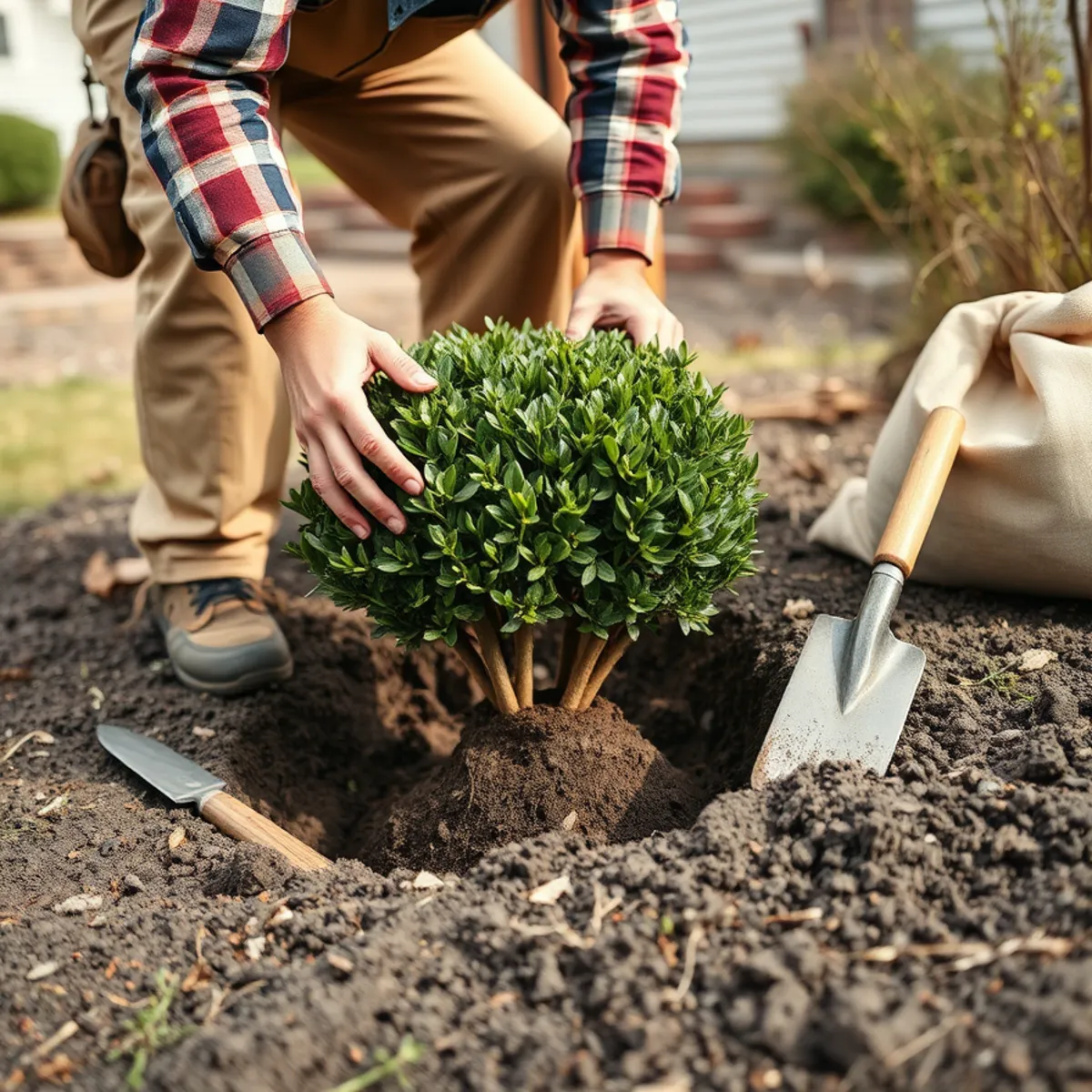
- Proper planting: hole width, root-flare depth, root-ball scoring on pot-bound stock
- Bed shaping and spaded edging
- Mulch installation at correct depth
- Seasonal color with annuals and bulbs where you want it
- Follow-up care guidance and optional ongoing bed maintenance
What we see
Planting problems we see on established properties
Most of these are install-time decisions that show up years later.
Shrubs swallowing windows and walkways
Nothing but a mature-size mistake. A shrub tagged "compact" can still be six feet wide at maturity. Spacing to mature width means beds look sparse the first two years — that is correct, and it is what we design for.
Plants set too deep
The root flare should be visible at soil level. Buried too deep, the plant slowly declines over three to five years and nobody connects it back to planting day. We plant slightly high, not deep.
Root-bound stock planted straight out of the pot
Circling roots keep circling and eventually girdle the plant. Roots have to be scored and teased outward at planting.
Hydrangeas that never bloom
Usually one of two causes: pruning at the wrong time on a variety that blooms on old wood, or too much shade. Both are fixable once you know which one you have.
Deer eating everything by February
Deer pressure is real across the ${site.region}. Selecting for deer resistance in the design — boxwood, spirea, ornamental grasses, most conifers other than arborvitae — beats spraying repellent forever.
Landscape Design & Planting in action
Our process
How a planting project runs
We spend most of the time on the front end. It costs nothing to move a plant on paper.
- 1
Walk the property and talk
What do you want to see from the kitchen window? What are you hiding? How much maintenance do you actually want to do? Do you want flowers all season or four weeks of a spectacular show?
- 2
Read the site
Sun and shade through the day, drainage, exposure to road salt, wind, existing root competition from big trees, and the soil under the mulch.
- 3
Design and select
We put together a plant list with mature sizes, bloom times, and fall color, and lay out the bed shapes. You see it before we buy anything.
- 4
Prep the beds
Bed shapes cut, sod removed, soil amended with compost, pH corrected, and grade set so beds shed water away from the foundation.
- 5
Plant
Holes dug two to three times the root ball width and no deeper than the ball itself. Roots scored. Backfill with native soil amended lightly rather than a rich pocket that discourages roots from leaving the hole. Watered in thoroughly.
- 6
Mulch and finish
Two to three inches, pulled back from every stem. Edges cut clean. Site left spotless.
- 7
Aftercare
A written watering schedule for the first season — new shrubs need deep, infrequent water, not daily sprinkles — plus pruning timing for each plant we installed.
Local expertise
Native plants that genuinely perform in southeastern Massachusetts
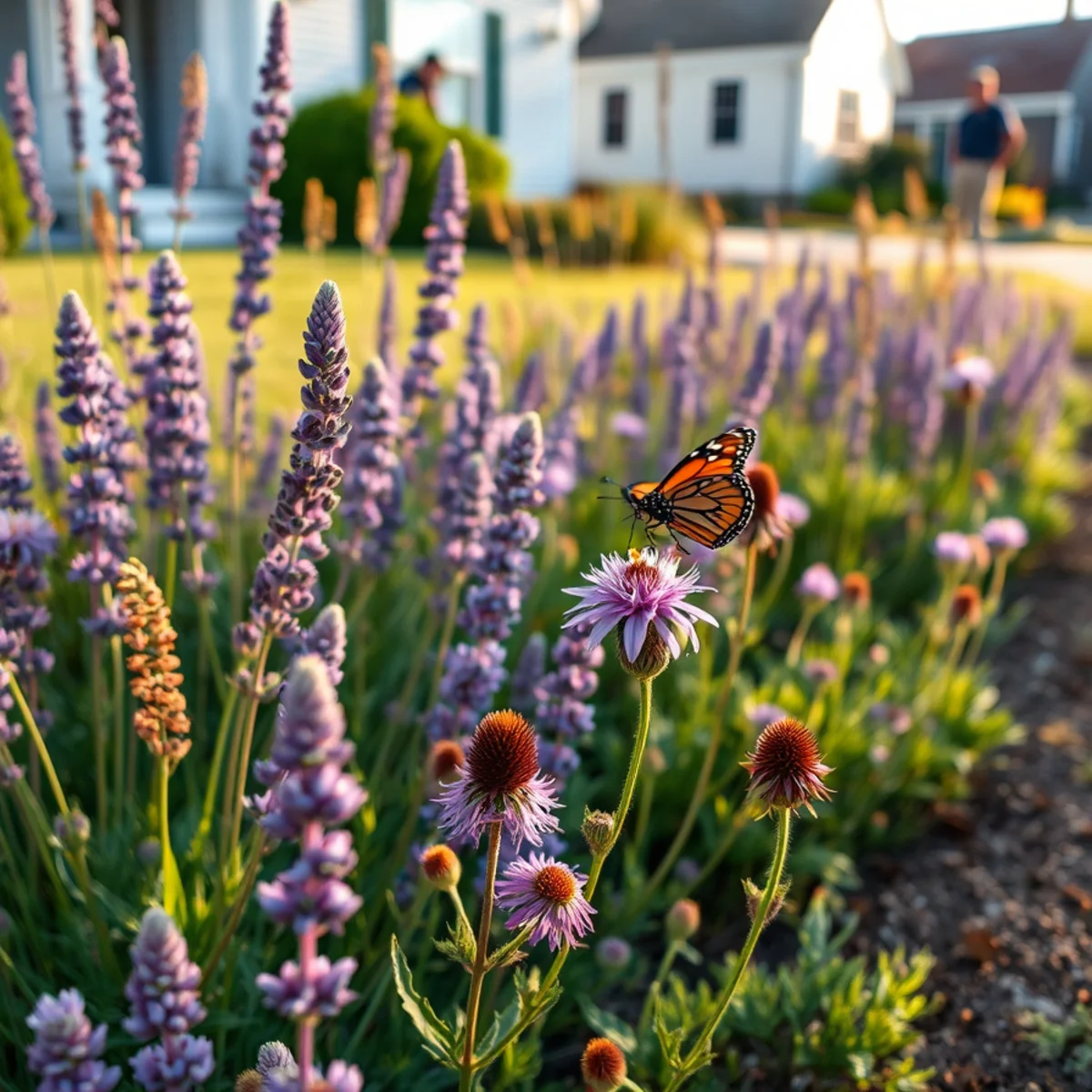
Native planting has gotten trendy, which unfortunately means a lot of plants get sold as natives that are marginal here. These are the ones we install repeatedly because they hold up in real Whitman yards.
For sunny beds: little bluestem gives you blue-green summer color, coppery fall color, and structure that holds through winter snow. Butterfly weed is a true milkweed — monarch host plant — that thrives in the poor, dry, sandy soil where most perennials sulk. New England aster carries the bed from late August into October, when almost nothing else is blooming and pollinators need it most.
For shade: our native ferns are unbeatable under mature oaks. Ostrich fern spreads to fill space, cinnamon fern handles wet, and Christmas fern stays evergreen through winter. Foamflower makes a low spring-flowering ground cover in dry shade where nothing else will hold.
For shrubs: winterberry holly is the plant that stops people in December — bare stems covered in bright red berries against snow. You need a male pollinator nearby for the female plants to fruit, which is exactly the kind of detail that gets missed at a garden center. Summersweet handles wet feet, blooms in August when little else does, and smells wonderful. Highbush blueberry gives you spring flowers, summer fruit, and the best red fall color of any shrub we plant.
For small trees: serviceberry blooms white before it leafs out, feeds birds in June, and turns orange-red in fall. Eastern redbud is a slightly southern native that has become reliably hardy in this area and is spectacular in early spring.
None of this means everything has to be native. A well-placed hydrangea or a boxwood hedge belongs on plenty of properties. But a bed built around plants adapted to our acidic soil, our rainfall, and our winters will need less water, less fertilizer, and less of your attention.
Why Giachetto Landscape
Why our beds still look right in ten years
15+ years on South Shore properties, 5.0 stars from 28 Google reviews, fully insured, and the owner on the job rather than behind a desk.
We design to mature size, not delivery-day size
A shrub tagged compact can still reach six feet wide. Spacing to mature width means beds look sparse for two seasons — that is correct, and it is the difference between a planting that settles in and one you are pruning back forever.
Light and drainage read before the plant list
We walk the property and look at how sun moves across it, where water sits, what the big trees are already taking, and what the soil is under the mulch. The plant list comes after that, not from a catalogue.
Deer pressure designed around, not fought
Arborvitae is a food source across most of our territory. Boxwood, spirea, inkberry, ferns and ornamental grasses hold up without a spraying programme you have to maintain forever.
Planted properly, then explained
Holes two to three times the root ball, roots scored on pot-bound stock, root flare at grade rather than buried. You get a written watering schedule for the first season and the pruning timing for everything we installed.
- 5.0 stars28 Google reviews
- 15+ yearsServing the South Shore since 2010
- Fully insuredCertificates on request
- Locally ownedBased at 23 Rowena Ave, Whitman
Honest pricing
What planting projects cost
Plant material is often less than half the number. Prep, labor, and access make up the rest.
Plant size at install
A three-gallon shrub and a seven-gallon of the same species differ substantially in price and in how quickly the bed looks finished. Smaller stock establishes faster and costs less; larger stock buys instant presence.
Number and variety of plants
Bed square footage plus planting density. Massed plantings of fewer species usually look better and cost less than one of everything.
Bed preparation required
Cutting new beds out of lawn, removing old overgrown plantings, and amending poor soil are all real labor before a plant goes in.
Removals
Taking out established, overgrown shrubs — especially old yews and junipers with substantial root systems — takes time and often a machine.
Soil amendment volume
Compost, loam, and lime by the yard, based on what the soil test shows.
Access
Front-yard beds beside the driveway are quick. Back-yard beds through a gate are not.
We are happy to phase a large project across two or three seasons. Foundation beds first, then the side yard, then the back. It spreads the cost and lets you live with each stage before committing to the next.
Social proof
28 Reviews, 5.0 Stars
Every review on our Google Business Profile is five stars. Here is a sample.
Read them on Google“The Giachetto Landscape crew did an absolutely incredible job on a big spring cleanup at our home. The yard was a mess, and there wasn't a single leaf or stick left in any nook or cranny once they were done. They were efficient, respectful, fast, and reasonably priced. We're blown away by how hard they worked. There are so many landscaping companies to choose from, and we couldn't be happier to have found such an amazing crew! 10/10!”
Mia Gallo· Google review
“Chris did an amazing job installing my new lawn with sod. From him being readily available to take a look at my job in the beginning, to providing me a prompt, competitive quote, to the pulling up of my old weed filled lawn, hand laying the new sod, and setting up of the sprinklers/timers to water the lawn, he has been a pleasure to work with. He also pulled out a large shrub and planted a smaller one, as well as re-mulched. He is professional, responsive to all questions, easy to work with, and a hard worker. I highly recommend him for any landscape project you may have.”
Laurie K· Google review
Answers
Landscape Design & Planting: Common Questions
Specific to landscape design & planting on South Shore properties.
Fall is generally best — roughly September through late October. Soil is still warm so roots grow, air is cool so the plant is not fighting heat stress, and rain is more reliable. Spring works well too. Midsummer planting is possible but demands committed watering.
Space to mature width, not to what looks full today. A shrub that reaches five feet wide gets planted about five feet from its neighbor. Beds look thin for two seasons and then look right for twenty years, instead of looking great for two and overgrown forever after.
You are fighting shade and root competition together, which is the harder problem. Native ferns, hostas, foamflower, and epimedium handle it. Adding two inches of compost each year helps a great deal. Grass under a mature oak canopy is usually a losing battle worth giving up on.
Yes. Nothing is deer-proof in a hard winter, but boxwood, spirea, ornamental grasses, ferns, catmint, and most conifers other than arborvitae hold up well. Arborvitae is deer candy — we steer away from it on high-pressure properties.
That is one of our most requested projects. Old yews and junipers get pulled, the soil gets amended, and we replace with a design scaled to the house — sized so it will not be back over the windows in five years.
Related services and articles
Related services
Mulch Delivery & Installation
Beds edged to a clean line and mulched at the right depth — dark, even, and pulled back off every trunk and stem.
Shrub Trimming & Pruning
Pruning timed to each plant, not to the calendar — so your hydrangeas still bloom and your hedges stay full to the ground.
Hardscaping: Patios & Walkways
Paver and bluestone patios, walkways, steps, and fire pits — built on a base that survives twenty New England freeze-thaw cycles.
Further reading
Native Plants That Actually Perform on the South Shore
Not a list of everything native to New England. A list of what we install over and over because it performs in real South Shore yards.
Deer-Resistant Plants That Work in Massachusetts
Nothing is deer-proof in a hard winter. But choosing correctly at planting time beats spraying repellent for the next fifteen years.
Where we do design & planting
Planting design takes us across a genuinely wide range of conditions. Coastal exposure governs the palette in Scituate, Duxbury and Marshfield; period-appropriate design suits the historic housing in Hingham, Bridgewater and Medfield; and acid-loving natives thrive with no help at all in Carver, Pembroke and Middleborough.
Free estimate
Request a Free Design & Planting Estimate
Tell us about the property and we will set up an on-site visit. Every request gets a reply within one business day.
- ✓Free on-site estimate with a written scope
- ✓5.0★ from 28 Google reviews
- ✓15+ years working South Shore properties
- ✓Fully insured — certificates available on request
Get Design & Planting Handled Properly
Call (323) 606-0255 to talk it through, or request a free on-site estimate and we will come look at the property.
- 5.0★ · 28 reviews
- 15+ years experience
- Fully insured
- Free on-site estimates