
Backyard Design Ideas That Actually Work on South Shore Properties
Most backyard inspiration online was photographed somewhere with different soil, different winters and no deer. Here is what holds up here.
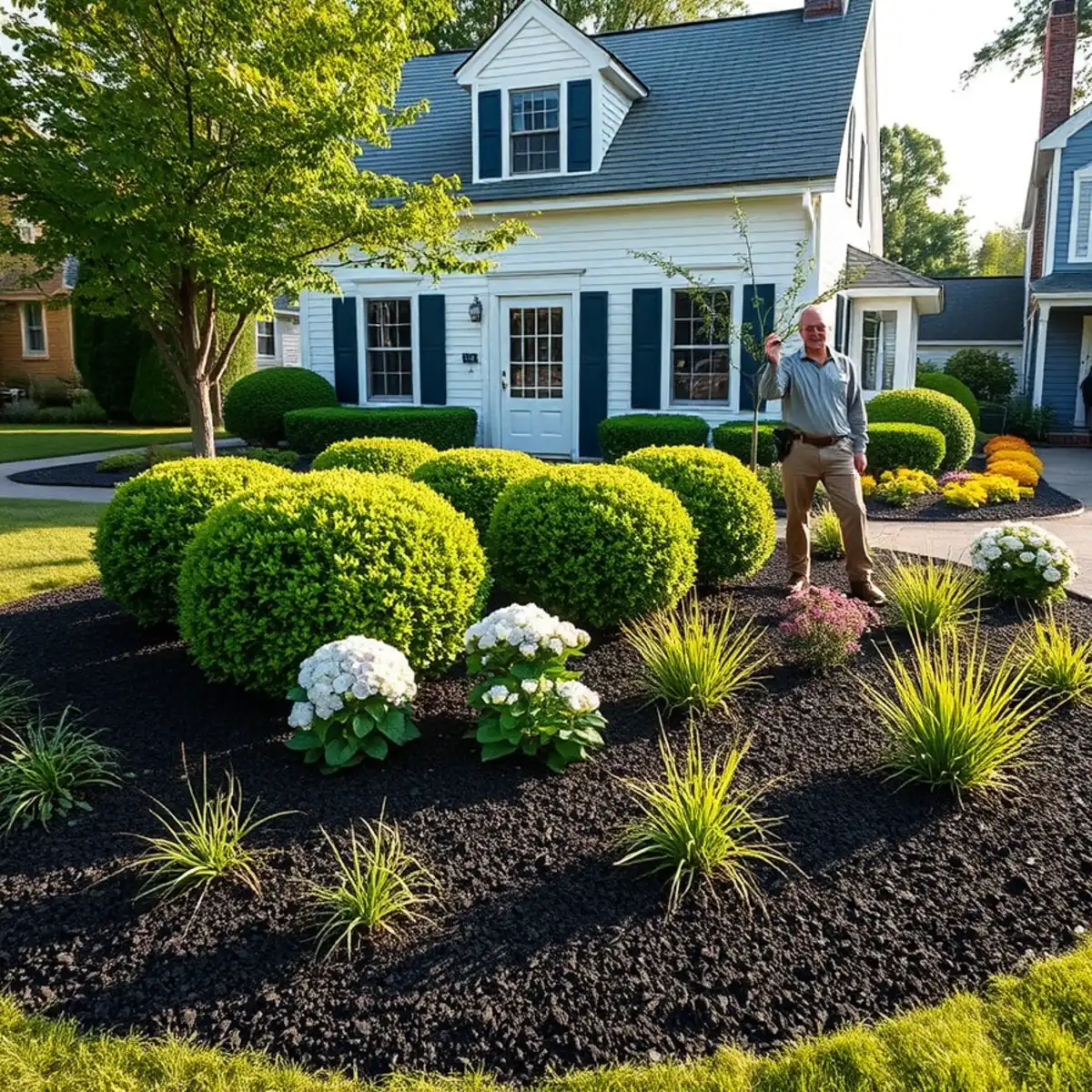
Most of the backyard inspiration people bring us was photographed in the Pacific Northwest, the Carolinas or an English garden. The plants in those pictures will not survive here, or will survive looking miserable. What follows is what genuinely works on South Shore and South Coast properties, given the soil, the winters, the salt and the deer.
Start with the problem, not the picture
Nearly every backyard we are asked to redesign has one underlying issue that has to be solved before anything decorative goes in. Usually it is water — a low corner that stays soggy, runoff from a neighbouring grade, or roof water discharging straight into a bed. Sometimes it is shade that has crept in over twenty years as oaks matured. Occasionally it is soil that was never anything but builder fill.
Designing around one of these rather than fixing it is how people end up redoing the same bed three times. If the back corner has held water every spring for a decade, a new planting there will fail exactly as the last one did.
Define the usable area before buying a single plant
The most effective change on most properties is not a plant at all. It is giving the yard a destination — a patio, a terrace, a gravel sitting area — so there is somewhere to actually be. A yard that is one undifferentiated rectangle of lawn gets looked at. A yard with a defined place to sit gets used.
Scale it honestly. A patio sized for four chairs and a small table needs more room than people estimate, and a terrace too small to pull a chair back from the table is a permanent irritation. Mark it out with paint and live with the shape for a few days before anything is excavated.
Layer the edges instead of lining them
The default around here is a single row of identical shrubs along the fence. It reads as a boundary and it makes the yard feel smaller. Beds with depth — a small tree, a mid-layer of shrubs, a front edge of perennials or grasses — blur where the property stops and make the same space feel considerably larger.
Curved bed lines help for the same reason, provided the curves are generous. Tight scalloped edges look busy and are a nuisance to mow around. One long sweeping curve beats five small ones.
Plant for the conditions you actually have
Acidic, often sandy soil
Most ground in this region sits well below neutral, which is excellent news if you work with it. Blueberry, inkberry, winterberry, mountain laurel, rhododendron, azalea and bayberry all genuinely prefer it. Fighting the pH to grow something that wants sweet soil is a permanent maintenance commitment.
Deer
Deer pressure is constant across most of the South Shore and heavy in towns bordering conservation land. Design assuming they will visit. Boxwood, ornamental grasses, Russian sage, catmint, barberry alternatives, ferns and most aromatic herbs are routinely left alone. Hostas, tulips, daylilies and arborvitae are a standing invitation.
Salt and wind, if you are near the water
Within a mile or so of the coast — Scituate, Marshfield, Duxbury, the Mattapoisett and Dartmouth shoreline — onshore wind carries salt well inland. Bayberry, beach plum, rosa rugosa, juniper, little bluestem and switchgrass handle it. Many evergreens that are reliable inland will brown on the windward side every winter.
Shade that was not there when the house was built
A lot of these properties have mature oak canopy now that did not exist in 1975. Where turf has thinned to nothing under it, the honest answer is usually to stop fighting for lawn and plant a shade bed — ferns, hosta where deer allow, hellebore, Solomon's seal, woodland phlox, with a mulched path through it.
Four changes that reliably make the biggest difference
- 1Solve the water problem first — regrade, drain, or redirect downspouts before planting anything near the wet area
- 2Add a defined destination — a patio or terrace sized generously enough to actually be used
- 3Deepen the beds — pull the bed line out from the fence and layer it, rather than planting a single row against the boundary
- 4Cut a crisp spaded edge — the cheapest single thing that makes a yard look maintained, and it costs nothing but labour
Front yards are a different problem
A front yard is a composition viewed from the street and from a car, which means it works on structure and mass rather than detail. Foundation plantings that have swallowed the windows are the near-universal problem on older South Shore houses — and the plants are frequently worth moving rather than removing, since twenty years of growth has real value somewhere else on the property.
Widening a narrow front walk changes the feel of a house more than almost any planting will. A great many entry walks here are thirty inches wide, which is too narrow for two people or for anyone carrying anything.
What to be sceptical of
- Fast-growing screening — anything that fills in quickly keeps growing at that rate and becomes a shearing commitment forever
- Low-maintenance claims about any new planting — everything needs real attention for the first two seasons regardless
- Lawn in deep shade — if it has failed twice, it will fail a third time; change the use of the space
- Fabric under mulch beds — it does not stop weeds for long and makes future planting miserable
Frequently Asked Questions
Fix the drainage and the grade, then define the usable space. [Planting](/services/landscape-design-planting-whitman-ma/) is the last step, not the first. If there is a corner that stays wet every spring, solving that before anything goes in the ground is the difference between a design that lasts and one you redo in three years.
Work with the acidic soil rather than against it — blueberry, inkberry, winterberry, mountain laurel and bayberry all prefer it. Near the coast add beach plum, rosa rugosa, juniper and native grasses for salt tolerance. Assume deer pressure and favour boxwood, grasses, catmint, Russian sage and ferns over hosta, tulips and arborvitae.
Enough to be used, and no more. Lawn is the highest-input surface in any landscape — water, fertiliser, lime, weekly mowing. Most properties we work on are better off with a smaller, genuinely healthy lawn where it gets sun and use, and beds, patio or naturalised area everywhere else.
Yes, and it is usually the sensible way to do it. The order that works is drainage and grade first, then hardscape and any structure, then the planting. Doing planting first and hardscape later means digging up plants you just paid for, which is the most common sequencing mistake.
Want this handled for you?
We do this work across Whitman and the South Shore every week. Call (323) 606-0255 for a free on-site estimate — we will tell you honestly what your property needs.