
Deer-Resistant Plants for Massachusetts Landscapes
Nothing is deer-proof in a hard winter. But choosing correctly at planting time beats spraying repellent for the next fifteen years.
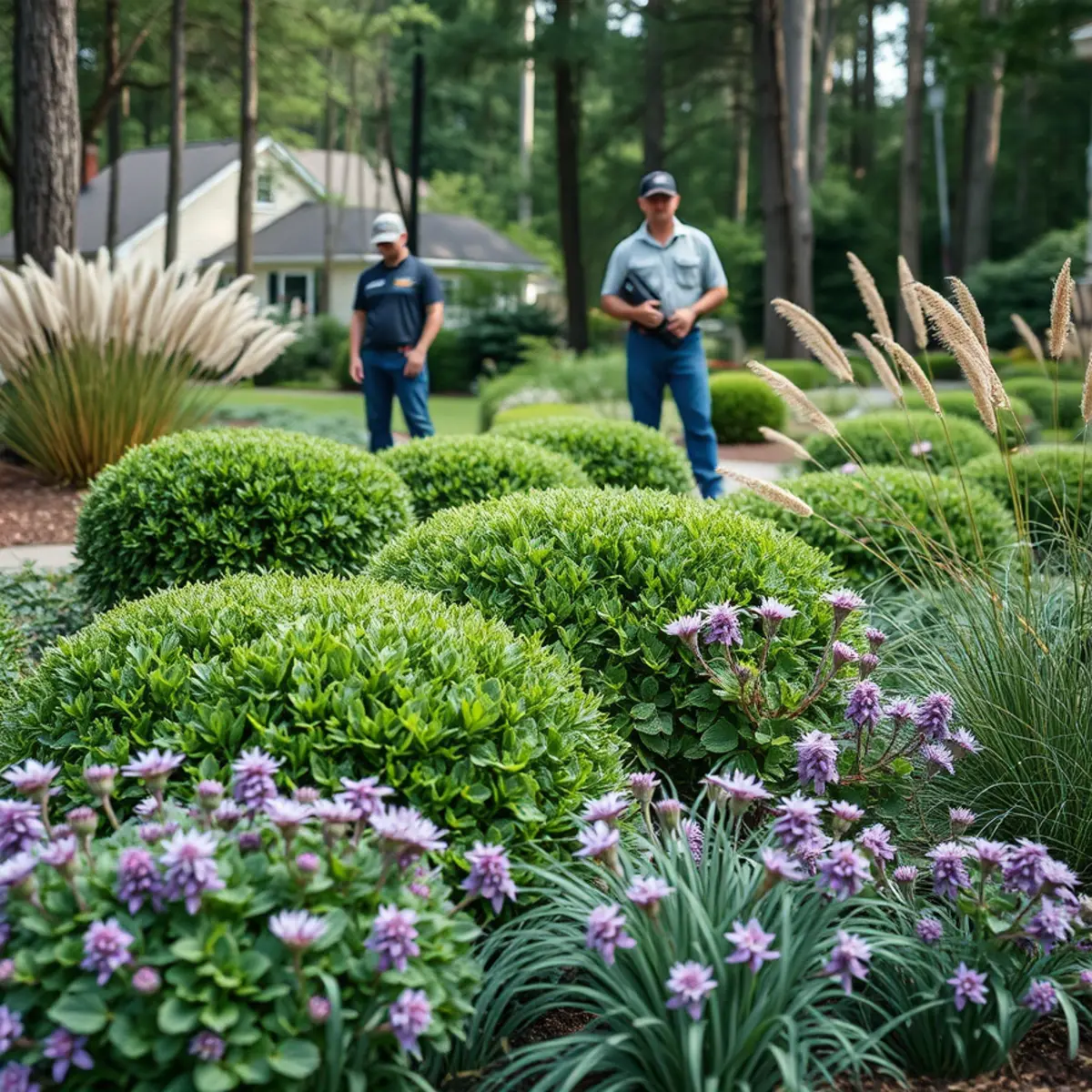
Deer pressure across the South Shore is significant and it is not getting lighter. In the wooded towns — Hanson, Pembroke, Norwell, Duxbury, and the rural edges of East Bridgewater and Plympton — it determines what can realistically be planted.
The honest framing: no plant is deer-proof. In a hard winter with deep snow and limited browse, deer eat things they normally ignore. What we can do is stack the odds heavily in your favor at planting time, which beats a repellent-spraying routine you have to keep up forever.
What deer avoid, and why
Deer avoid plants based on four broad characteristics:
- Strong aromatic oils — catmint, lavender, Russian sage, most culinary herbs
- Fuzzy or coarse texture — lamb's ear, lady's mantle, many salvias
- Toxic or bitter compounds — daffodils, ferns, boxwood, most euphorbias
- Tough, leathery, or spiny foliage — hollies, barberry, ornamental grasses
Reliable shrubs
| Plant | Use | Notes |
|---|---|---|
| Boxwood | Formal hedge, foundation | Very reliably avoided; watch for boxwood blight |
| Inkberry holly | Native boxwood alternative | Evergreen, salt-tolerant, handles wet |
| Spirea | Flowering border | Tough, long bloom, essentially untouched |
| Bayberry | Coastal, screening | Aromatic foliage deer avoid |
| Summersweet | Wet shade, fragrance | Native, August bloom, rarely browsed |
| Russian sage | Sunny border | Aromatic, silver foliage, very reliable |
| Juniper | Groundcover, screening | Prickly texture; upright forms take some browse |
| Caryopteris | Late-season blue flower | Aromatic; blooms when little else does |
Reliable perennials
- Catmint — long blooming, aromatic, thrives on neglect, and one of the most reliably avoided perennials there is
- Lavender — needs sharp drainage and full sun, which is the real limitation here rather than the deer
- Ferns — nearly all of them, and they solve the shade problem at the same time
- Daffodils — genuinely toxic to deer and rodents; plant these instead of tulips, which deer treat as a delivery service
- Ornamental grasses — little bluestem, switchgrass, and most others are left alone
- Peony — established plants are essentially untouched
- Bleeding heart, hellebore, and lamb's ear for shade and edging
What deer will destroy
This list matters more than the first one, because these are the plants people keep buying and replacing:
| Plant | Why it fails |
|---|---|
| Arborvitae | The single worst choice — deer strip it to the height they can reach |
| Hosta | Eaten to the ground repeatedly through the season |
| Yew | Toxic to most animals but deer eat it anyway |
| Tulips | Flower buds taken the night before they open |
| Rhododendron and azalea | Winter browse when other food is scarce |
| Daylily | Flower buds eaten reliably |
| Euonymus | Heavily browsed |
| Young fruit trees | Bark rubbed off by bucks in fall |
Screening without arborvitae
This comes up on nearly every design where privacy is the goal:
- Norway or Colorado spruce — large, fast, and rarely browsed once past sapling height, and a common screening choice on the wooded lots we work in Norwell
- American holly — evergreen, native, spiny leaves deter browsing
- Inkberry holly — lower, denser, good for a four-to-six-foot screen
- Bayberry — semi-evergreen, aromatic, excellent in coastal exposure
- Mixed plantings — a varied screen looks better than a monoculture hedge and survives one species failing
Repellents: what they do and do not do
Repellents work, within limits. Egg-based products are the most effective in independent testing. They have to be reapplied after rain and as new growth emerges, and rotating between products prevents deer habituating to one scent — a routine we fold into seasonal bed maintenance where clients want it.
They are worth it for a small number of high-value plants, or for a new planting during its establishment period. They are not a strategy for an entire property over twenty years. Selection at planting time is.
Fencing
The only genuinely reliable exclusion. Deer clear six feet without difficulty, so an eight-foot fence is the standard for a full perimeter — which is impractical and often prohibited on most residential lots.
Practical alternatives: fence a small area rather than the property. A fenced vegetable garden is the only vegetable garden that produces in the rural South Shore towns. Individual cages on high-value young plants during establishment work well. And trunk guards on young trees prevent buck rub in fall, which kills more young trees than browsing does.
Design around the pressure
The practical approach we use on properties with real deer pressure:
- 1Put the most vulnerable plants closest to the house, where human activity provides some deterrence
- 2Use reliably avoided species at the woodland edge and along the property perimeter
- 3Never plant arborvitae for screening on a wooded lot — pick something that works
- 4Accept that a few things will get browsed and plan for it rather than replacing annually
- 5Cage and guard new plantings through their first two winters, when they are most vulnerable — worth doing on anything installed during a fall planting project
Getting this right at design time costs nothing extra and saves a decade of frustration. It is one of the first things we discuss when planning landscape design and planting on a wooded property.
Frequently Asked Questions
Boxwood is the most reliably avoided, with inkberry holly as the native alternative. Spirea, bayberry, Russian sage, and summersweet are all excellent and rarely browsed even under heavy pressure.
It is highly palatable and available above the snow line all winter. Worse, arborvitae will not regenerate from bare wood, so once deer strip it to a browse line the damage is permanent. It is the wrong screening plant for any property with deer.
Yes, with limits. Egg-based products test best. They need reapplication after rain and as new growth emerges, and rotating products prevents habituation. They are practical for a handful of high-value plants, not for an entire property indefinitely.
Want this handled for you?
We do this work across Whitman and the South Shore every week. Call (323) 606-0255 for a free on-site estimate — we will tell you honestly what your property needs.