
Native Plants That Actually Perform on the South Shore
Not a list of everything native to New England. A list of what we install over and over because it performs in real South Shore yards.
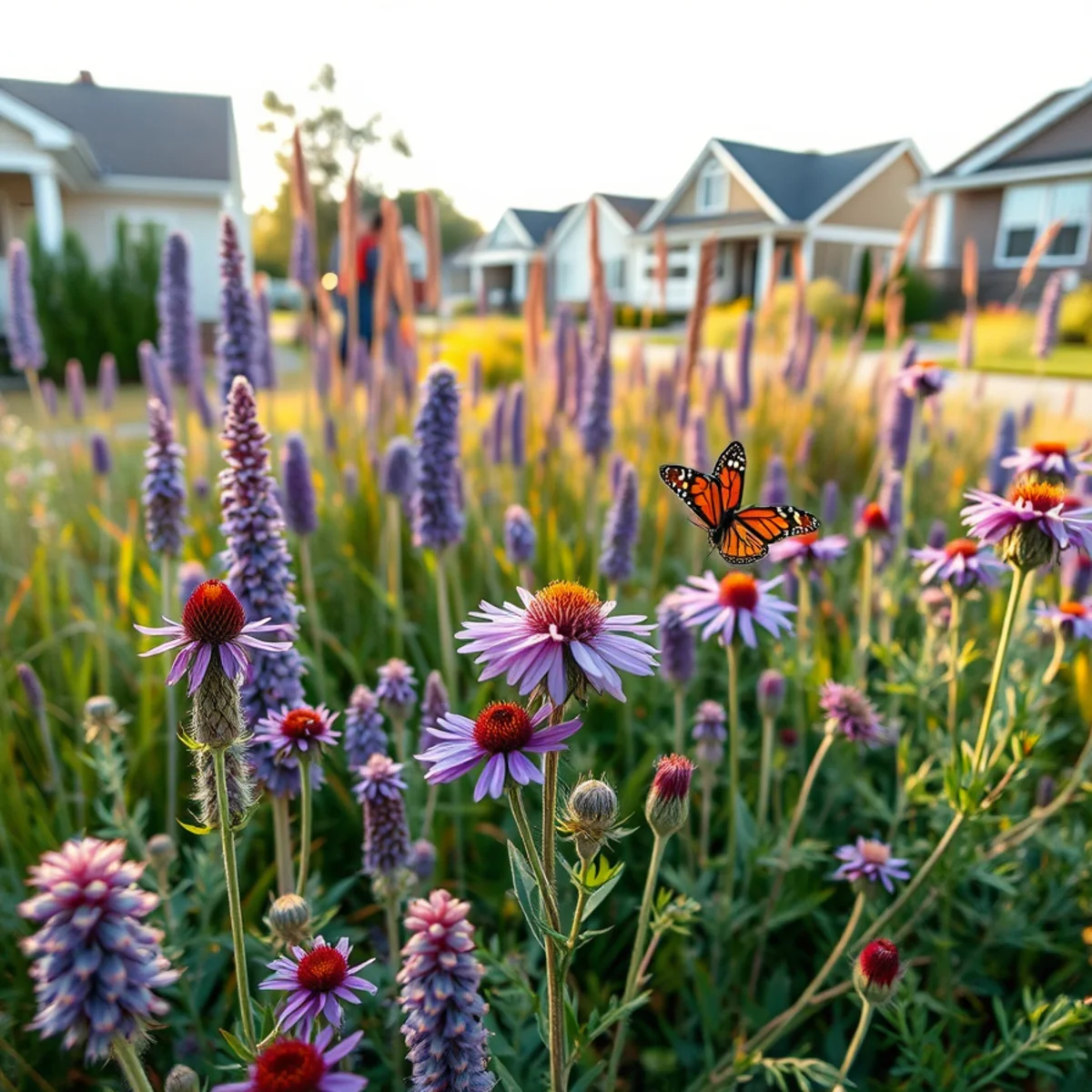
Native planting has become a selling point, which unfortunately means plenty of things get labeled native that are marginal in our specific conditions. What follows is narrower and more useful: the plants we install repeatedly across the South Shore because they genuinely perform here.
Our conditions are specific. Zone 6b, acidic soil, sandy outwash in a lot of places and clay-heavy till in others, wet springs and dry Augusts, and heavy deer pressure in the wooded towns.
Shrubs
Winterberry holly (Ilex verticillata)
The plant that stops people in December. Bare stems covered in bright red berries against snow, and they hold into January until the birds finish them.
One detail gets missed constantly: winterberry is dioecious. Female plants produce the berries and require a male within about fifty feet to pollinate them. Buy three females and no male and you get a green shrub. Match bloom times too — pair "Winter Red" with "Southern Gentleman," not with an early-blooming male.
Handles wet soil beautifully, which makes it one of the best answers for the soggy back corner that will never be lawn.
Summersweet (Clethra alnifolia)
Blooms in August when almost nothing else does, smells genuinely wonderful, tolerates both wet feet and part shade, and is one of the best pollinator plants available. Deer generally leave it alone. If we had to pick one shrub for a difficult wet spot, this is it.
Highbush blueberry (Vaccinium corymbosum)
White bell flowers in spring, fruit in summer, and the best red fall color of any shrub we plant. It wants exactly what our soil already is — acidic and well-drained — which is why it grows wild across this region. Plant two varieties for better fruit set.
Inkberry holly (Ilex glabra)
The practical native alternative to boxwood. Evergreen, tolerates wet soil and salt, and holds a low rounded form without constant shearing. Choose a compact cultivar to avoid the bare-legged look older plants develop. Excellent in coastal towns like Scituate and Duxbury where salt eliminates most broadleaf evergreens.
Bayberry (Myrica pensylvanica)
The default coastal shrub. Handles salt spray, wind, and pure sand, fixes its own nitrogen so it thrives in poor soil, and the waxy gray berries are what bayberry candles are made from. Semi-evergreen here. Suckers to form a colony, which makes it excellent for stabilizing a bank.
Mountain laurel (Kalmia latifolia)
The Massachusetts state flower and a genuinely beautiful broadleaf evergreen for shade. Wants acidic, well-drained soil and protection from harsh winter wind. Slow-growing and worth the wait.
Perennials for sun
Little bluestem (Schizachyrium scoparium)
Blue-green through summer, copper-orange in fall, and holds structure through winter snow. Thrives in poor dry sand where most perennials sulk. Cut it back in late winter, not fall — the winter form is half the point.
Butterfly weed (Asclepias tuberosa)
A true milkweed and a monarch host plant, with bright orange flowers in midsummer. It wants poor, dry, sandy soil and full sun — the sites where nothing else wants to grow. Do not amend the soil for it and do not overwater it. Emerges very late in spring, so mark it or you will dig it up.
New England aster (Symphyotrichum novae-angliae)
Purple flowers from late August into October, exactly when pollinators need late-season nectar and when most gardens have nothing left. Gets tall and can flop; pinch it back by about a third in early June and it comes in shorter and denser.
Switchgrass (Panicum virgatum)
Upright, tough, tolerant of wet and dry, and it handles wind without flopping — which is why it works on exposed coastal sites where taller grasses fail. Airy seed heads catch light beautifully in fall.
Perennials and ferns for shade
Shade under mature oaks is the single most common planting problem on the South Shore, and native ferns are the answer more often than anything else:
| Plant | Conditions | Notes |
|---|---|---|
| Ostrich fern | Moist shade | Spreads to fill large areas; goes dormant early in drought |
| Cinnamon fern | Wet shade | Large and architectural; handles genuinely soggy ground |
| Christmas fern | Dry shade | Evergreen through winter; the toughest of the group |
| Foamflower | Dry to moist shade | Low spring-flowering groundcover |
| Wild geranium | Part shade | Spring bloom, holds through summer |
| Wild columbine | Dry part shade | Red and yellow spring flowers; self-sows politely |
Under a mature oak you are fighting deep shade and heavy root competition at the same time. Adding two inches of compost annually helps considerably. Grass in that situation is usually a losing battle worth giving up on — the reasoning is covered in our landscape design and planting work.
Small trees
Serviceberry (Amelanchier canadensis)
White flowers before the leaves emerge, edible berries in June that birds get to first, and orange-red fall color. Multi-stem form is excellent as a specimen. One of the few small trees that genuinely does four seasons well.
Eastern redbud (Cercis canadensis)
Magenta flowers directly on bare branches in early spring, before almost anything else. Native slightly south of us but reliably hardy here now. Site it out of harsh wind.
Red maple (Acer rubrum)
The most adaptable native tree in the region. Handles wet soil, dry soil, and everything between, and the fall color is why New England looks the way it does in October. It gets large — site it accordingly.
What native does not mean
It does not mean zero maintenance. Every new planting needs deep watering weekly through its first full growing season regardless of origin. A native plant that dies in its first August is not more sustainable than anything else.
It does not mean deer-proof either. Deer eat plenty of natives. Selecting for deer resistance is a separate consideration, covered in our guide to deer-resistant plants for Massachusetts.
And it does not mean everything has to be native. A well-placed hydrangea, a boxwood hedge, or a Japanese maple belongs on plenty of properties — they just need pruning at the right time for their species. The value of building around natives is that plants adapted to our acidic soil, our rainfall pattern, and our winters need less water, less fertilizer, and less of your attention — while supporting the insects that support the birds.
A simple starting scheme
If you want to add natives without redesigning the property, this combination works on most South Shore lots:
- A serviceberry as a specimen where you want spring interest
- A grouping of three winterberry (two female, one male) in the wettest area
- Summersweet along a shaded foundation for August bloom and fragrance
- A mass of little bluestem in the hottest, driest, poorest spot
- New England aster and butterfly weed threaded through a sunny bed
- Christmas fern and foamflower under the oaks where grass has failed
That is a genuine four-season planting that feeds pollinators from spring through October, feeds birds through winter, and — once established — asks for essentially nothing.
Frequently Asked Questions
Winterberry holly, summersweet, highbush blueberry, inkberry, and bayberry cover most situations. They handle our acidic soil, they include options for wet and dry and coastal sites, and once established they need very little.
Almost certainly no male pollinator nearby. Winterberry has separate male and female plants — only females fruit, and they need a compatible male within about fifty feet with an overlapping bloom time.
Once established, generally yes, because they are adapted to local rainfall patterns. During the first full growing season after planting, they need the same deep weekly watering as anything else. The low-maintenance payoff comes in year two and after.
Want this handled for you?
We do this work across Whitman and the South Shore every week. Call (323) 606-0255 for a free on-site estimate — we will tell you honestly what your property needs.