
Whitman, MA · 4–5 applications, April–November
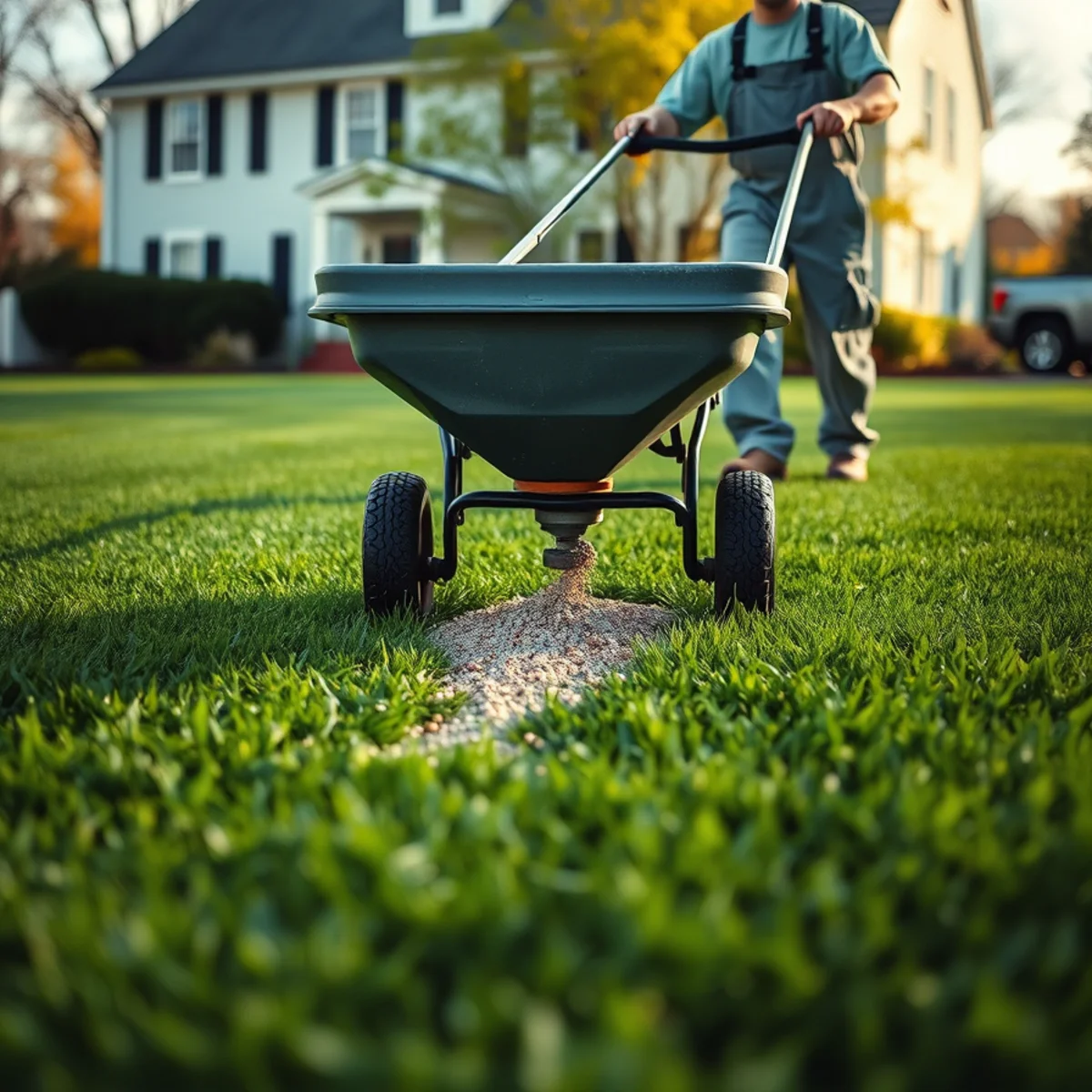
Lawn Fertilization & Weed Control in Whitman, MA
Programs built off a real soil test — not a bag schedule. Correct the pH first, then feed, then the weeds have nowhere to go.
5.0★
28 Google reviews
Not one below five stars
15+
Years in business
Serving the South Shore since 2010
Free
On-site estimates
Written scope, firm number
12
Months a year
Lawn care through snow removal
Overview
Fertilization & Weed Control in Whitman, MA
Most lawn programs sold in this area are a fixed schedule of bags applied on fixed dates, regardless of what the soil actually needs. That works well enough to keep grass green. It does not fix the underlying problem on most Whitman properties.
Our soil here is naturally acidic. When pH drops below about 6.0, nutrients get chemically locked up — the fertilizer is in the soil, and the grass cannot take it up. You can feed a lawn like that four times a year and it will still look hungry. That is why we start with a soil test.
Correct the pH, feed based on what the test shows, mow high, and most weed problems solve themselves. Thick turf is the best herbicide there is.
What's included
- Laboratory soil test covering pH, phosphorus, potassium, calcium, magnesium, and organic matter
- Lime applied at the rate the test calls for — not a guess
- A written, season-long program with what goes down and when
- Slow-release nitrogen applications timed to growth cycles
- Spring pre-emergent for crabgrass, applied at the right soil temperature
- Targeted spot treatment of broadleaf weeds instead of blanket spraying
- Grub monitoring and preventive treatment where pressure warrants it
- Organic and reduced-input programs for households that want them
- Fall applications, which matter more than spring ones for cool-season grass
What we see
What the weeds in your lawn are telling you
Weeds are indicators. The species that shows up tells you what is wrong with the site.
Crabgrass along driveways and walks
Crabgrass germinates in warm, bare, sunny soil — exactly what you get at pavement edges. It signals thin turf and a mowing height that is too low. Pre-emergent handles the current season; mowing high and thickening the turf handles the cause.
Clover spreading through the lawn
Clover fixes its own nitrogen, so it outcompetes grass specifically where nitrogen is low. Plenty of people now want clover and that is a perfectly good choice. If you do not, the answer is feeding the grass properly.
Moss in the shady areas
Moss means wet, compacted, shaded, acidic soil. Killing it changes nothing. Lime, aeration, drainage, and shade-tolerant fescue change everything.
Nutsedge — bright green, faster-growing, triangular stems
Sedge, not grass, and it thrives in chronically wet soil. Standard broadleaf herbicides do nothing to it. It needs a sedge-specific product plus fixing the drainage that invited it.
Plantain and dandelion in worn areas
Both tolerate compaction better than turf does. They colonize traffic paths and thin spots. Aeration and overseeding are the real fix.
Turf peeling up like carpet
That is grub damage — the roots have been eaten. Usually shows late summer, often with skunks and crows digging. Treatment timing is specific and mostly preventive.
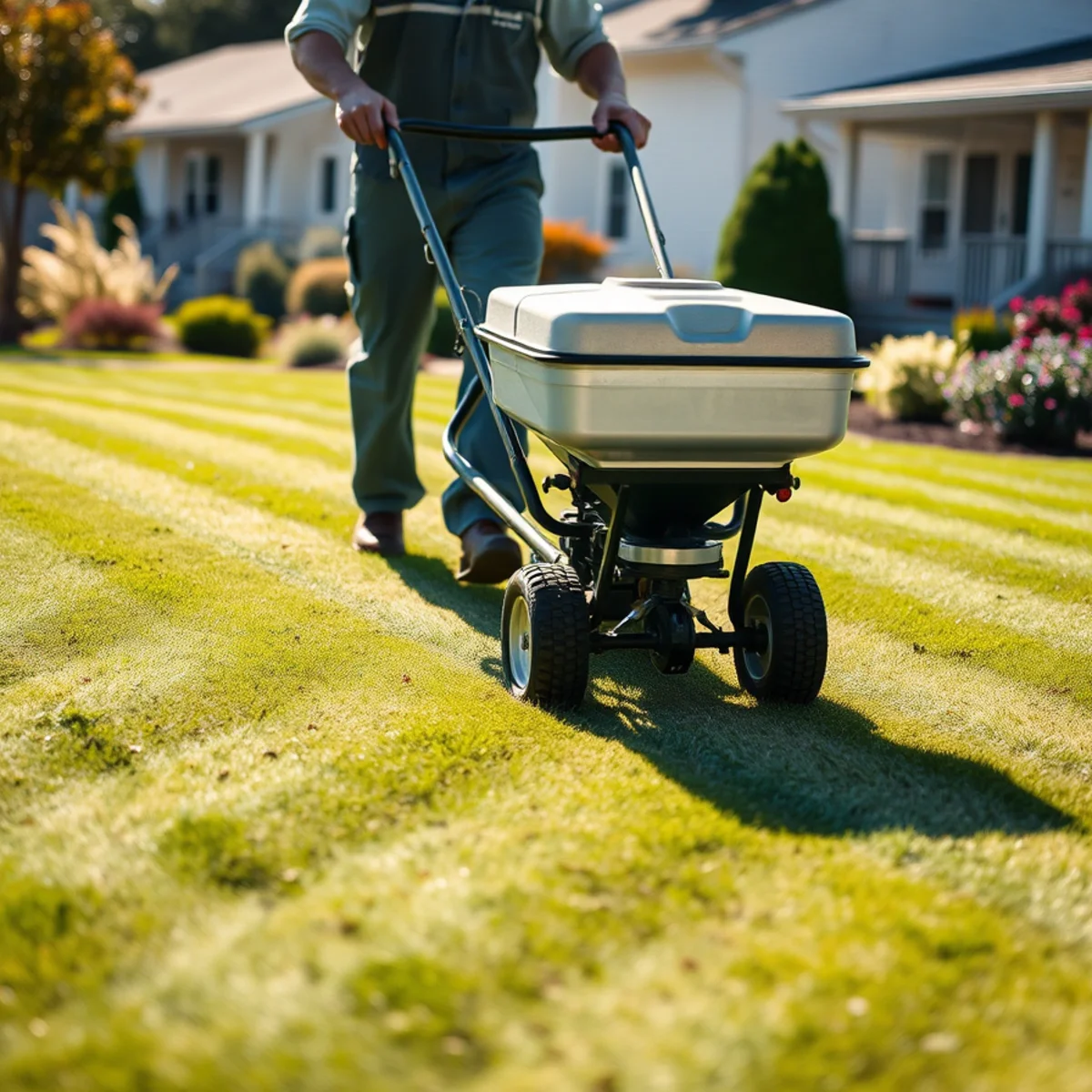
Fertilization & Weed Control in action
Our process
How we build a lawn program
Test, correct, feed, monitor. In that order.
- 1
Soil test first
Samples pulled from several spots and sent to a lab. We get pH, nutrient levels, and organic matter back — real numbers instead of assumptions.
- 2
Correct pH
Lime at the rate the test specifies. Late fall is ideal so winter moisture works it in. Lime moves slowly through soil, so this is a multi-season correction, not a one-shot fix.
- 3
Early spring
A balanced feeding plus crabgrass pre-emergent, timed to soil temperature rather than a calendar date — around when forsythia finishes blooming is the classic local indicator.
- 4
Late spring
Slow-release nitrogen to carry the lawn into summer, and spot treatment for broadleaf weeds that got through.
- 5
Summer
Light feeding at most. Pushing nitrogen into a heat-stressed cool-season lawn in July causes disease. This is a monitoring visit — grubs, fungus, drought stress.
- 6
Early fall
The most important application of the year. Paired with aeration and overseeding, this is when the lawn does its real growing.
- 7
Late fall
A final feeding after top growth slows but while roots are still active. This is what gives you an early green-up next spring without forcing soft growth.
Local expertise
Why lime is the first thing your lawn needs here
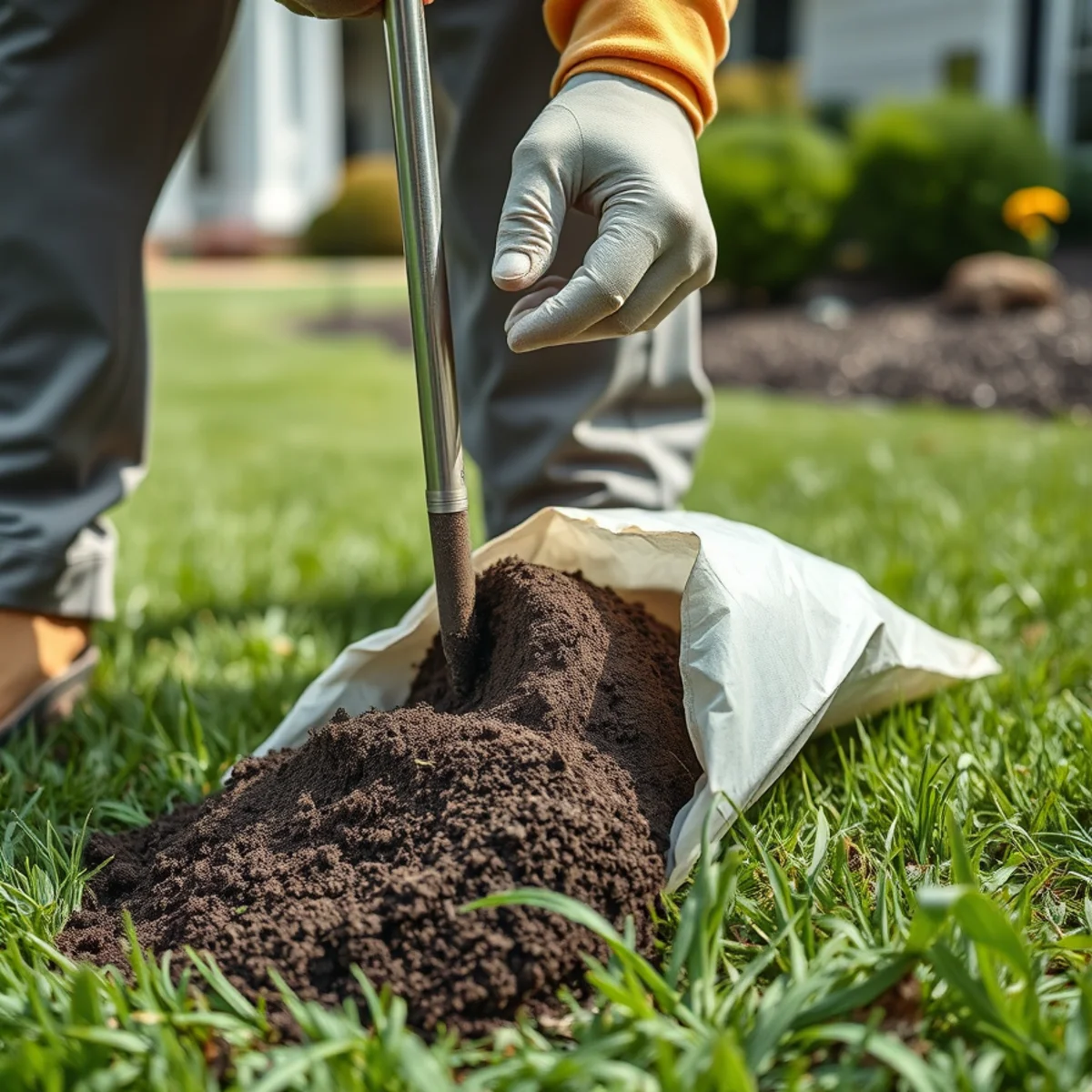
If you take one thing from this page: get a soil test, and if your pH is below 6.0, lime is a better investment than fertilizer.
Soils across southeastern Massachusetts trend acidic. Our parent material is acidic to begin with, our rainfall leaches calcium and magnesium steadily out of the root zone, decomposing pine and oak litter pushes pH down further, and conventional nitrogen fertilizers acidify soil as a side effect. Left alone, a lawn here drifts down year after year.
Cool-season turf wants a pH somewhere around 6.0 to 7.0. Below that, availability of nitrogen, phosphorus, and potassium starts dropping sharply. At 5.5 you might have plenty of nutrients in the soil and grass that cannot access much of it. Meanwhile moss, sorrel, and plenty of weeds are perfectly comfortable in acidic conditions — which is why they take over the exact same lawns.
Lime raises pH, but slowly. It is only sparingly soluble and it moves down through soil at roughly an inch a year without help. That means two things: apply it in late fall so winter moisture carries it in, and apply it right after core aeration when the holes give it a direct path to the root zone.
How much depends on the test and on your soil texture. Sandy soils shift fast with less material; clay-heavy soils resist change and need more. Applying more than about fifty pounds per thousand square feet at once is wasteful — the correction gets split across seasons.
Then re-test every two or three years. Getting the pH right once and never checking again means drifting straight back down over the following decade.
Why Giachetto Landscape
Why we test before we feed
15+ years on South Shore properties, 5.0 stars from 28 Google reviews, fully insured, and the owner on the job rather than behind a desk.
A lab soil test, not a guess
Samples from several spots, sent out, and real numbers back: pH, phosphorus, potassium, calcium, magnesium and organic matter. Our soils run acidic, and below pH 6.0 the nutrients are chemically locked up. That single number explains most 'I feed it and it still looks hungry' lawns.
Lime before fertilizer, in that order
Correcting pH is what makes everything else you pay for actually available to the grass. It works slowly, so it goes down in late fall or straight after aeration when the open holes carry it to the root zone.
Spot treatment rather than blanket spraying
Scattered dandelions and plantain get hit individually. It uses far less product and works just as well, and it is our default rather than an upgrade you have to request.
Organic and reduced-input programmes available
Compost top-dressing, natural nitrogen sources, corn gluten as a limited pre-emergent, and integrated pest management instead of a fixed spray schedule. Results build more slowly and the soil ends up genuinely better. Plenty of families with children and dogs prefer it.
- 5.0 stars28 Google reviews
- 15+ yearsServing the South Shore since 2010
- Fully insuredCertificates on request
- Locally ownedBased at 23 Rowena Ave, Whitman
Honest pricing
What a lawn program costs
Priced per application by treated square footage, usually as a season package.
Treated square footage
Measured turf area, not lot size.
Number of applications
Four to five visits covers most lawns. Struggling lawns may want more in the first year and fewer once corrected.
Lime requirement
Driven by the soil test. A badly acidic lawn may need substantial lime over two or three seasons.
Conventional versus organic
Organic programs cost more per application, work more slowly, and improve soil biology over time. Both are legitimate — it depends on your priorities.
Weed pressure at the start
A lawn that is half weeds needs more intervention in year one than a lawn with scattered dandelions.
Grub treatment
Preventive treatment is priced separately and only recommended where there is history or evidence of pressure.
Massachusetts restricts phosphorus in lawn fertilizer — it is only permitted when a soil test shows a deficiency or when establishing a new lawn. That is one more reason we test rather than guess.
Social proof
28 Reviews, 5.0 Stars
Every review on our Google Business Profile is five stars. Here is a sample.
Read them on Google“The Giachetto Landscape crew did an absolutely incredible job on a big spring cleanup at our home. The yard was a mess, and there wasn't a single leaf or stick left in any nook or cranny once they were done. They were efficient, respectful, fast, and reasonably priced. We're blown away by how hard they worked. There are so many landscaping companies to choose from, and we couldn't be happier to have found such an amazing crew! 10/10!”
Mia Gallo· Google review
“Chris did an amazing job installing my new lawn with sod. From him being readily available to take a look at my job in the beginning, to providing me a prompt, competitive quote, to the pulling up of my old weed filled lawn, hand laying the new sod, and setting up of the sprinklers/timers to water the lawn, he has been a pleasure to work with. He also pulled out a large shrub and planted a smaller one, as well as re-mulched. He is professional, responsive to all questions, easy to work with, and a hard worker. I highly recommend him for any landscape project you may have.”
Laurie K· Google review
Answers
Fertilization & Weed Control: Common Questions
Specific to fertilization & weed control on South Shore properties.
Test it. A lab soil test costs very little and is the only way to know your pH and how much lime it would take to correct. Moss, heavy clover, and a lawn that stays pale despite regular feeding are all strong hints, but the test gives you the number.
Yes. Organic programs use compost top-dressing, natural nitrogen sources like feather and alfalfa meal, corn gluten as a limited pre-emergent, and integrated pest management instead of scheduled pesticide applications. Results come more slowly and soil quality improves more over time. Plenty of families with kids and dogs prefer it.
When soil temperature at the surface holds around 55°F for several consecutive days — typically mid-April here, though it moves a week or two either way with the season. The old local marker is when forsythia finishes blooming. Too early and it breaks down before crabgrass germinates; too late and it has already sprouted.
For cool-season grass, yes. Fall applications go into root development and carbohydrate storage rather than top growth, which is what carries a lawn through the next summer. If you only do two feedings a year, make them both in the fall.
Yes, and it is our default. Spot treatment targets the actual weeds instead of blanket-spraying the whole property. It uses far less product and works just as well on scattered broadleaf weeds.
Related services and articles
Related services
Core Aeration & Overseeding
The highest-return service on any established lawn. Pull the plugs, drop the seed, and watch a thin lawn fill in over the fall.
Lawn Mowing & Weekly Maintenance
Weekly or bi-weekly cuts with sharp blades, crisp trim lines, and every hard surface blown clean before we leave.
New Lawn Installation: Sod & Hydroseeding
Sod for instant results, hydroseed for value, slice seeding for renovation — with the grading and loam depth the lawn actually needs.
Further reading
Why Massachusetts Lawns Fail: Soil pH Is Usually the Answer
You can fertilize an acidic lawn four times a year and it will still look starved. Here is the chemistry, and the fix.
A Month-by-Month Lawn Care Calendar for Whitman, MA
Twelve months of specific, local timing: when to lime, when to seed, when to stop feeding, and the two deadlines that matter most.
Where we do fertilization & weed control
Soil chemistry varies more across our territory than people expect, which is why every programme starts with a test. The sandy outwash in Carver, Pembroke and Kingston is strongly acidic with almost no buffering; the clay till in Whitman and Brockton resists change and needs more lime to move the same amount. Near the water supply ponds in Lakeville and Halifax we use no phosphorus at all.
Free estimate
Request a Free Fertilization & Weed Control Estimate
Tell us about the property and we will set up an on-site visit. Every request gets a reply within one business day.
- ✓Free on-site estimate with a written scope
- ✓5.0★ from 28 Google reviews
- ✓15+ years working South Shore properties
- ✓Fully insured — certificates available on request
Get Fertilization & Weed Control Handled Properly
Call (323) 606-0255 to talk it through, or request a free on-site estimate and we will come look at the property.
- 5.0★ · 28 reviews
- 15+ years experience
- Fully insured
- Free on-site estimates