
Sod vs. Hydroseed vs. Slice Seeding: Which Is Right for Your Lawn?
Sod costs more and works immediately. Hydroseed costs less and takes a season. Slice seeding is the option most people have never heard of.
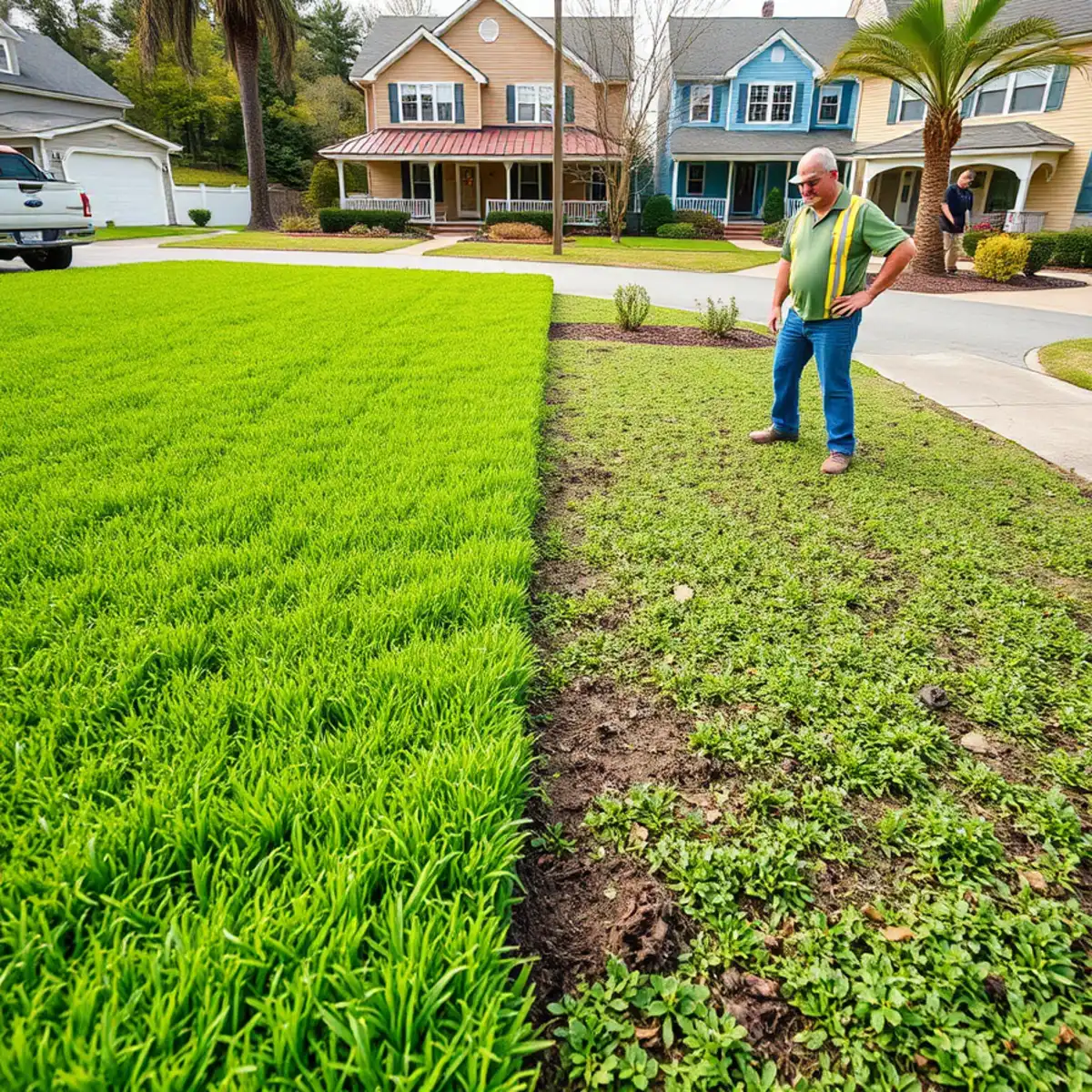
When a lawn is more than about half weeds, moss, and bare soil, patching stops being worth it. At that point you are choosing between three approaches, and the right answer depends on your budget, your timeline, your site, and honestly on how much watering you are willing to commit to.
The quick comparison
| Sod | Hydroseed | Slice seeding | |
|---|---|---|---|
| Relative cost | Highest | Moderate | Lowest |
| Usable lawn in | 2–3 weeks | 2–3 months | Existing lawn stays usable |
| Erosion control | Immediate | Good with tackifier | Minimal |
| Grass variety choice | Limited to what growers offer | Wide | Wide |
| Best season | Spring or fall | Late Aug–Sept | Late Aug–Sept |
| Watering demand | Very high for 2 weeks | High for 4–6 weeks | Moderate |
Sod: instant lawn, higher cost
Sod is mature turf grown on a farm, cut with a layer of soil and roots, and laid on prepared ground. You go from bare dirt to a green lawn in a day.
When sod is the right call
- You are selling the house and need it to look finished now
- The area is sloped, where loose seed washes away in the first storm
- It is a high-visibility front yard where months of establishment is not acceptable
- You are installing outside the ideal seeding window and need results anyway
- You have kids or dogs and need the lawn usable quickly
What people underestimate about sod
The watering. New sod has a shallow root layer sitting on soil it has not rooted into yet, and it dries out very fast. It needs to stay damp for the first two weeks, which often means watering twice a day in warm weather. Let it dry once and you get gaps at every seam that never close.
The other issue is variety. Sod farms grow what transports and installs well, which in this region means Kentucky bluegrass blends. If your yard is heavily shaded, bluegrass sod is the wrong plant and it will thin out regardless of how well it was installed.
Hydroseed: the value option
Hydroseeding sprays a slurry of seed, wood or paper mulch, fertilizer, and tackifier onto prepared soil. The mulch holds moisture around the seed, the tackifier keeps everything in place, and the green dye lets the operator see coverage.
Why it beats broadcast seeding
- Even coverage, because the operator can see exactly where the slurry has landed
- The mulch layer retains moisture around each seed, which is the main germination variable
- Tackifier resists washout, so it works on slopes where dry seed would run off
- Fertilizer is delivered in the same pass, in contact with the seed
The tradeoffs
Time, mostly. Germination in a week or two, usable lawn in two to three months, full density often the following spring. Through that period the area is fragile — no traffic, no dogs, and consistent watering.
Hydroseed is the clear winner on large areas. On a half-acre lawn, the cost difference against sod is substantial enough that it decides the question for most people.
Slice seeding: the underused option
A slice seeder cuts shallow grooves in the existing lawn and drops seed directly into them. You get genuine seed-to-soil contact without stripping anything out.
If your lawn still has thirty to fifty percent decent turf, this is very often the smart move. Slice seeding combined with core aeration, lime, and a proper fertility program can bring a struggling lawn back for a fraction of what a full replacement costs — and you keep a usable lawn the whole time.
We recommend it more often than clients expect. Plenty of lawns that people have written off do not need replacing; they need pH correction, compaction relief, and seed in contact with soil. The underlying chemistry is covered in our piece on why Massachusetts lawns fail from acidic soil.
The part that decides all three: preparation
Whichever method you choose, what happens before installation determines the outcome more than the method does.
- 1Soil test for pH and nutrients — our soils are acidic and it is the number one cause of failure
- 2Remove the old lawn and any perennial weeds, which will otherwise come straight back through
- 3Fix the grade so water moves away from the house and out of low spots — on wet lots that is a drainage and grading job before it is a seeding job
- 4Bring in screened loam where existing soil is thin — four to six inches of workable depth is the target
- 5Till in compost for organic matter and apply lime to correct pH
- 6Work starter fertilizer into the top few inches
- 7Final rake, remove rocks and debris, and lightly firm the surface
A hydroseed job on properly prepared soil outperforms sod laid on compacted fill every single time. The prep is where the money should go.
Timing beats everything
Late August through early October is the best window for any seeding method in Massachusetts, by a wide margin. Warm soil for germination, cooling air, more reliable rain, and no crabgrass competition.
Spring — late April into early June — is the second choice. Seedlings established in May have to survive their first July with roots only a couple of months old.
Midsummer installation is possible with sod and committed irrigation, and we do it when someone needs it done. It fights the weather the entire way.
We handle all three methods as part of new lawn installation, and the recommendation depends on walking your specific site. On well-water properties in Plympton and the rural towns south of us, water availability alone often decides it.
Frequently Asked Questions
Considerably, on a per-square-foot basis — usually several times less for the installed material. The tradeoff is time: sod gives you a usable lawn in two to three weeks, hydroseed in two to three months.
Light foot traffic after about two weeks, once it has rooted and no longer lifts at a corner. Normal use after three to four weeks. First mow at around three and a half inches with a sharp blade and no turning on the wheels.
Yes, and it works — late April into early June is a legitimate window. Fall is still better because seedlings get established before facing a summer, and there is no conflict with crabgrass pre-emergent.
Want this handled for you?
We do this work across Whitman and the South Shore every week. Call (323) 606-0255 for a free on-site estimate — we will tell you honestly what your property needs.