
Spring Cleanup Checklist for South Shore, MA Properties
The order matters as much as the tasks. Here is how a spring cleanup should run, and the deadline that decides whether it helps or hurts.
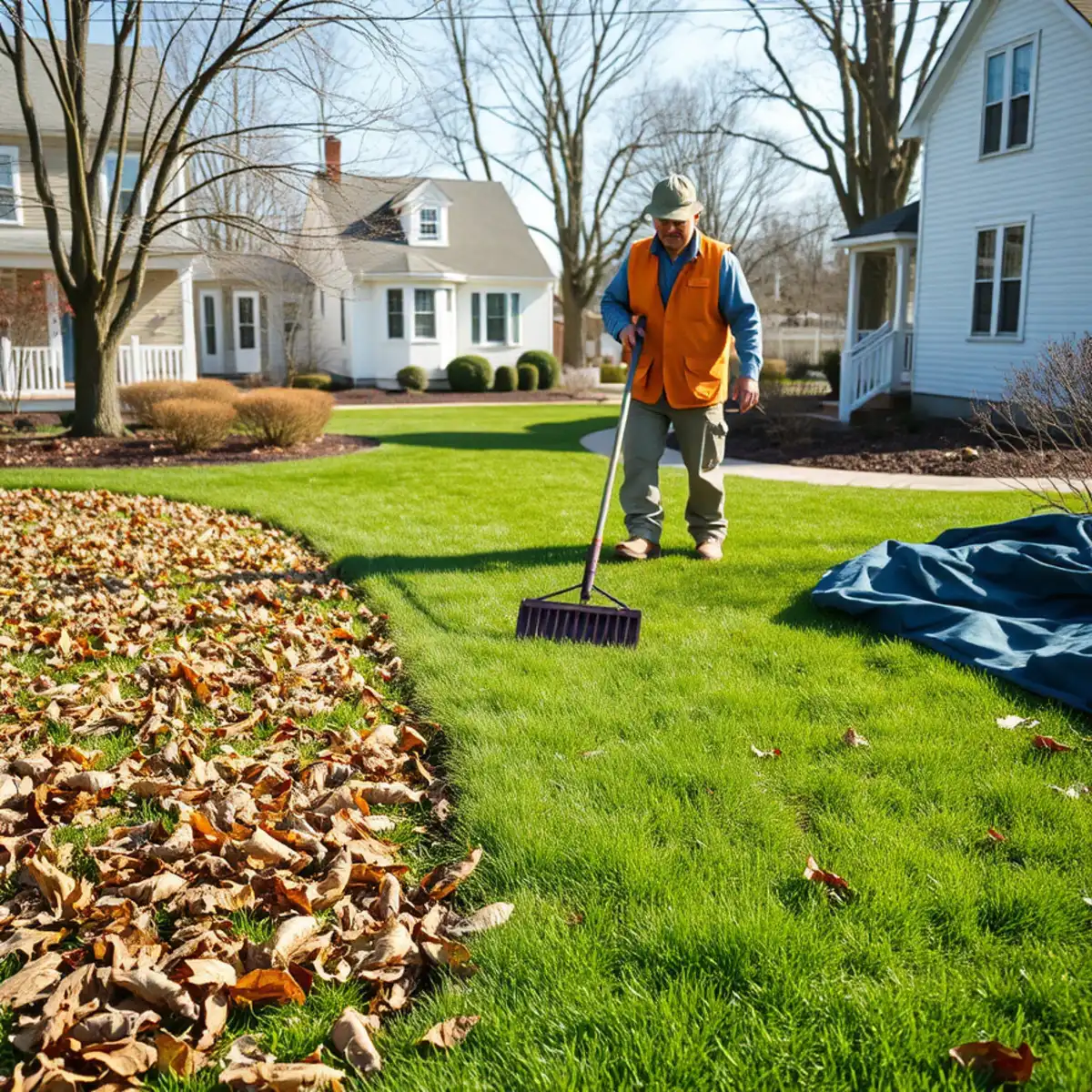
Spring cleanup is the highest-leverage day of the year on a residential property. Done properly and on time, everything that follows is easier. Done late or done halfway, you spend the rest of the season compensating.
The deadline: April 15
Around here, soil temperature crosses fifty degrees somewhere in the middle of April. Once it does, perennials push, bulbs come up, and shrubs break bud.
Raking a bed after that point tears out the growth you paid for last year. Hostas get their emerging shoots snapped, daylilies get shredded, and peony eyes get broken off at ground level. It is the single most common way a well-intentioned cleanup causes damage.
So the window is real, and it is narrow: from whenever the ground drains enough to walk on without leaving footprints, through mid-April. That is often only three or four workable weeks, which is why cleanup schedules fill from February.
The other constraint: do not work wet ground
Walking, raking, and running equipment across saturated soil compacts it, and compaction is the thing you will fight all season. Wait until the ground firms up.
The test is simple. Walk across the lawn. If you leave visible footprint impressions, it is too wet. That is particularly relevant on the clay-heavy soils around Whitman and the low-lying areas near the meadows, which stay saturated weeks after higher ground has dried.
The checklist, in order
Sequence matters. Doing this out of order means tracking debris back over ground you have already finished.
1. Beds and tight areas first
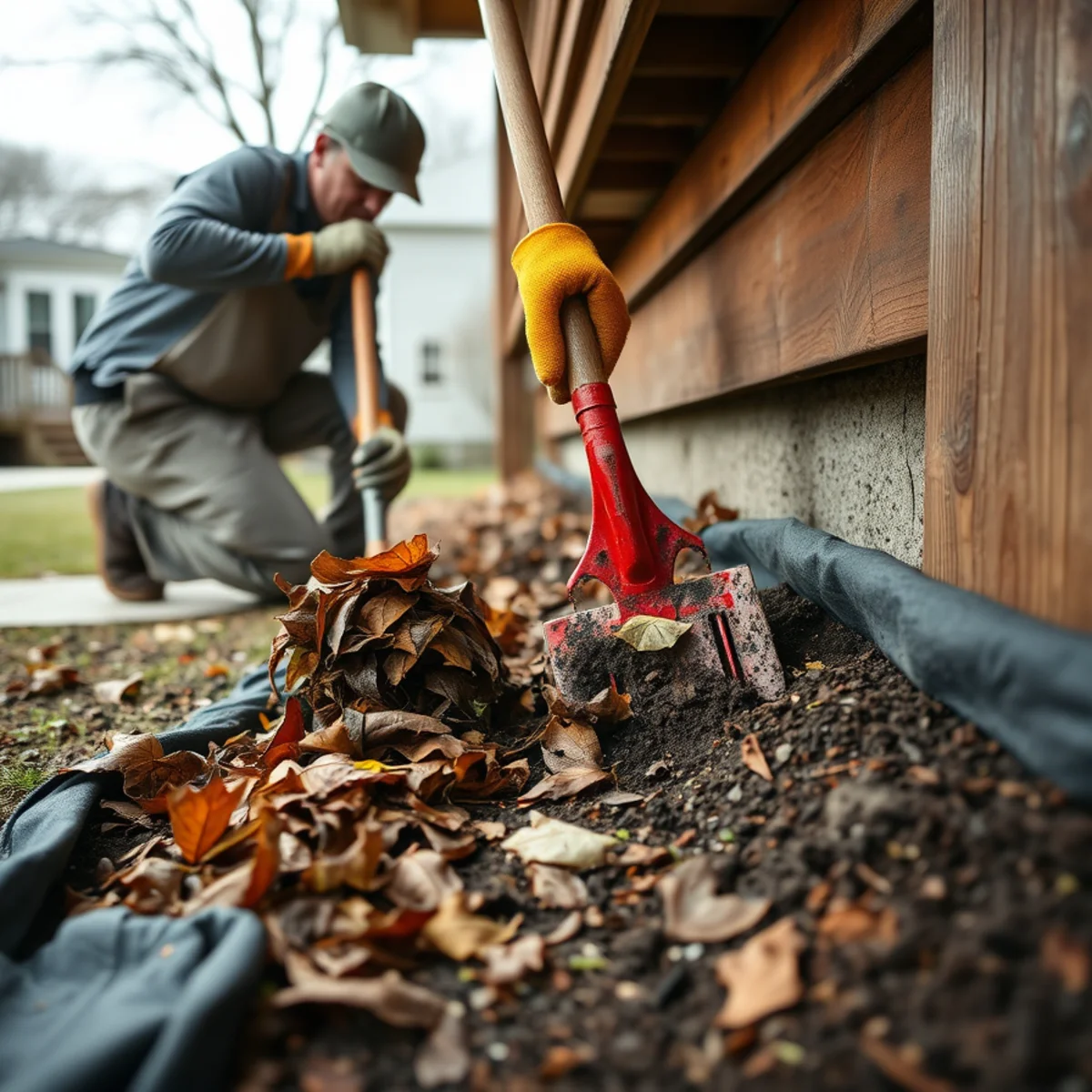
Hand-clear all beds, foundation lines, and the tight spots before touching the open lawn. Everything you pull out of these areas lands on grass you have not cleaned yet.
The spots that get skipped, and should not be:
- Under decks and porches, where leaves rot and mice nest
- Behind sheds and garages
- Along fence lines, especially where the fence meets a hedge
- Around AC condensers and utility boxes
- Inside dense shrub beds, where debris packs down between stems
- Window wells
- Corners where wind consistently deposits material
2. Cut back last year's growth
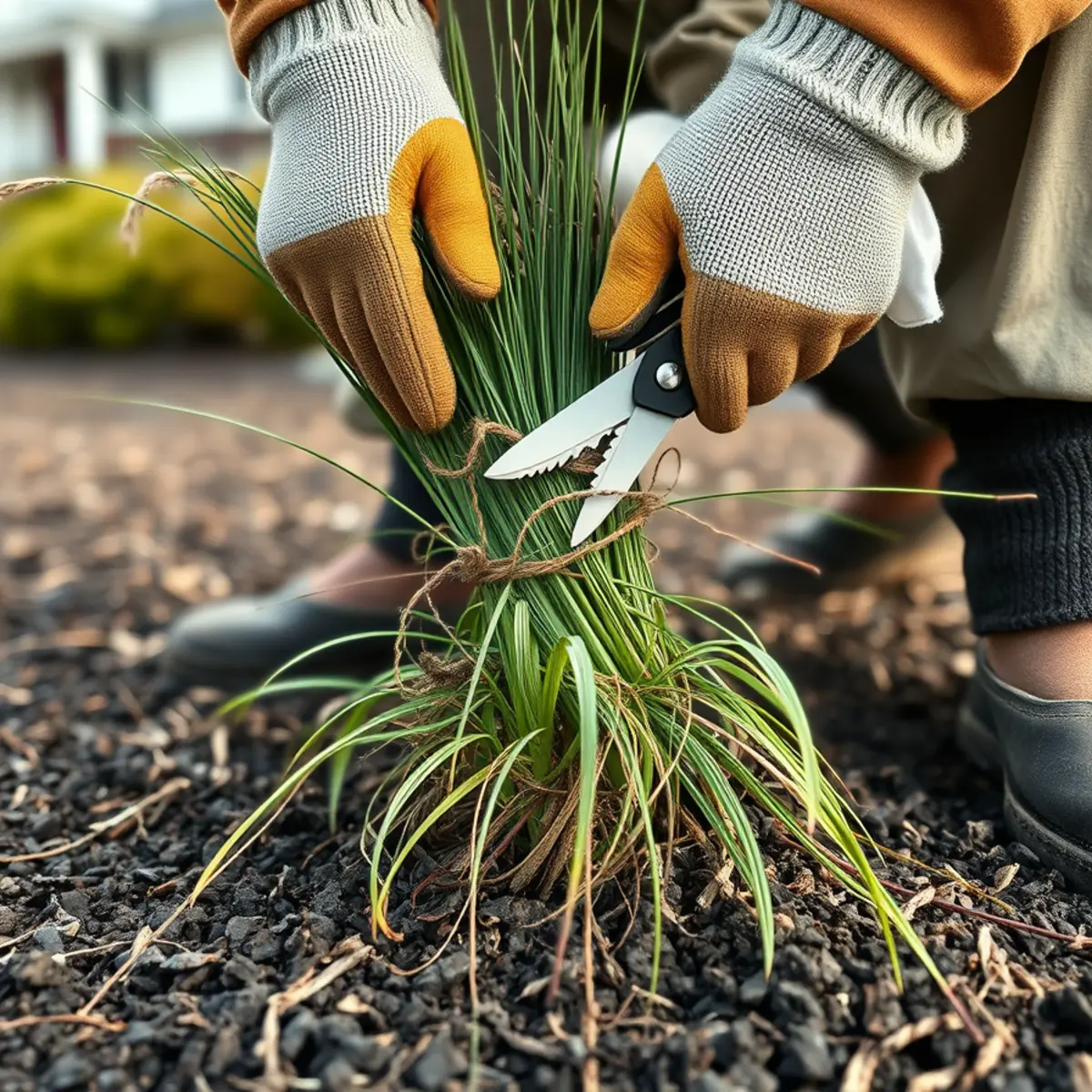
Spent perennial stems come down to a few inches. Ornamental grasses get bundled and cut low before new growth starts — cutting them after growth begins means shredding the new blades.
3. Clear the open lawn
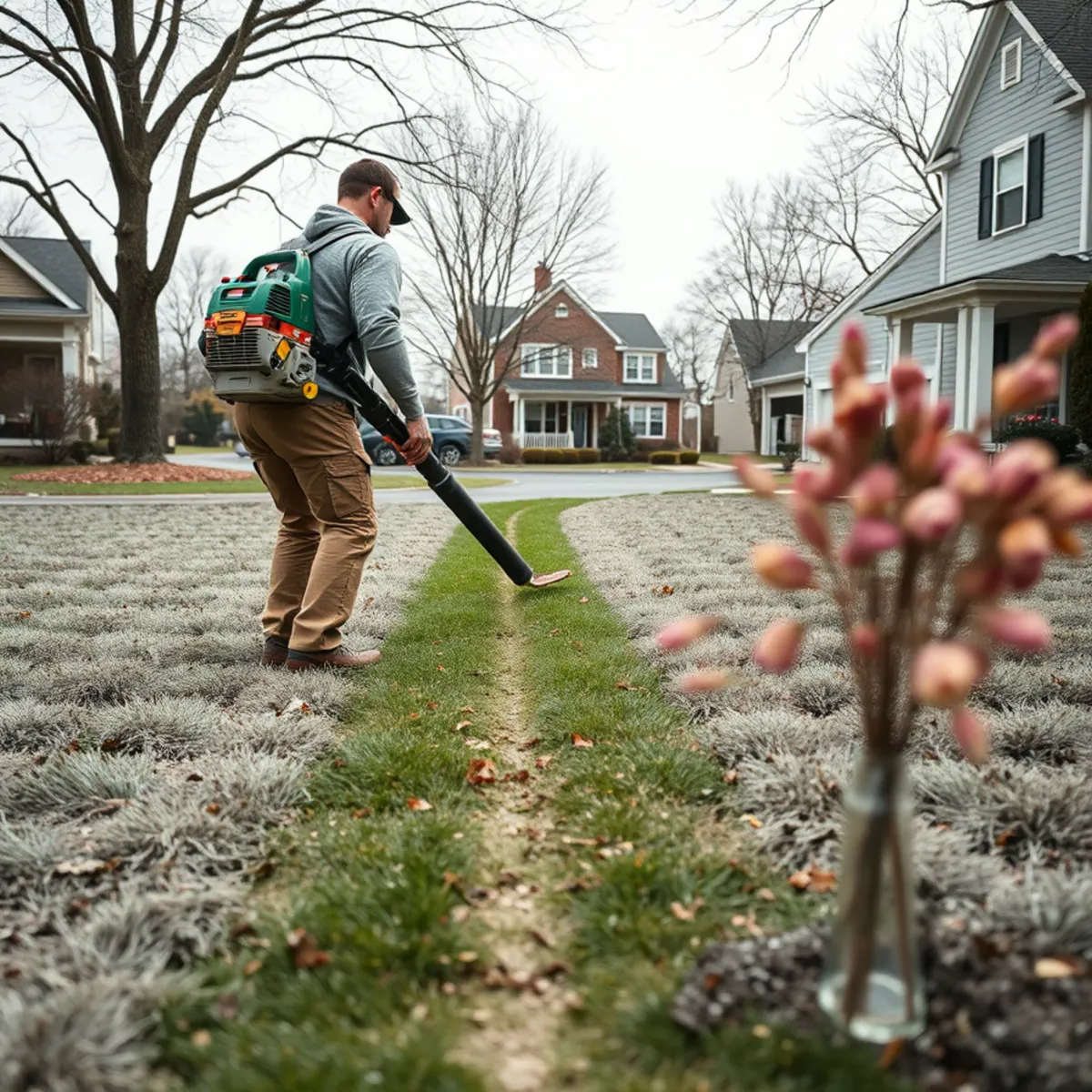
Blow or rake the open areas. What you are removing is not just leaves — it is the matted layer that formed under snow, plus winter sand thrown by plows, gravel pushed into lawn edges, and whatever blew in during January storms.
Getting that material off matters more than it looks. It lets soil warm faster, which means an earlier green-up, and it removes the wet mat that snow mold grows in.
4. Address what winter did

This is where you find the damage. Look for:
- Snow mold — gray or pink circles of matted, crusty grass. Rake it lightly to break up the mat and it usually recovers.
- Vole runways — surface tunnels chewed through the turf. Cosmetic; rake and overseed the worst spots.
- Plow damage along driveway edges — torn sod and displaced loam. Repair with loam and seed now.
- Salt-burned turf strips along the road frontage. Flush with water and apply gypsum.
- Broken branches on shrubs from snow load. Prune out cleanly.
- Frost-heaved perennials pushed up out of the soil. Press them back down firmly.
5. Dethatch if needed
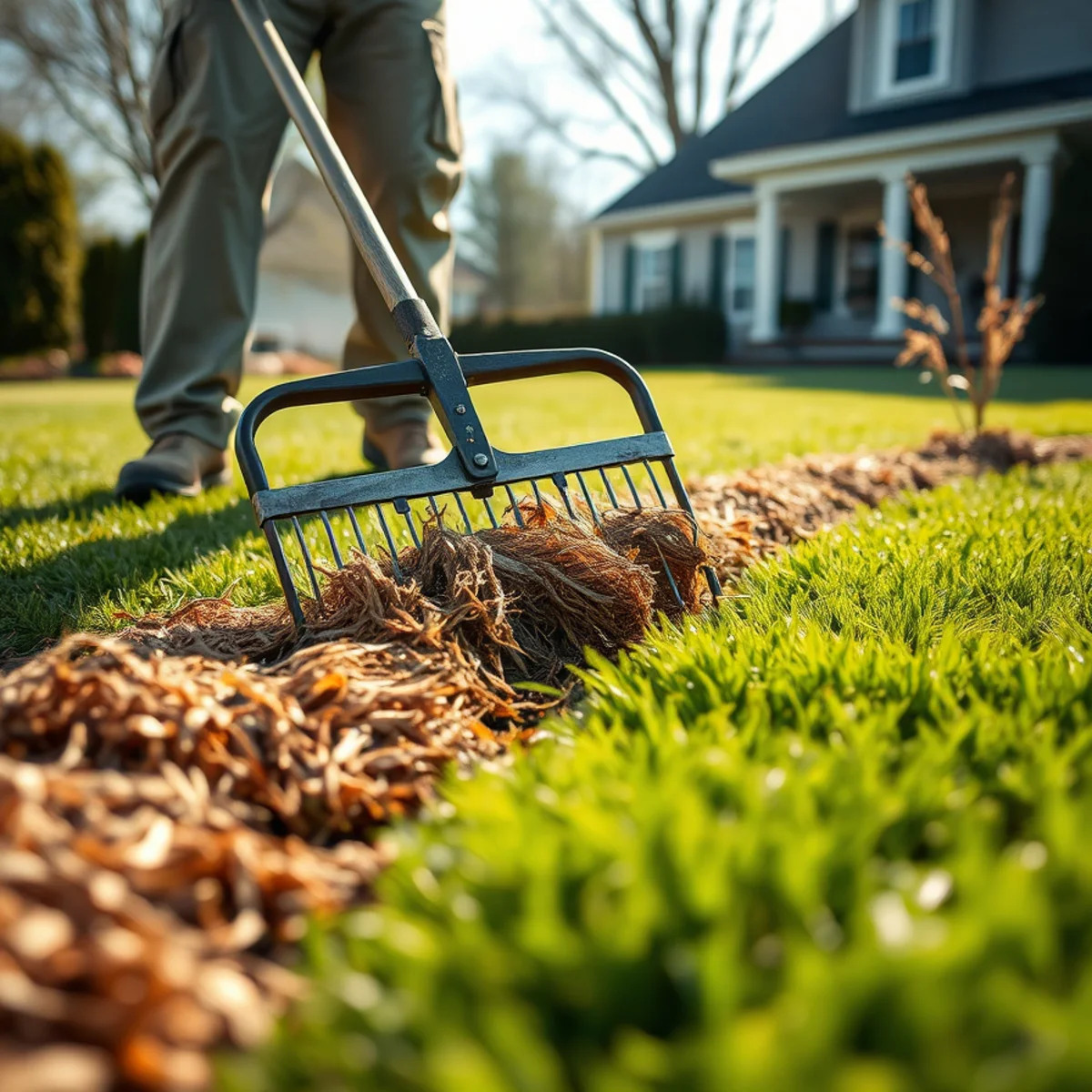
Light dethatching in spring is worthwhile if a heavy mat built up over winter. If the thatch layer is over half an inch and the soil is also compacted, the better answer is fall core aeration — aeration addresses the cause rather than just the symptom.
6. Re-cut the bed edges
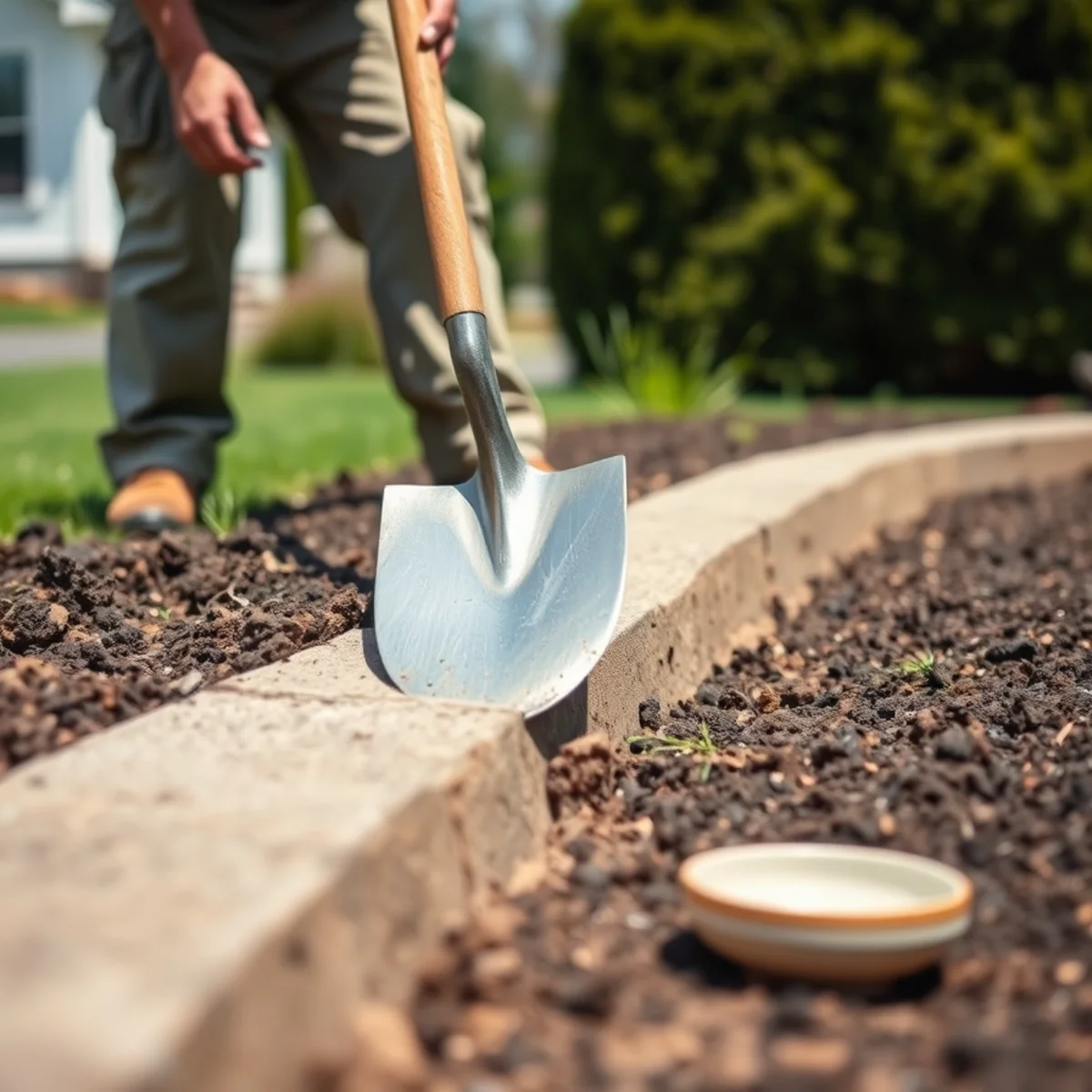
A spaded edge — a clean vertical cut with a shallow trench at the bottom — is what makes a professionally maintained property look different from a well-mowed one. It stops grass creeping into beds, holds mulch in place, and reads as deliberate from the street. It is worth the time it takes.
7. Mulch
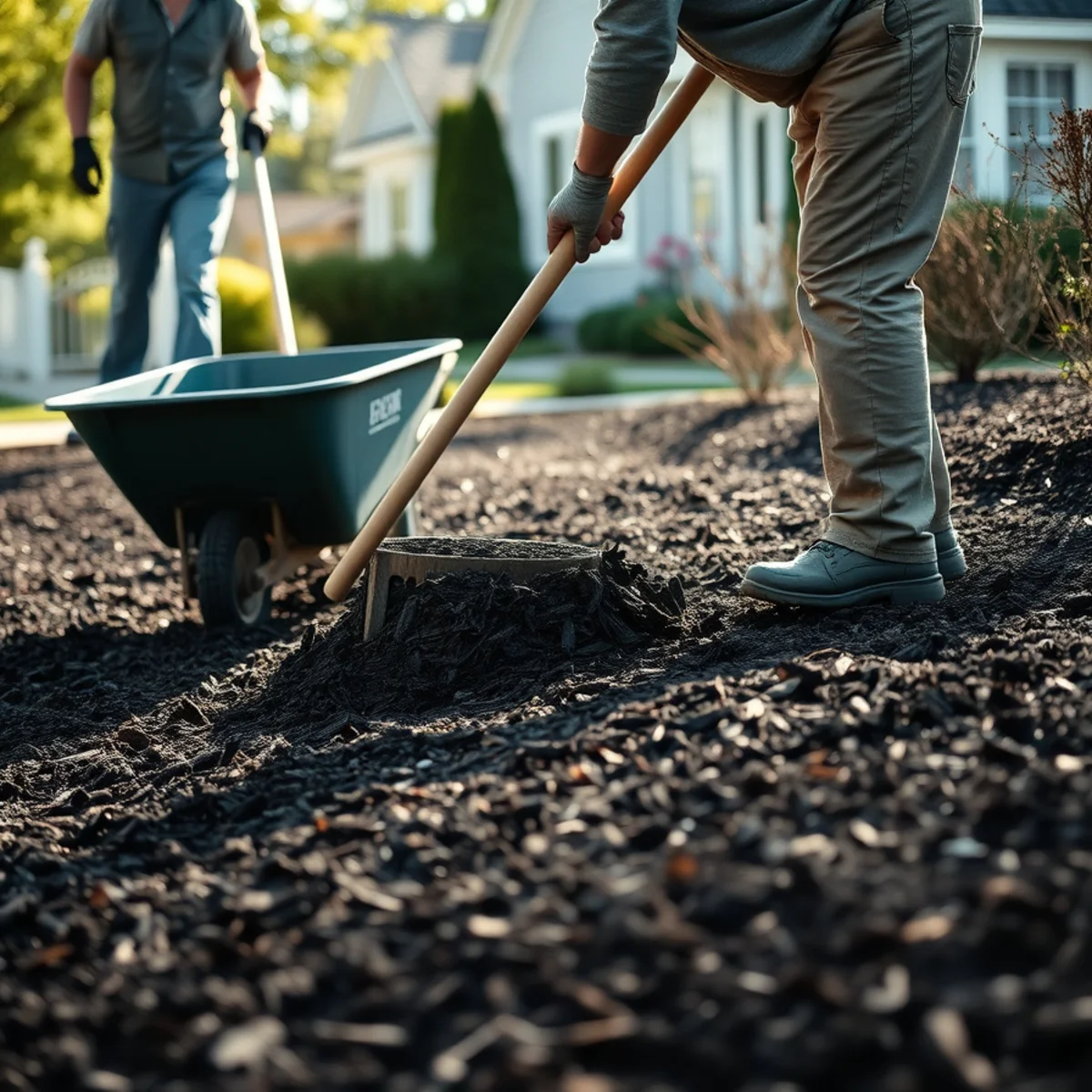
Get mulch down before the heavy April rains, while beds are workable and before weed seed germinates. Two to three inches total depth including what is already there, and pulled back off every trunk and stem. Depth math is covered in our guide on how much mulch you actually need.
8. First mow and blade check

Sharpen the blade before the first cut. Mow at three inches, and if the lawn got long over a warm early spring, take a third now and the rest in a few days rather than scalping it in one pass.
What to do with the material
Leaves and debris should leave the property or go to a compost area. Pushing it into the woods at the back of the lot moves the problem rather than solving it, and it creates the habitat that brings voles back next winter.
What not to do in spring
- Do not prune spring-flowering shrubs — lilac, forsythia, rhododendron, azalea all set buds after they bloom, so spring pruning removes this year's flowers
- Do not apply crabgrass pre-emergent if you intend to seed, because it prevents grass seed from germinating too
- Do not fertilize heavily before growth starts — early nitrogen pushes soft top growth at the expense of roots
- Do not aerate in spring unless the lawn is severely compacted; fall is far better
- Do not roll the lawn to flatten bumps — it compacts soil and rarely fixes anything
The realistic version
A thorough spring cleanup on an average quarter-acre lot with mature plantings is a full day of work for two people, and considerably more on a wooded property. That is why it is the service most homeowners hire out even when they handle their own mowing.
We run spring and fall cleanups across Whitman, Hanson, Abington, and the surrounding towns, and the pre-April-15 slots book first every year.
Frequently Asked Questions
Between when the ground drains enough to walk on without leaving footprints and April 15. After mid-April, perennials and bulbs have emerged and raking beds damages the new growth.
Clearing beds and tight areas by hand, cutting back spent perennials, removing debris and matted material from the lawn, light dethatching where needed, re-cutting bed edges, blowing all hard surfaces, and hauling everything away. Mulch and a first mow are typically bundled in.
Often yes, once the ground has firmed up. March is ideal on well-drained properties. On low-lying or clay-heavy lots, wait — working saturated soil compacts it, and that damage lasts far longer than a two-week delay costs you.
Want this handled for you?
We do this work across Whitman and the South Shore every week. Call (323) 606-0255 for a free on-site estimate — we will tell you honestly what your property needs.