
Fixing Yard Drainage Problems on the South Shore
Three different fixes get used interchangeably and they solve different problems. Choosing wrong is how people spend money and stay wet.
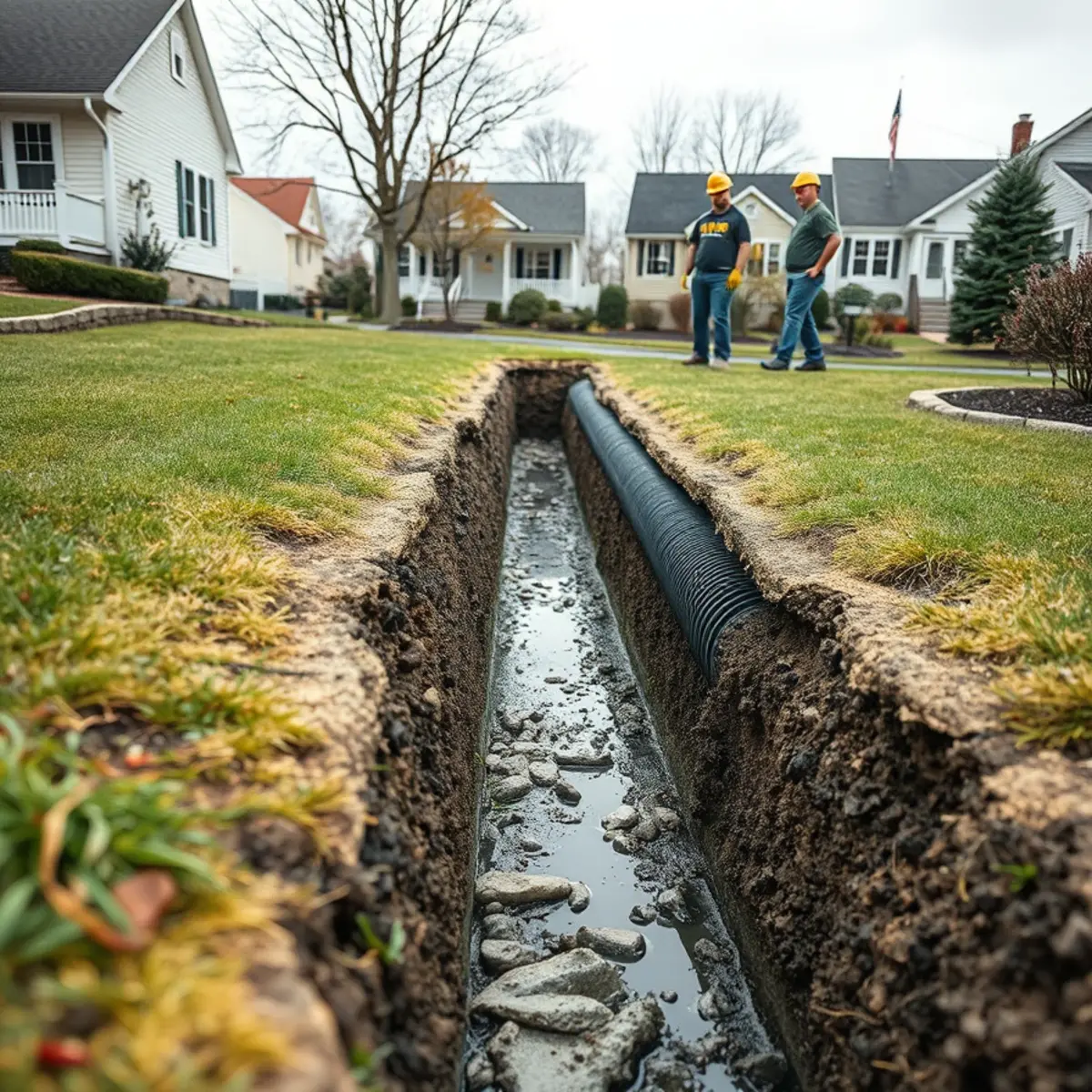
Drainage is the least glamorous work we do and the most consequential. Standing water kills lawns, rots plant roots, undermines patios, breeds mosquitoes, and eventually finds its way into your basement.
It is also the area where the most money gets spent on the wrong solution, because three different fixes get talked about interchangeably.
First: figure out where the water comes from
Before choosing a fix, answer this. It changes everything.
| Source | Sign | Right approach |
|---|---|---|
| Roof runoff | Wet only near downspouts | Bury and extend downspout lines |
| Surface runoff | Water flows in from uphill | Swale or intercepting drain upslope |
| Low spot with no outlet | Ponds after every rain, dries slowly | Regrade if there is somewhere lower |
| Poor percolation | Water sits on flat ground for days | Drain to outlet, or drywell |
| High water table | Wet in spring regardless of rain | Manage rather than eliminate |
| Sump discharge | Wet area right near the discharge | Pipe it well away from the house |
Option 1: Regrading
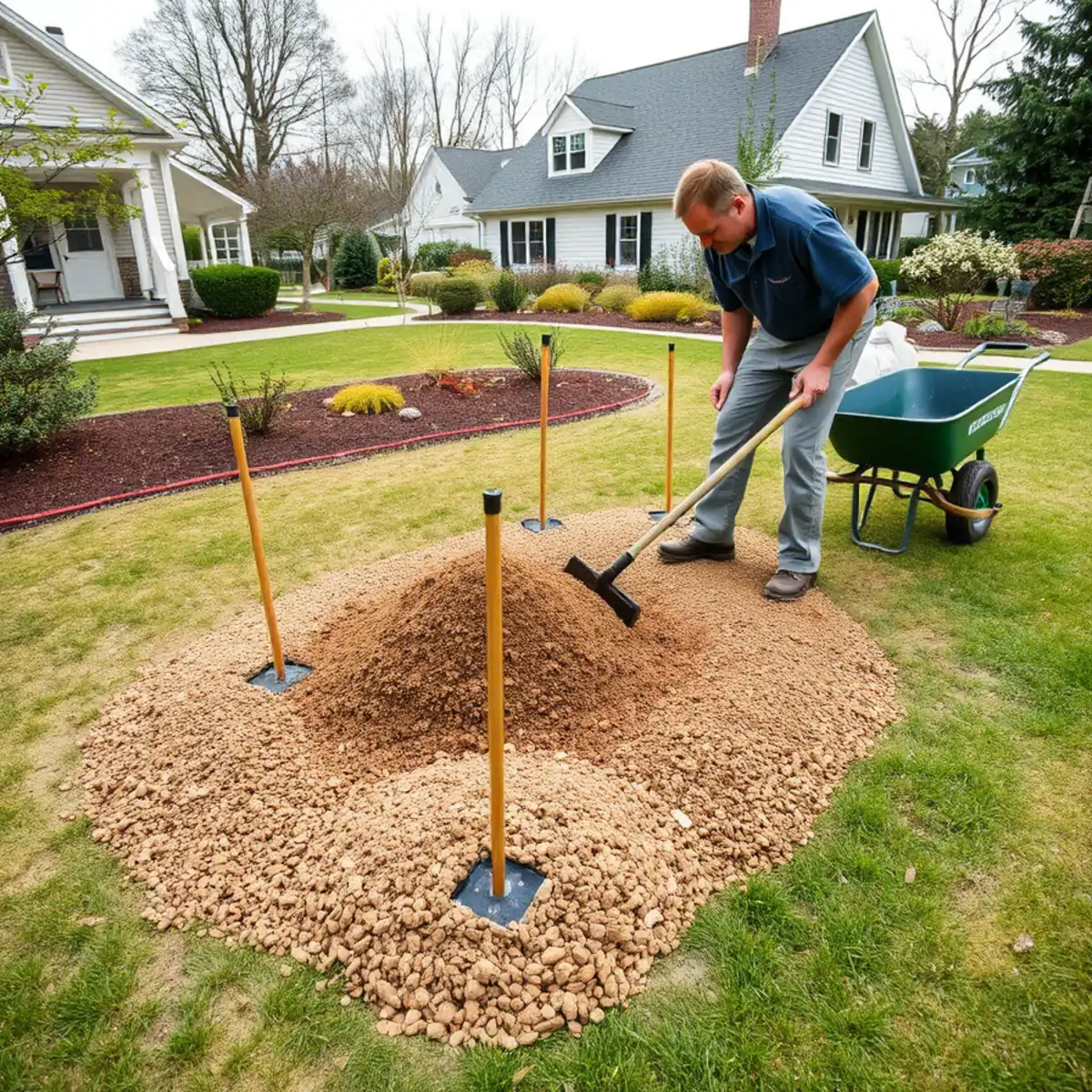
The most overlooked fix and often the best one. If water is sitting in a low spot and there is somewhere lower nearby, reshaping the surface to move it there is cheaper and more reliable than any pipe.
Grade should fall away from the house at roughly six inches over the first ten feet — the same standard we set when installing a new lawn. A surprising number of "drainage problems" are simply a grade that settled toward the foundation over twenty years, and the fix is loam, a rake, and seed.
Regrading is right when: there is a viable low point to send water to, the problem is surface water rather than groundwater, and the area is not so large that the earthwork becomes its own project.
Option 2: French drain
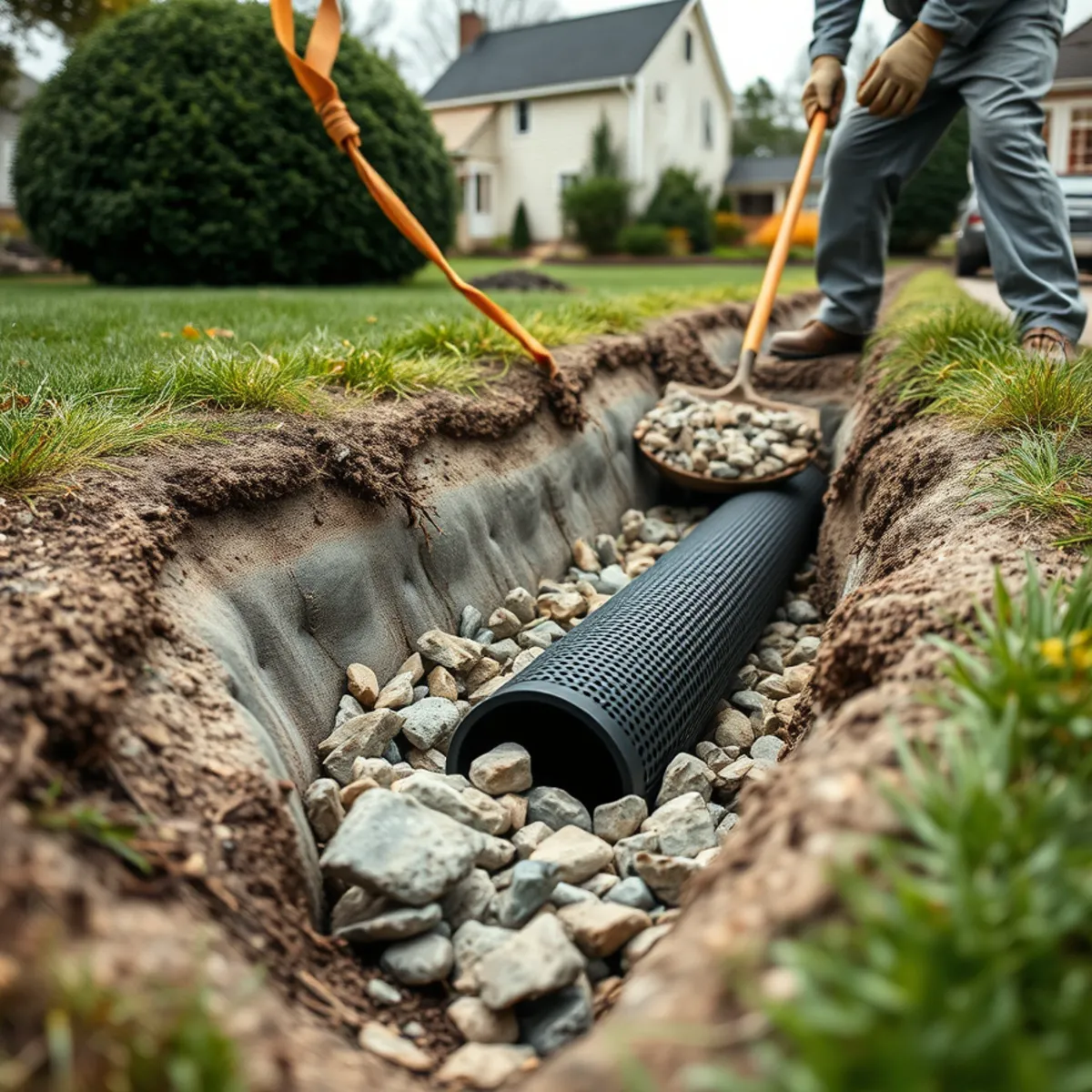
A trench containing washed stone, perforated pipe, and geotextile fabric. It collects water moving through soil and carries it away.
It is the right tool for:
- Chronically soggy areas where the soil itself stays saturated
- Intercepting water flowing downhill toward you from an upslope property
- Relieving hydrostatic pressure against a foundation or behind a retaining wall
- Collecting water along the edge of a driveway or patio that sheds runoff to its border
It is the wrong tool when the actual problem is surface water ponding in a low spot — that wants regrading or a catch basin, and a French drain in that situation just gets overwhelmed.
How one should be built
- 1Trench dug to design depth with consistent pitch to the outlet — a level drain does not drain
- 2Geotextile fabric lining the entire trench
- 3A bed of washed stone (not stone dust, not screened gravel with fines)
- 4Perforated pipe laid with the holes facing down
- 5More washed stone over the pipe
- 6Fabric folded over the top before backfill
- 7Backfill, then loam and seed or sod to restore the surface
The fabric is what keeps silt out. Without it, fines migrate into the stone, clog the voids, and the system stops working in year six. Holes facing down is not intuitive but it is correct — it lets the pipe pick up water from the bottom of the stone bed rather than only after the trench has filled.
Option 3: Drywell
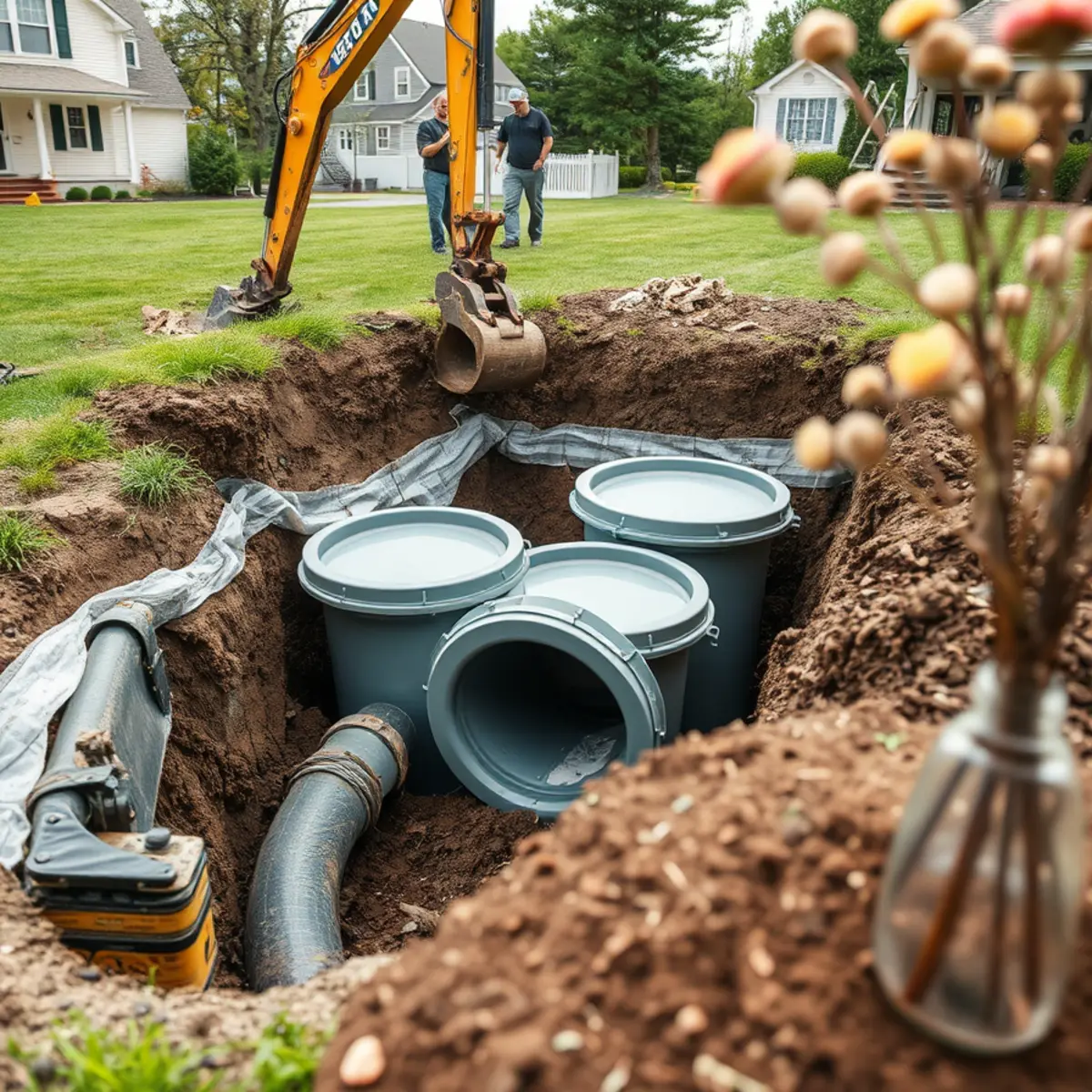
An underground reservoir — a chamber system or a stone-filled pit — that holds collected water and lets it infiltrate slowly into the surrounding soil.
It is the answer when there is no daylight outlet anywhere on the property, which is common on flat lots and on the tighter parcels in towns like Rockland and Quincy.
A drywell only works as fast as the surrounding soil accepts water, which means it must be sized from a percolation test. Dig a hole, fill it with water, and measure how fast the level drops. A drywell installed in heavy clay without that test is just a hole that fills up and stays full.
Most real projects combine all three
A typical solution on a problem lot looks like: downspouts tied into buried solid pipe, a catch basin at the low point of the lawn, a French drain intercepting subsurface flow along the uphill side, everything joined into a single solid line, discharging to daylight at the back of the property or into a properly sized drywell.
The wet basement question
Most wet basements are an outside problem. Water arrives at the foundation wall, finds a crack or a cold joint, and comes in.
The exterior fixes, in order of cost and effectiveness:
- 1Extend downspouts at least ten feet from the foundation, buried and discharging somewhere useful
- 2Correct the grade so it falls away from the house at six inches over ten feet
- 3Install drainage in window wells if they are collecting water
- 4Add a French drain to intercept water before it reaches the wall
- 5On serious cases, excavate to the footing, waterproof the wall, and install a footing drain
Interior systems manage water that has already arrived. Exterior work stops it earlier. Both have their place, and doing the exterior first is usually the better sequence.
When the answer is to work with the water
On some South Shore properties — particularly around the bogs and ponds in Hanson, Halifax, and Carver — the wet area is groundwater, not runoff. The water table is genuinely high, and no drainage system eliminates it.
In those cases the honest recommendation is often to stop fighting it. A rain garden or a planted wet meadow in a spot that will never be dry lawn is a better outcome than reseeding the same soggy patch every April. Native species that want wet feet — winterberry, summersweet, red twig dogwood, joe-pye weed, native ferns — thrive there and look intentional.
Wetlands regulation
Massachusetts protects a buffer zone around wetland resource areas, and in this region a great many back yards fall within one. Grading, drainage outlets, and vegetation removal within that buffer may require Conservation Commission review.
We identify that during the assessment. A permitting conversation before the work is a mild inconvenience; a stop-work order mid-project is not.
If your property has a problem you have been mowing around for years, a drainage assessment starts with a look at where the water actually comes from — ideally during or right after rain, when you can see it happen.
Frequently Asked Questions
A French drain collects and carries water somewhere; a drywell stores it and lets it infiltrate. If there is a lower point on the property to discharge to, a drain to daylight is simpler and more reliable. If there is no outlet, a drywell sized from a percolation test is the answer.
Either it is a low spot with no outlet, or the soil below it does not percolate — common on the clay-heavy glacial till across much of the inland South Shore. Regrading fixes the first. The second needs a drain to an outlet or a drywell.
Frequently more than anything else. One inch of rain on a 1,500 square foot roof is over 900 gallons. Concentrating that at four points beside your foundation creates problems no downhill drain can keep up with. Extending downspouts is the cheapest high-impact drainage fix there is.
Want this handled for you?
We do this work across Whitman and the South Shore every week. Call (323) 606-0255 for a free on-site estimate — we will tell you honestly what your property needs.