
Fall Leaf Removal in Whitman, MA
Maples finish in October. Oaks hold on into November. That gap is why single-pass cleanups leave a second layer to mat under snow.
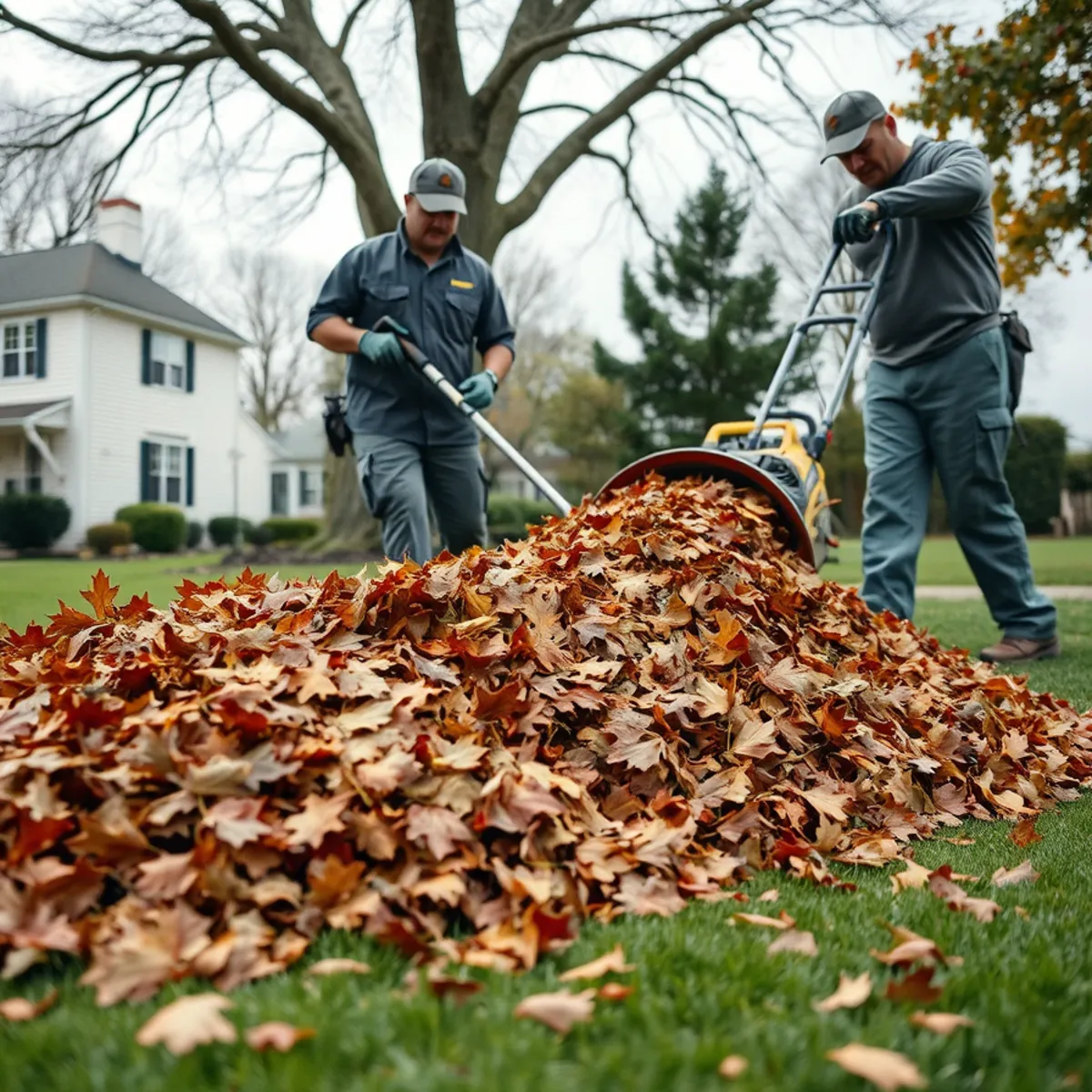
Leaves on a lawn are not a cosmetic problem. A layer of wet leaves left through winter causes real, visible damage that shows up as gray matted patches in April, and it is entirely preventable.
What leaves actually do to turf
A leaf layer blocks light and traps moisture against the grass crown. Under snow, that combination is exactly what snow mold needs — the fungus grows at temperatures just above freezing in dark, damp conditions. The result is the crusty gray or pink circles people find as snow melts.
Leaves also:
- Provide winter cover for voles, which is where the surface tunnels chewed through your lawn come from
- Mat into a layer that sheds water rather than absorbing it, so spring rain runs off instead of soaking in
- Smother turf outright where the layer is thick, killing patches that then need reseeding
- Clog gutters and drainage, which is a foundation problem rather than a lawn problem
The oak problem
This is the local detail that determines your schedule. Different trees drop at different times, and the spread is weeks:
| Tree | Typical drop | Notes |
|---|---|---|
| Ash | Early–mid October | Drops fast, often all at once |
| Maple | Mid–late October | Heavy volume, breaks down reasonably fast |
| Birch | Mid October | Light, blows around easily |
| Oak | Late October into late November | Slow, heavy, resists decomposition |
| Beech | Holds into winter | Some leaves stay on through spring |
Oak leaves are the difficult ones. They are thick, waxy, high in tannins, and they resist breaking down. They also drop weeks after the maples finish. A single cleanup in late October on a property with mature oaks clears the maple drop and leaves the entire oak drop still to come.
That is why we run two passes on most wooded properties across Whitman, Pembroke, Hanson, and the heavily canopied South Shore towns: one in late October, one in mid-to-late November.
Do not wait for every leaf to fall
The instinct is to wait until the trees are bare and do it once. It is the wrong call for two reasons.
First, the leaves already down are causing damage while you wait. Three or four weeks of a wet leaf layer sitting on turf in November does real harm.
Second, once you get past the first hard rain-and-freeze cycle in late November, leaves stop behaving like leaves. They become a compacted mat welded to the turf that has to be scraped rather than blown, which is slower, harder on the lawn, and more expensive.
Mulch-mowing: when it works and when it does not
Mowing leaves into the lawn is genuinely good practice — within limits. Shredded leaf material feeds soil organic matter and there is solid research showing it does not harm turf and may suppress some weed seed.
It works when:
- The layer is thin enough that you can still see grass through it
- The leaves are dry
- You are dealing with maple, birch, or ash rather than heavy oak
- You can make several passes to chop the pieces small
It does not work when:
- You cannot see grass through the layer — that is too much material to disappear into the turf
- Leaves are wet, in which case they clump rather than shred
- The property is dominated by oaks, which produce far more volume and break down far more slowly
On a lightly wooded lot, mulch-mowing can handle most of the season. On a property with mature oaks, it can handle the early light drops and then the volume exceeds what the lawn can absorb.
The rest of the fall list
A proper fall cleanup is more than leaves:
- 1Clear all beds, foundation lines, under decks, and behind structures — the same spots that get skipped in spring
- 2Cut back spent perennials, leaving ornamental grasses standing if you want winter interest
- 3Remove fallen fruit and nuts, which attract rodents through the winter
- 4Final mow at around two and a half inches so grass does not fold over and mat under snow
- 5Clear gutters and downspout outlets
- 6Drain and store hoses; winterize the irrigation system before a hard freeze
- 7Cut back and clear anything overhanging walkways before ice makes it a hazard
Late fall is also the right time for lime
Once the cleanup is done, lime applied in late fall gets worked into the soil by winter freeze-thaw cycles and snowmelt over the following months. Given how acidic soil is across this region, that is one of the most valuable things you can do — the reasoning is laid out in our article on soil pH and why Massachusetts lawns fail.
And book snow before you need it
While you are thinking about fall, book winter. Reliable snow removal contractors fill their routes by September, because equipment and hours are finite. The calls we get in late November are almost always from people whose previous plow contractor stopped answering.
Frequently Asked Questions
If you have mature oaks, two — one in late October after the maples finish and one in mid-to-late November once the oaks are down. Open lots with few trees are usually fine with a single pass.
Up to a point. If you can still see grass through the layer and the leaves are dry, mulch-mowing works well and feeds the soil. Once the layer is thick enough to hide the grass, or on a property dominated by oaks, the volume exceeds what the lawn can absorb.
Snow mold, vole damage, and smothered patches that need reseeding. A leaf layer trapped under snow is dark, damp, and just above freezing all winter — the exact conditions the fungus needs.
Want this handled for you?
We do this work across Whitman and the South Shore every week. Call (323) 606-0255 for a free on-site estimate — we will tell you honestly what your property needs.