
Bluestone, Brick or Concrete Paver: Choosing a Walkway Material
Three materials, three very different answers depending on the house, the budget and how much winter maintenance you are willing to do.
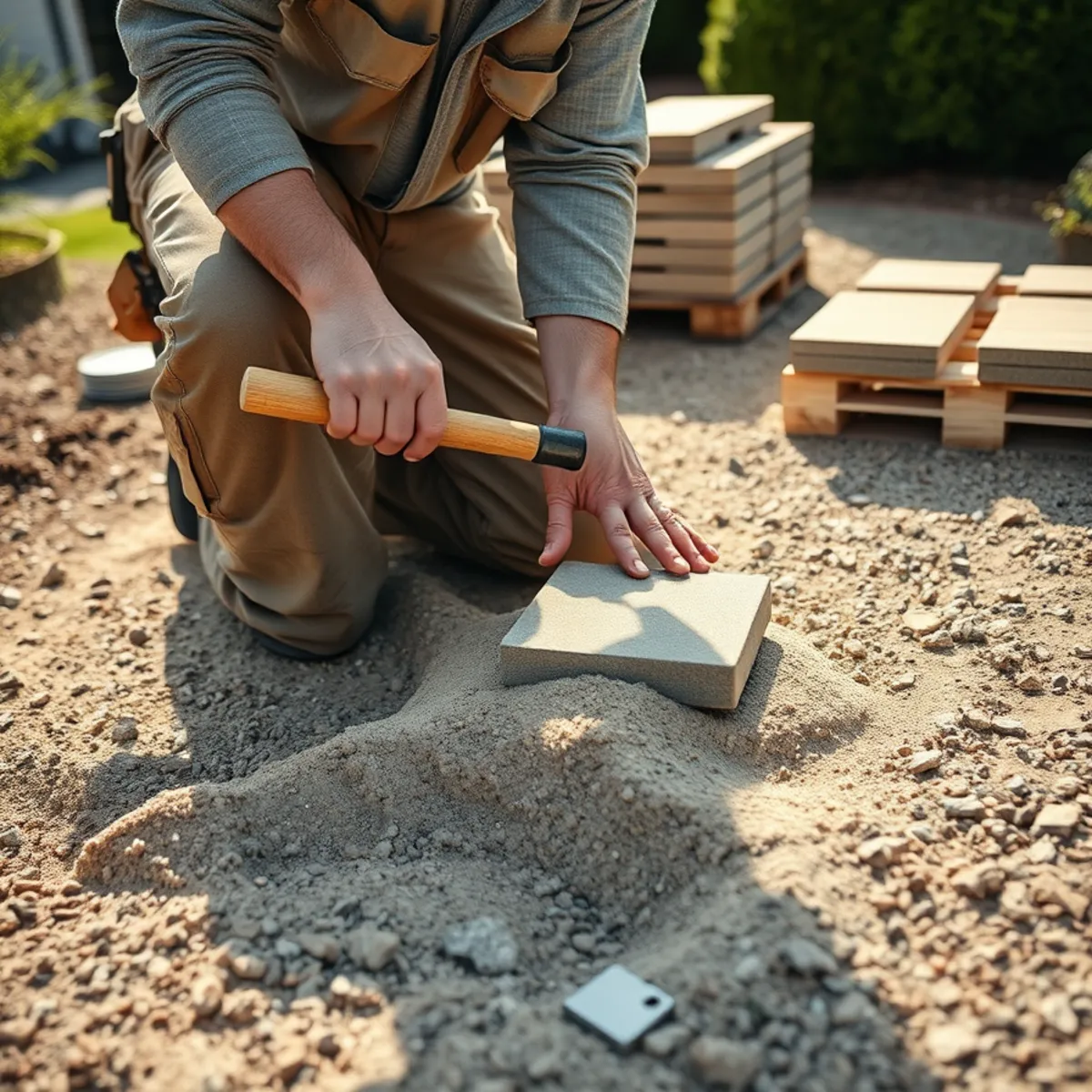
People usually arrive at this decision having already been told that one of the three is "the best". None of them is. They fail and succeed for different reasons, and the right answer depends on the house you are putting it in front of, what you want to spend, and how you feel about January.
One thing is true of all three: the material is not what decides whether your walkway is flat in fifteen years. The base is. We have pulled up beautiful full-thickness bluestone that heaved because it was set on four inches of gravel, and we have re-levelled budget concrete pavers that were still perfectly sound underneath after twenty years. Choose the material for how it looks and how it wears, then spend properly on what goes under it.
Natural bluestone
Pennsylvania and New York bluestone is the default premium choice in this part of the country, and it has earned it. It is a dense sandstone that holds up to freeze-thaw, it does not fade, and it suits almost every older New England house because it is the material those houses were originally built around.
It comes in three broad forms. Thermal bluestone has a flamed, slightly textured surface and sawn edges — the most formal look and the best grip of the three. Pattern-cut is sawn to rectangular sizes and laid in a repeating pattern. Irregular, sometimes called flagging, is broken-edge stone fitted together with wider joints; it is the most informal and the most labour-intensive to set well.
The real distinction to ask about is thickness. Full-thickness bluestone is typically an inch and a half to two inches and can be dry-laid on a proper base. Thin bluestone, around three-quarters of an inch, has to be mortared onto a concrete slab — and a rigid assembly is exactly what you do not want in ground that moves. If someone quotes you bluestone at a surprisingly low number, ask which one they mean.
- Best for: older or architecturally significant houses, formal entries, anywhere you want the walk to look original to the property
- Lifespan: effectively indefinite if dry-laid on a correct base
- Winter: thermal finish grips well; irregular flagging can be slick where it is smooth
- Watch for: thin stone that needs a mortar bed, and "bluestone" that is actually a dyed concrete product
Clay brick
Brick is the material most people underrate. Its single biggest advantage is that the colour is the material — a clay brick is the same colour all the way through and will look the same in thirty years as it does on day one. Concrete products are pigmented and will soften in tone over time.
It also happens to be the right answer for a great many houses around here. Colonials, Capes, Federals and most of the older housing stock in towns like Hingham, Dedham and Milton were built in a brick-and-granite vocabulary, and a brick walk simply looks correct in front of them in a way that a modern paver rarely does.
The caution is that you must use a genuine paving brick rated for exterior use underfoot. Reclaimed building brick looks wonderful and is often softer, more absorbent and prone to spalling once it has gone through enough freeze-thaw cycles saturated with water. We like reclaimed brick for its appearance and we will tell you plainly that it is a shorter-lived walk.
- Best for: colonial, Federal, Cape and Victorian houses; anywhere permanent colour matters
- Lifespan: decades for true paving brick; noticeably less for reclaimed building brick
- Winter: good grip; narrow units mean more joints, which means more places for moss in shade
- Watch for: softer reclaimed brick being sold for a surface that gets shovelled
Concrete paver
Modern concrete pavers are a genuinely good product and they are the most economical of the three by a clear margin. They are manufactured to consistent dimensions, which makes them faster to set, and they come in a wide range of shapes and colour blends. For a long run of walk, or where the budget has to cover a patio as well, they are often the sensible choice.
The honest drawbacks are two. The colour is a pigment through a wear layer rather than the body of the material, so expect some softening of tone over fifteen to twenty years, particularly in strong sun. And the colour blends that look current now tend to date — a blend that was everywhere ten years ago reads as exactly ten years old today. The muted greys and tans age far better than anything strongly coloured.
- Best for: longer runs, newer houses, budgets that also have to cover a patio or a driveway apron
- Lifespan: twenty-five years or more structurally; appearance softens sooner
- Winter: good grip, and the tight joints shed water well
- Watch for: fashionable colour blends that will date the walk
Pea stone and steppers
For a secondary garden path — a route to a shed, a bed walk, something that is not the main entry — loose pea stone or fieldstone steppers set into lawn or groundcover cost a fraction of any of the above and look appropriate precisely because they are informal. They are not suitable for a front entry, they are difficult to shovel, and they need topping up. Used in the right place they are excellent value.
How the three compare
| Bluestone | Clay brick | Concrete paver | |
|---|---|---|---|
| Relative cost | Highest | Middle | Lowest |
| Colour over time | Does not fade | Permanent — colour is the clay | Softens over 15–20 years |
| Winter grip | Excellent (thermal) | Good | Good |
| Repairability | Individual units lift and reset | Individual units lift and reset | Individual units lift and reset |
| Suits older houses | Very well | Very well | Depends on the blend |
| Joint maintenance | Wider joints, more upkeep | Many joints | Tight joints, least upkeep |
What we would choose
For an antique or colonial house, clay brick or thermal bluestone, almost without exception. For a mid-century or contemporary house, a muted concrete paver in a simple pattern, with the money saved going into a wider walk and a deeper base. For a garden path that is not the main entry, steppers or pea stone.
And if the budget will not stretch to the material you want at the width you need, go narrower on material cost and never on base depth or width. A four-foot concrete paver walk on a proper base is a far better outcome than a three-foot bluestone walk on four inches of gravel.
Frequently Asked Questions
Full-thickness natural bluestone on a correctly built base, by a clear margin. True clay paving brick is close behind and holds its colour permanently. Concrete pavers are structurally sound for decades but their colour softens sooner. All three outlive their base if the base is wrong, which is why construction matters more than the material choice.
Thermal bluestone, which has a flamed textured surface, grips well and is what we use for entries. Smooth-sawn or naturally smooth irregular flagging can be slick when wet or icy. If winter footing is a concern, specify a thermal finish rather than avoiding bluestone altogether.
You can, and it looks superb, but go in knowing it is a shorter-lived surface. Much reclaimed brick is softer building brick rather than paving brick, and once it is saturated and freezing repeatedly it will begin to spall. For a low-traffic garden path that is a reasonable trade. For a main entry that gets shovelled and salted, we would steer you to a true paver brick.
Not meaningfully. Base depth is driven by the subgrade, the drainage and the frost, not by what sits on top. The one real exception is thin bluestone, which requires a mortar bed on a concrete slab — a different and considerably more rigid assembly that we generally avoid in ground that moves.
Want this handled for you?
We do this work across Whitman and the South Shore every week. Call (323) 606-0255 for a free on-site estimate — we will tell you honestly what your property needs.