
Fall Aeration and Overseeding in Whitman, MA
The highest-return service on any established lawn, and the reason spring aeration is a worse deal than most people realize.
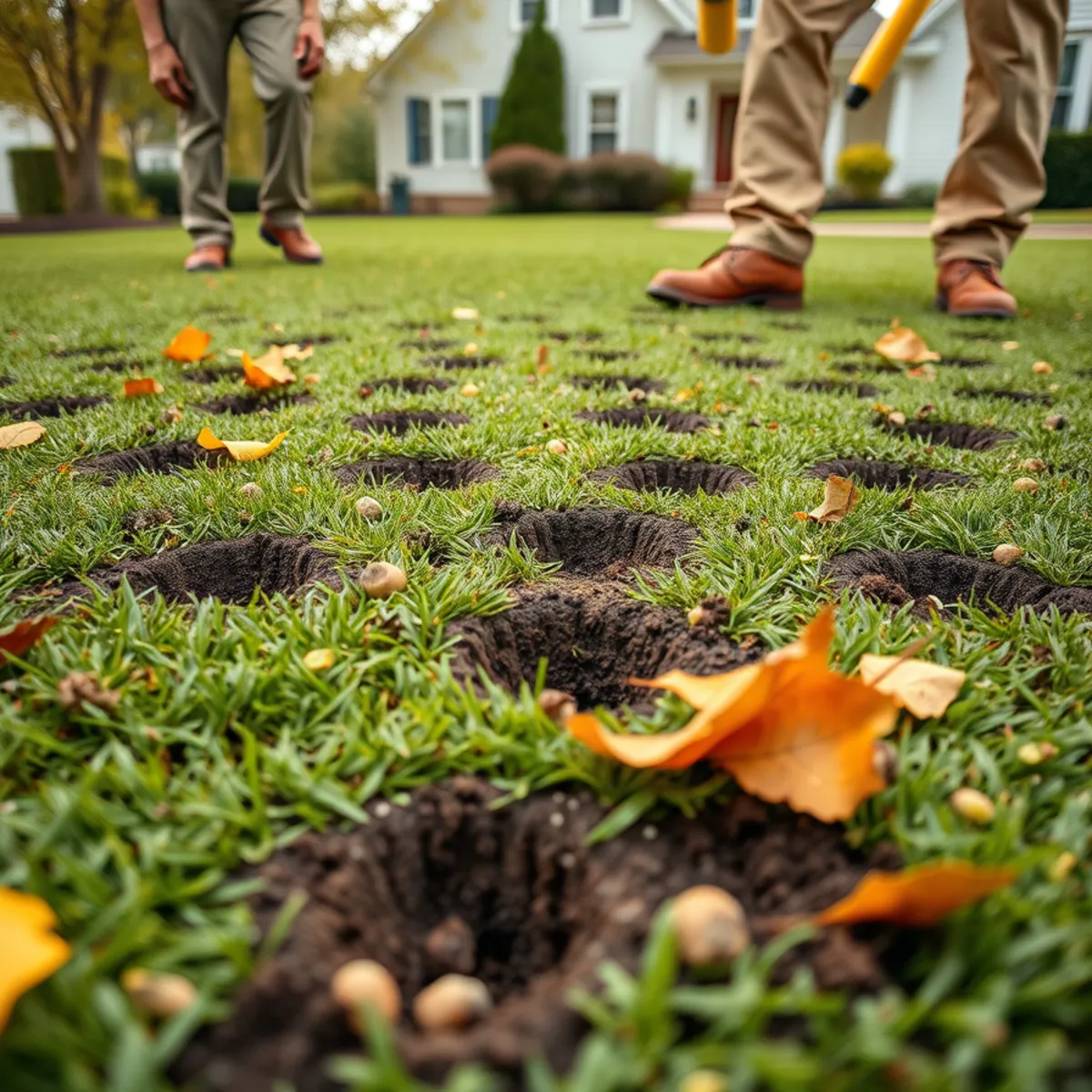
If you can only afford one lawn service a year, this is the one. Core aeration paired with overseeding in September produces more visible improvement on an established lawn than any other single thing you can do to it.
What compaction is doing to your lawn
Soil is not solid. Healthy soil is roughly half solid particles and half pore space, and those pores hold the air and water roots need. Compaction squeezes the pores closed.
It happens gradually from everything: foot traffic, mower wheels, kids, dogs, rain impact, and the settling that happens naturally over years. Clay-heavy soils compact faster because the particles are small and pack tightly. A lot of Whitman sits on glacial till with enough clay to make this a real problem.
Once soil is compacted, a cascade follows:
- Water cannot infiltrate, so it pools or runs off instead of soaking in
- Roots cannot push down, so they stay in the top inch of soil
- Shallow roots mean no drought reserve, so the lawn browns in the first dry week
- Thatch builds because soil microbes that digest it need oxygen they no longer have
- Weeds that tolerate compaction — plantain, knotweed, crabgrass — outcompete the turf
How to tell if your lawn is compacted
The screwdriver test, done a day after rain: push a screwdriver into the lawn with hand pressure. If it will not go six inches in easily, roots are struggling as much as the screwdriver is.
Other reliable signs: water standing after normal rain, thin strips along walkways and gates where traffic concentrates, a spongy feel underfoot from thatch buildup, and a lawn that browns off fast every summer despite watering.
Core aeration versus spike aeration
This matters. A core aerator pulls actual plugs of soil out of the ground, leaving open holes and physically removing material so the surrounding soil can expand into the space.
A spike aerator — including the shoe attachments sold online — pushes a solid spike into the ground. It does not remove anything. It displaces soil sideways, which compacts the walls of the hole. On already-compacted soil, spiking makes the problem marginally worse.
Only core aeration does the job. If someone quotes you aeration, ask whether the machine pulls plugs.
Why September beats April
You can aerate in spring. It is just a worse deal, for four separate reasons that compound.
1. Fall growth goes into roots
Cool-season grass has two growth surges. The spring flush goes largely into top growth. The fall surge goes into roots, crown density, and carbohydrate storage — which is exactly what you want new seedlings doing before winter.
2. Germination conditions are better
In early September, soil is still warm from summer, which drives fast germination. Air temperatures are dropping, so seedlings are not fighting heat stress. Rainfall is more reliable than in June. Seed sown in September gets eight to ten favorable weeks to establish.
3. The crabgrass conflict disappears
This is the one most people miss. Crabgrass germinates in spring, and it needs light and bare soil — which is precisely what aeration creates. Meanwhile, you cannot apply crabgrass pre-emergent alongside grass seed, because it prevents both from germinating. So spring aeration and overseeding forces a choice: seed the lawn, or protect it from crabgrass. In fall, crabgrass is done for the year and there is no conflict.
4. Weed pressure generally is lower
Most annual weeds have finished their cycle by September. New grass seedlings face far less competition for light and space than they would in May.
How the work should be done
- 1Mow shorter than usual and mark sprinkler heads, invisible fence wire, and shallow utility lines
- 2Water the day before if the soil is dry — an aerator cannot pull a full-depth core from bone-dry ground, which is one reason we tie this in with irrigation checks
- 3Aerate in multiple passes at angles to each other; one pass gives baseline coverage, compacted areas need two or three
- 4Leave the plugs on the surface — they break down in two weeks and top-dress the lawn with soil and microbes
- 5Overseed the same day while the holes are open, so seed falls into them
- 6Apply starter fertilizer, and lime if your soil test calls for it
- 7Water lightly and frequently until germination, then taper to deeper and less often
Seed selection matters as much as the aeration
Match the blend to your actual conditions, not to what is on sale:
| Condition | What to use | Why |
|---|---|---|
| Full sun, kids and dogs | Kentucky bluegrass with rye | Spreads by rhizomes, repairs its own damage |
| Shade under oaks and maples | Fine fescue blend | Tolerates low light and low fertility |
| Sun with drought stress | Turf-type tall fescue | Roots deep, handles heat far better |
| Need fast cover | Perennial ryegrass in the mix | Germinates in 7–10 days |
Most of the lawns we seed get a blend chosen for that specific yard, and it is common to use two different mixes on one property — a sun blend out front and a fescue-heavy mix in the shaded back. Details on species selection are covered further in our piece comparing sod and hydroseeding for Massachusetts lawns.
What to expect afterward
Perennial ryegrass shows in seven to ten days. Fescues take two to three weeks. Kentucky bluegrass can take up to four weeks and does not really fill in until the following spring — that is normal, not a failure.
Keep the surface consistently moist until germination, which usually means light watering once or twice a day. Then shift to deeper, less frequent watering to drive roots down. Hold off mowing until the new grass reaches about three and a half inches, and use a sharp blade for that first cut.
One season of this makes a visible difference. Three consecutive years transforms a lawn. We run core aeration and overseeding through September across Whitman, East Bridgewater, and the surrounding towns — and the schedule fills, which is why we tell people to book in August.
Frequently Asked Questions
Most lawns benefit from annual fall aeration. Heavy clay soil, high-traffic yards, and lawns with dogs should be done every year without question. Sandy, low-traffic lawns can go every other year.
Not if you are overseeding. Pre-emergent stops grass seed germinating as effectively as it stops crabgrass. That conflict is a major reason fall is the right season for this work — crabgrass is finished by then.
Aeration alone is still worthwhile in October. Overseeding gets risky after the first week or so, because seedlings need several weeks of growth before hard frost. If you have missed September, aerate and lime now and plan to seed next fall.
Want this handled for you?
We do this work across Whitman and the South Shore every week. Call (323) 606-0255 for a free on-site estimate — we will tell you honestly what your property needs.