
How Often to Water a Lawn in Massachusetts
Most people water too often and not deeply enough. Here is the measurement method that turns guesswork into a number.
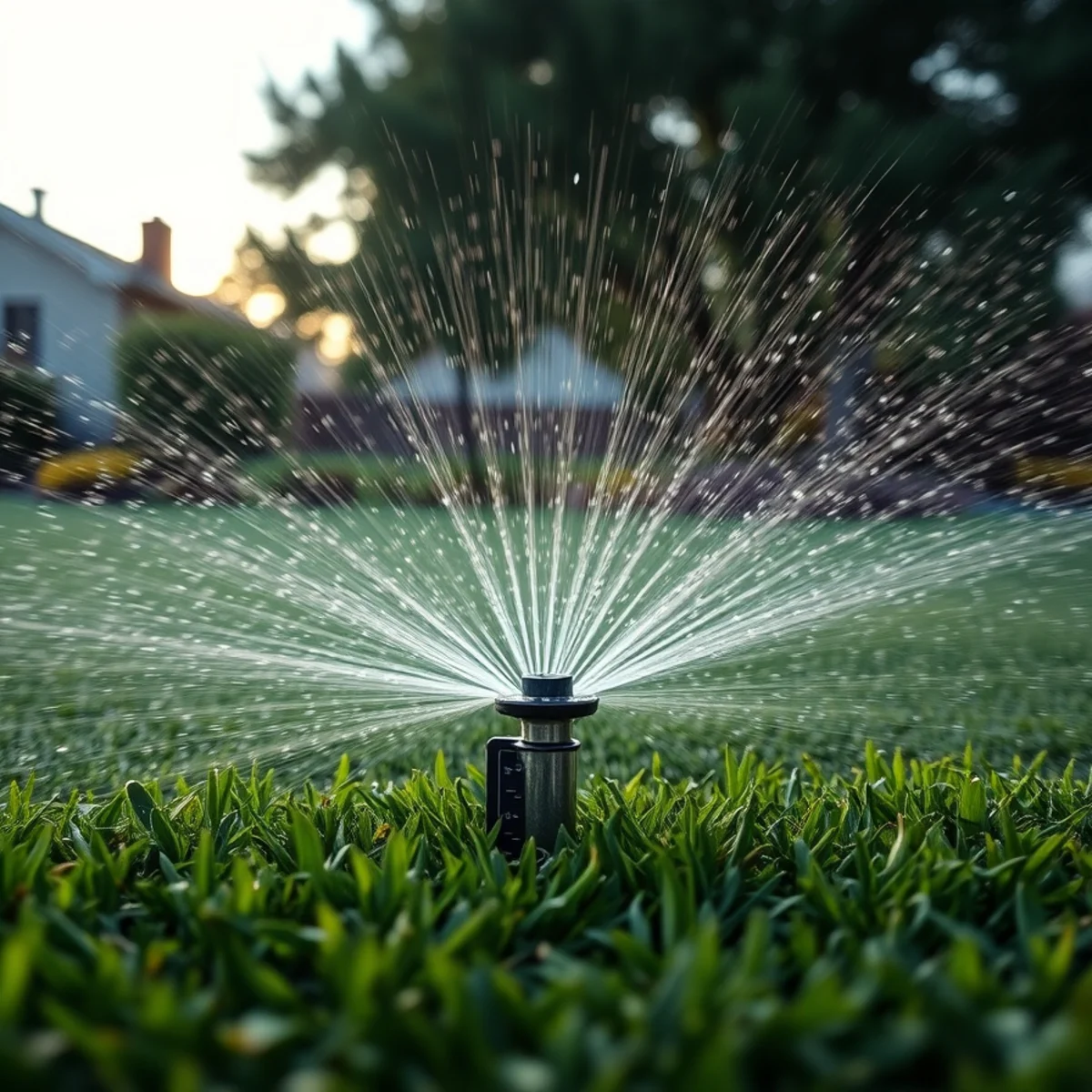
Watering is the variable homeowners get wrong most often, and it is almost never about total volume. It is about frequency, depth, and time of day.
One inch per week, including rain
That is the number for cool-season grass in this climate through the growing season. Not one inch of run time — one inch of actual water depth delivered onto the lawn.
How you deliver that inch matters more than the number itself. Applied in one or two deep sessions, it soaks six to eight inches down and pulls roots after it. Split into seven daily fifteen-minute sessions, the same total never wets more than the top inch of soil, and roots stay there because there is no reason to go deeper.
The lawn watered daily is the one that browns out first in August. Its roots have never had a reason to go looking for water.
Deep and infrequent, in practice
One or two sessions a week during normal conditions. Three during a genuine heat wave, still deep each time. Let the surface dry between sessions — a constantly damp surface encourages fungal disease and shallow rooting simultaneously.
Established lawns handle this easily. Newly seeded and newly sodded lawns are the exception and follow completely different rules until they establish, which is covered in our comparison of sod and hydroseeding.
Water between 4 and 6 in the morning
Early morning is best for three separate reasons:
- Wind is calmest, so sprinkler patterns are not distorted and coverage stays even
- Evaporation loss is minimal compared to midday, when a meaningful share never reaches the soil
- Grass blades dry quickly as the sun comes up, which limits fungal disease
Evening watering is the worst option in this climate. Grass that stays wet through an eight-hour overnight period is ideal for brown patch and dollar spot, both of which are common here in humid July weather. If you can only water in the evening, do it early enough that blades dry before dark.
How to measure what you are actually applying
This takes fifteen minutes once and removes all the guesswork:
- 1Set four or five straight-sided containers around the area a sprinkler covers — empty tuna cans are the classic choice
- 2Run the sprinkler or zone for exactly fifteen minutes
- 3Measure the depth of water in each container with a ruler
- 4Average them, then multiply by four to get inches per hour
If you collected a quarter inch in fifteen minutes, that zone delivers one inch per hour, and you need sixty minutes per week split across one or two sessions.
The variation between containers is just as informative as the average. If one holds a half inch and another holds an eighth, you have a coverage problem — a misaligned head, a clogged nozzle, or spacing that does not overlap correctly. No amount of run time fixes uneven coverage. That is exactly what a proper irrigation audit and adjustment is for.
Cycle and soak on slopes and clay
If water runs off the lawn onto the driveway before the zone finishes, you are applying faster than the soil can absorb. Common on slopes and on the clay-heavy soil found across much of Whitman and the inland South Shore.
The fix is splitting the run. Instead of twenty minutes straight, run two ten-minute cycles an hour apart. The first cycle wets the surface, the pause lets it absorb, and the second cycle penetrates instead of running off. Most modern controllers can do this automatically.
Adjust through the season
| Period | Typical need | Notes |
|---|---|---|
| April–May | Often none | Spring rain usually covers it; check before running |
| June | ~1"/week | Start monitoring as growth slows and heat builds |
| July–August | 1–1.5"/week | Peak demand; deep sessions only |
| September | ~1"/week | Critical if you overseeded |
| October | Reduce | Cool air, lower demand, more rain |
| November | Stop and winterize | Blow out systems before hard freeze |
Dormancy is not death
When a cool-season lawn browns off in an August drought, it has gone dormant. That is a survival strategy, not a failure, and the crowns remain alive.
If watering restrictions are in effect — which happens on the South Shore in dry summers — roughly a half inch every two or three weeks keeps crowns hydrated without trying to maintain green. The lawn comes back when rain returns in September. What kills a dormant lawn is heavy traffic while it is brown, not the lack of water.
Beds and shrubs are different
Established trees and shrubs want slow, deep soaking at the drip line every week or two during dry weather — not the frequent light application a lawn zone provides. Lawn spray heads also wet foliage and often miss the root zone entirely under mulch.
Beds should be on their own drip zone — something we handle as part of irrigation setup and adjustment. Drip delivers water directly to the root zone with almost no evaporation loss, and it keeps foliage dry, which matters for disease.
New plantings are the exception in the other direction. A shrub installed this season needs deep watering weekly through its first full year, regardless of how established the bed around it looks — which is why our planting projects come with a written watering schedule.
Frequently Asked Questions
About one inch, including rainfall, through the growing season. Deliver it in one or two deep sessions rather than daily light watering, so roots grow down instead of staying at the surface.
Yes, in this climate. Grass that stays wet overnight for eight hours is ideal for brown patch and dollar spot. Early morning, between 4 and 6 a.m., is the right window.
Not to bring it back mid-drought. Roughly a half inch every two or three weeks keeps the crowns alive, and the lawn greens up on its own when rain returns. Repeatedly breaking and re-entering dormancy is harder on the plant than staying dormant.
Want this handled for you?
We do this work across Whitman and the South Shore every week. Call (323) 606-0255 for a free on-site estimate — we will tell you honestly what your property needs.