
When to Prune Shrubs in Massachusetts: A Calendar
Cut a lilac in March and it stays perfectly healthy — and produces no flowers. Timing matters more than technique.
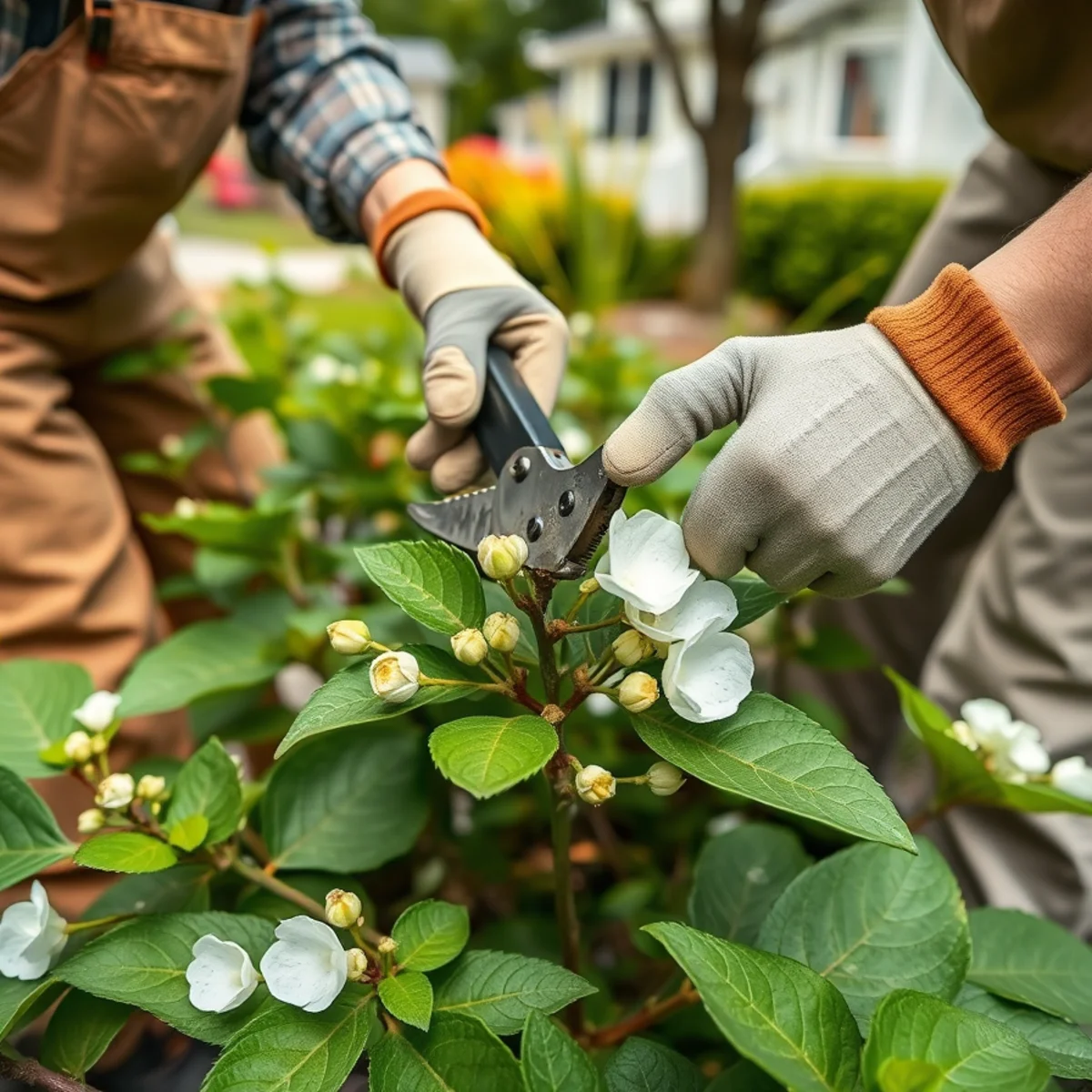
Pruning is the one landscape task where timing matters more than technique. Cut a lilac in March and the plant is perfectly healthy — and produces no flowers, because you removed every bud it set the previous summer.
The rule that covers most of it
Shrubs that flower in spring bloom on old wood — buds formed the previous growing season. Prune them right after they finish flowering.
Shrubs that flower in summer bloom on new wood — growth produced this season. Prune them in late winter before growth starts.
That single distinction resolves the majority of pruning questions. The rest is evergreens and structural work.
Late winter: February to March
Before buds break. This is the window for summer bloomers and for structural work, because with the leaves off you can actually see branch architecture.
| Plant | What to do |
|---|---|
| Panicle hydrangea (PeeGee, Limelight) | Cut back hard — blooms on new wood, stronger stems result |
| Smooth hydrangea (Annabelle) | Cut back to 12–18 inches |
| Butterfly bush | Cut back hard to 12 inches |
| Summersweet | Thin oldest stems |
| Roses (shrub and knockout) | Reduce by about a third, remove dead wood |
| Red twig dogwood | Remove a third of oldest stems for bright new color |
| Most deciduous shrubs | Structural work — dead, damaged, crossing branches |
| Overgrown forsythia, spirea, privet | Hard renovation cuts if needed |
Right after bloom: spring into early summer
The narrow one. Spring bloomers set next year's buds within a few weeks of finishing this year's flowers, so the window is short.
| Plant | Prune by |
|---|---|
| Forsythia | Within 2–3 weeks of bloom finishing |
| Lilac | Immediately after flowers fade — mid-June at the latest |
| Rhododendron | Right after bloom; deadhead spent trusses by hand |
| Azalea | Right after bloom |
| Mountain laurel | Right after bloom |
| Bigleaf hydrangea (blue/pink mophead) | Right after bloom, and lightly |
| Weigela | After bloom |
| Deutzia and mock orange | After bloom |
Early summer: June
New growth on evergreens has hardened enough to shear cleanly. This is the main shaping pass for formal hedges.
- Yew — shear or hand-prune to shape
- Boxwood — main shearing; thin the interior periodically to let light in
- Privet — shear; it can take several cuts a season
- Arborvitae and juniper — light shaping only, staying strictly within green growth
- Spruce and fir — pinch new candles by half to control size
Late summer: August
A second light shear on formal hedges keeps lines crisp into fall. This is the last chance to prune evergreens — cutting past the end of August pushes tender new growth that will not harden before the first hard freeze.
Fall: do almost nothing
Fall pruning stimulates growth at exactly the wrong time and leaves fresh wounds heading into winter. The only fall pruning worth doing is removing genuinely dead or hazardous wood, which we handle as part of a fall cleanup.
Leaving perennials and ornamental grasses standing through winter is also better practice than cutting them down — the structure looks good under snow, the seed heads feed birds, and native bees overwinter in hollow stems.
Technique that applies year-round
Thin before you shorten
Thinning cuts remove an entire stem back to its origin. They reduce size, open the interior to light and air, and preserve natural form. Heading cuts — shortening a branch partway — trigger a dense flush of weak growth right below the cut, which is why sheared shrubs develop a hard outer shell with nothing but dead sticks inside.
The one-third rule
Never remove more than about a third of a healthy shrub in one season. Renovating a badly overgrown plant is a two-to-three-year project, not a single afternoon.
Taper hedges wider at the base
This is why so many hedges are bare at the bottom. Sheared with straight or top-heavy sides, the top shades out the bottom and the lower branches die from lack of light. A hedge should be slightly wider at the base than at the top so light reaches the entire face.
Know what will not come back
Yews regenerate from old wood and tolerate hard renovation. Junipers, arborvitae, and most spruce will not — cut past the green and that section stays brown permanently. Identifying which is which before starting is the difference between a renovation and a disfigurement.
How often
Most ornamental shrubs want one thoughtful pruning a year at the right time for their species. Formal hedges typically need two or three shearings to hold clean lines. A plant sheared four times a year with no thinning is being maintained badly, no matter how neat it looks from the street.
If you are unsure what you have, that is a normal starting point — we identify plants during the estimate and prune to species-correct timing as part of shrub trimming and pruning across Whitman, Hanover, and the surrounding towns.
Frequently Asked Questions
Depends on the type. Bigleaf hydrangea — blue and pink mopheads — blooms on old wood: prune right after flowering, never in spring. Panicle and smooth hydrangeas bloom on new wood and should be cut back in late winter.
Almost certainly pruned at the wrong time. Lilac sets next year's buds within weeks of finishing bloom, so any pruning after about mid-June removes flowers. The other common cause is too much shade — lilac needs full sun to bloom well.
Depends on the species. Forsythia, spirea, lilac, privet, and yew tolerate hard renovation and regrow. Junipers, arborvitae, and most spruce do not regenerate from bare wood, so hard cuts leave permanent brown. Identify before cutting.
Want this handled for you?
We do this work across Whitman and the South Shore every week. Call (323) 606-0255 for a free on-site estimate — we will tell you honestly what your property needs.