
When to Transplant Trees and Shrubs in Massachusetts
Two windows work in this climate and one of them is closing sooner than you think. The rest is root ball size and water.
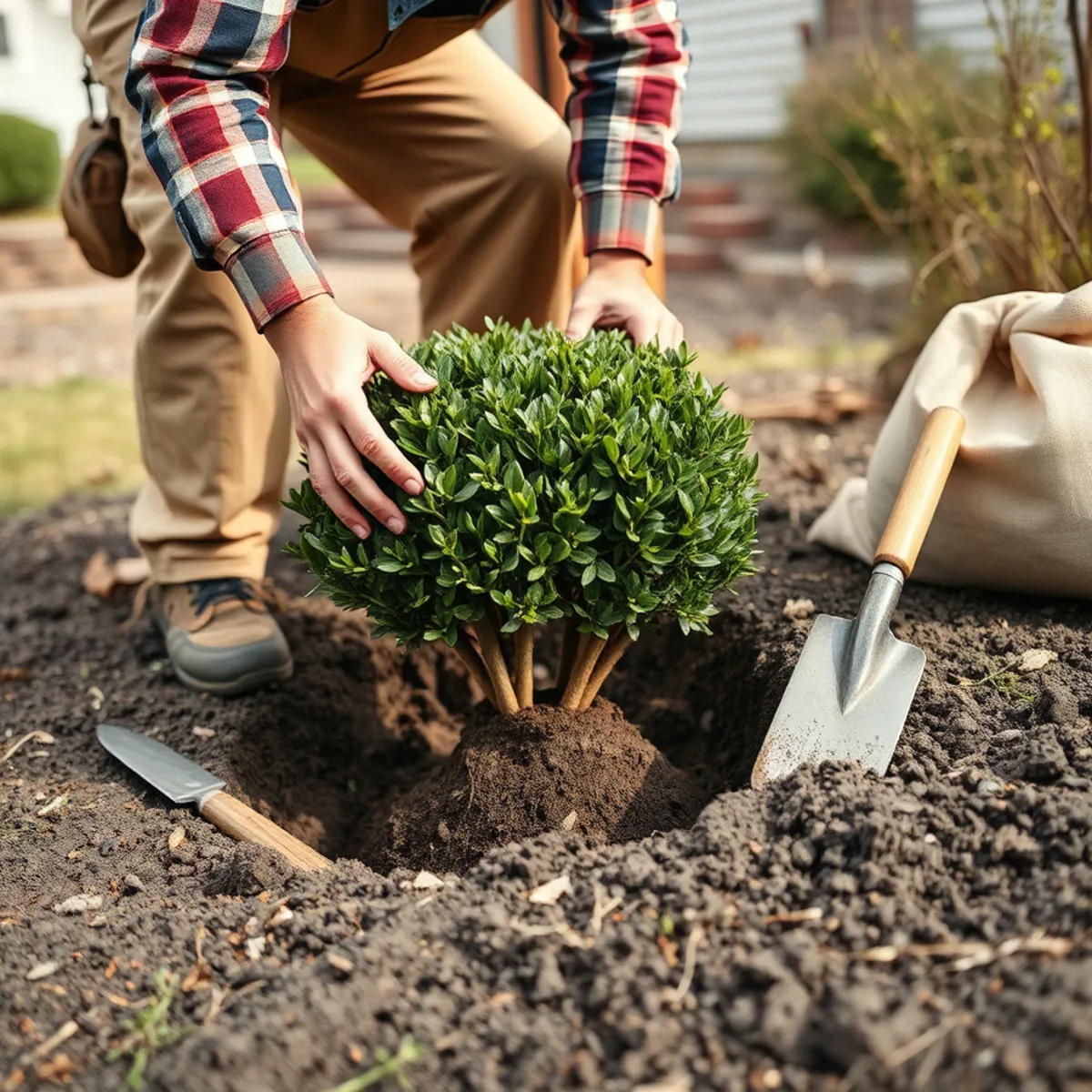
Almost every transplant that fails in this part of the country failed for one of three reasons: it was moved in the wrong month, the root ball was too small for the canopy it had to support, or nobody watered it properly afterwards. None of those is bad luck, and all three are within your control.
The two windows that work
Early spring, before bud break
As soon as the ground is workable and before the plant pushes new growth — in southeastern Massachusetts that is usually late March into mid-April, though it moves a week or two either way depending on the year. The plant is still dormant, soil is cool and wet, and it has the whole spring to build roots before summer asks anything of it. This is the better of the two windows for most deciduous material.
Autumn, four to six weeks before the ground freezes
Once top growth has stopped but while soil is still warm enough for roots to work. Around here that means roughly mid-September through October. Roots carry on growing in warm soil long after the leaves have gone, so an autumn transplant can put down meaningful root before winter. Push much past the end of October and you are gambling on a mild November.
Why summer moves fail
Digging a plant removes most of its absorbing roots. The fine feeder roots that actually take up water sit out near the edge of the root zone, far beyond any root ball you can realistically lift. What you move is structure and stored energy.
That is why a July transplant so often leafs out, looks fine for three weeks, and then collapses. It had enough stored reserve for one flush of growth and no root system to supply a full canopy through heat. The plant did not die of shock in the dramatic sense — it simply ran out of water it had no way to collect.
How big a root ball
Root ball size is measured off the plant, not off what is convenient to lift. The general rule for trees is roughly ten to twelve inches of root ball diameter for every inch of trunk calibre measured at knee height. For shrubs, work off the spread of the canopy rather than the trunk.
The weight goes up far faster than people expect — soil is heavy, and doubling the diameter of a ball more than doubles its weight. This is the point at which a job stops being a two-person task and starts needing machinery, and it arrives sooner than most homeowners anticipate.
Root pruning: the step that gets skipped
For anything large or valuable, cutting a circle around the plant one full growing season before you intend to move it is the single biggest improvement you can make to its survival odds. Severing the roots at the eventual root ball line prompts the plant to grow dense feeder roots inside that circle, so when you finally lift it you are taking a far higher proportion of its working root system with you.
It requires planning rather than skill, which is exactly why it rarely happens. If you know an addition is going in next summer, root prune this autumn.
What moves well and what does not
- Move readily at size: yew, boxwood, hydrangea, spirea, viburnum, lilac, forsythia, most junipers
- Move with care and a generous ball: rhododendron and azalea (shallow, wide, fibrous roots — keep the ball wide rather than deep), holly, magnolia
- Difficult at any real size: oak, hickory, walnut and other taprooted trees; birch; most conifers once established
- Not worth moving: anything already in decline, and anything whose replacement cost is less than the cost of the move
Planting depth, and the mistake that kills slowly
Set the plant so the root flare — where the trunk widens into the roots — sits at or very slightly above finished grade. Planting deep is extremely common and it kills slowly, often three or four years later, by which point nobody connects the death to the planting. Dig the hole wide and no deeper than the ball, and break the sides rather than leaving them smooth.
Mulch afterwards, but keep the ring clear of the stem. A mulch volcano piled against the trunk holds moisture against bark that is not built for it and is a slow way to lose a plant you just spent money moving.
The watering schedule is the job
For the first full season the plant can only drink from inside its root ball, and a root ball dries out considerably faster than the soil around it. Watering the bed is not watering the plant. An irrigation zone that keeps the surrounding lawn green will not keep a new root ball wet — this is the most common way a correctly executed transplant still dies.
Water slowly and deeply at the base, two or three times a week through the first season, more in heat, and continue until the ground freezes in the first autumn. Large material needs a second season of attention.
Frequently Asked Questions
Late March to mid-April, before bud break, or mid-September through October once top growth has stopped. Both windows give the plant cool soil and low canopy demand so roots can re-establish before they are asked to support a full set of leaves.
Early and mid-October is generally fine in southeastern Massachusetts. By the last week of October you are relying on a mild November for any useful root growth. If you have missed it, wait for early spring — a plant moved at the right time in April will outperform one forced into frozen ground in November.
Expect a full growing season of reduced vigour, and two for larger material. Some wilting, smaller leaves and little or no new growth in the first year is normal and not a sign of failure. What is not normal is sudden collapse in midsummer, which almost always means the root ball dried out.
Small shrubs up to about three or four feet, yes, provided you take a generous root ball and commit to the watering. Beyond that the ball weight rises quickly and an undersized ball is the usual compromise — which is also the usual cause of death. If the plant matters to you and it is large, it is worth having it done properly.
Only to remove damaged or broken growth — see [pruning timing by species](/blog/when-to-prune-shrubs-massachusetts/) for anything beyond that. The old advice to cut back the canopy to "balance" the lost roots has largely been abandoned — the plant needs its leaves to produce the energy it will use to rebuild roots. Remove what is damaged and leave the rest alone.
Want this handled for you?
We do this work across Whitman and the South Shore every week. Call (323) 606-0255 for a free on-site estimate — we will tell you honestly what your property needs.