
What Drives the Cost of a Paver Patio in Massachusetts
The difference between a cheap patio quote and an expensive one is almost always what is under the stone. Here is how to read a bid.
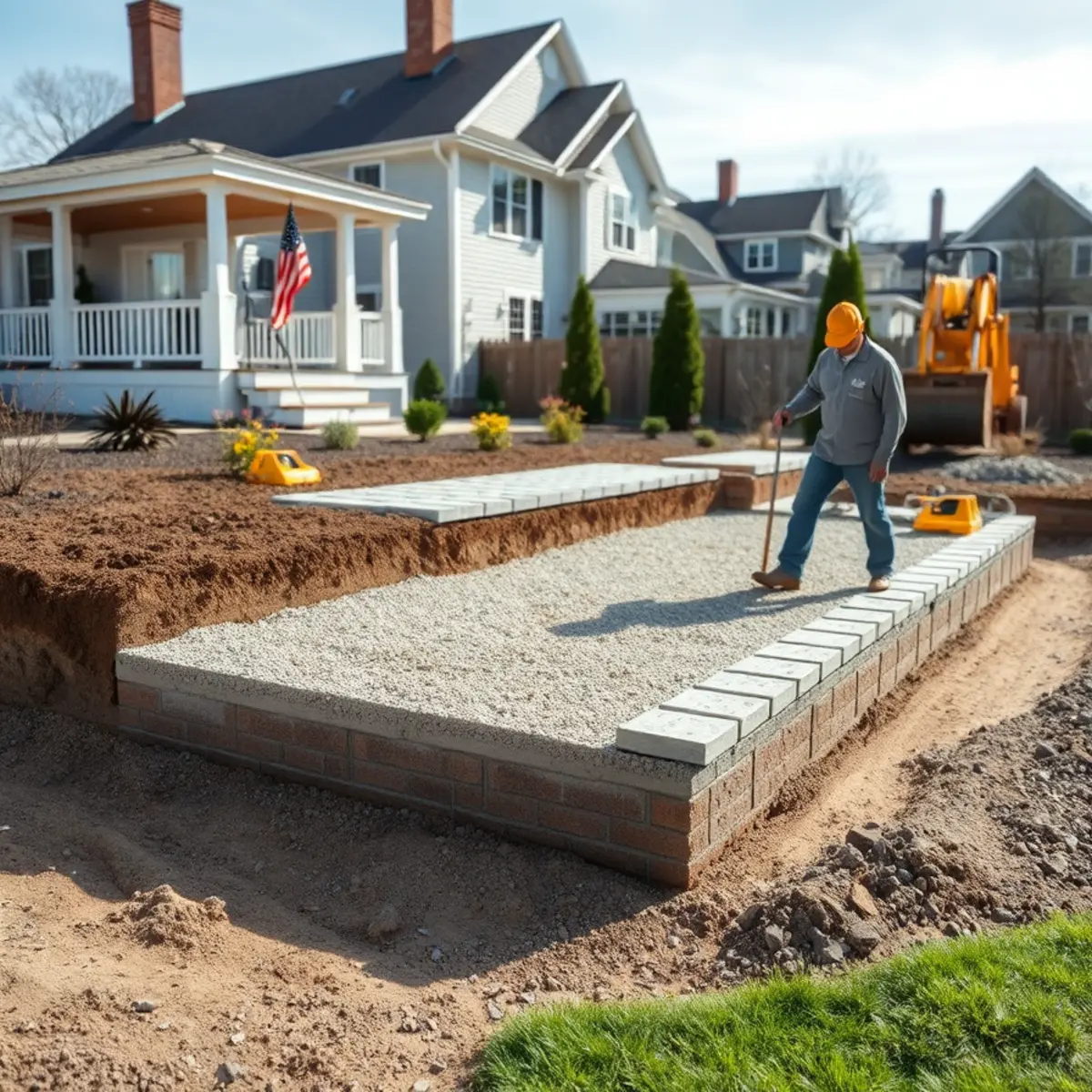
Homeowners regularly show us three quotes for the same patio that are thousands of dollars apart, and ask which one is right. Usually all three are honest quotes — for three different patios.
The surface looks identical on paper. What differs is everything underneath it, and that is what determines whether the patio is still flat in fifteen years.
The two lines that matter most on a quote
Before comparing prices, find these two items on each proposal:
- 1Excavation and base depth — how deep are they digging, and how much compacted processed gravel is going in
- 2Drainage — is there a drain line, a drywell, or explicit pitch specified, or does the quote not mention water at all
A quote specifying eight to twelve inches of excavation with base installed in compacted lifts is a different product from one that says "install pavers on compacted base" with no numbers. If a proposal does not state a base depth, ask. The answer tells you most of what you need to know.
Base depth: why it is the biggest variable
Frost in southeastern Massachusetts drives well below two feet in a cold winter. Any water retained in a patio base freezes, expands about nine percent, and lifts whatever sits on top of it. When it thaws, it leaves a void.
Defending against that means a base of angular processed gravel that locks together, installed in three-to-four-inch lifts with plate compaction between each one, over a compacted subgrade. Six inches is a reasonable minimum for a residential patio on good soil. Clay-heavy sites, high water tables, and any area carrying vehicle weight need more.
One thick lift dumped in and compacted on top does not compact all the way down. That patio will settle. It is invisible on day one and obvious after the second winter. More on the mechanism in our article on hardscaping and frost heave in New England.
Drainage and site conditions
On a well-drained sandy site — Kingston, Pembroke, parts of Duxbury — the base drains naturally and the drainage line item may be minimal.
On the clay-heavy glacial till common across Whitman and much of the inland South Shore, water sits. Those sites need geotextile fabric between the base and subgrade so fines do not migrate up and clog the stone, and they often need a perforated drain line in the base running to daylight or a drywell.
That work is real cost and it is the item most commonly cut to win a bid. Skipping it does not save money; it defers the expense to a rebuild.
Material selection
| Material | Relative cost | Notes |
|---|---|---|
| Standard concrete pavers | Lowest | Wide color range, easy repairs, strong interlock |
| Premium tumbled pavers | Moderate | Aged look, more color variation, thicker units |
| Full-thickness bluestone | High | Natural, distinctly New England, more labor to set flat |
| Granite | Highest | Extremely durable, heavy, mostly used for steps and edging |
| Poured concrete | Low–moderate | Cracks over time here; repairs are visible and awkward |
Pavers interlock, which distributes load across neighboring units, and a damaged one lifts out and gets replaced. Natural bluestone gives you a look that suits older housing stock and ages beautifully, but it takes more time to set flat because thickness varies from piece to piece.
Shape and layout
A rectangle is the most material-efficient shape there is. Every curve means cuts, every cut means waste, and both mean labor.
Circles, inlays, contrasting borders, and complex patterns like herringbone at 45 degrees all add cutting time. Running bond and stack bond are the fastest patterns to install. None of this means you should not have a curved patio — it just explains why the quote is higher.
Access
This is the factor homeowners never anticipate and it can move a quote substantially.
If a machine can reach the work area, excavation and material handling go fast. If everything has to come through a three-foot gate by wheelbarrow — spoil out, base stone in, sand in, pallets of pavers in — the labor line climbs significantly on the identical patio.
A three-hundred square foot patio needs roughly six to eight tons of base material moved in, plus the spoil moved out. By wheelbarrow that is a day of work by itself.
Grade change
A flat site is a flat patio. Any meaningful elevation change means steps, a retaining wall, or both, and those are structural elements priced separately.
Steps in particular carry concentrated load and take the worst of the freeze-thaw cycle. They need a deeper, wider base than the patio they connect to. Details on how walls get built properly are in our retaining walls and steps service page.
Extras that add up
- Fire pit — built-in stone versus a movable unit is a meaningful cost difference
- Seat walls — structural, with their own base and cap, priced by linear foot
- Pillars and columns
- Lighting sleeves run under the patio during construction (cheap now, expensive later)
- Integrated planters
- Outdoor kitchen rough-ins for gas, water, and electrical
What a complete proposal should tell you
- 1Excavation depth in inches
- 2Base material by name and installed depth, with lifts and compaction specified
- 3Whether geotextile fabric is included
- 4Drainage approach — pitch, drain line, drywell, or an explicit statement that none is needed
- 5Paver or stone by manufacturer, product name, and color
- 6Joint material — polymeric sand, not mason sand
- 7Edge restraint on all free edges
- 8Site restoration, including repairing lawn disturbed by equipment
- 9Timeline and payment schedule
If a proposal is three lines on a page, it is not a proposal. It is a number. The specification is what you are actually buying.
Permits and setbacks
A ground-level patio generally does not need a building permit in Massachusetts, but wetlands setbacks, conservation review, and lot coverage limits can apply depending on the property. In towns with a lot of protected resource area — Halifax, Hanson, Marshfield — that check matters more than average, and it should happen before anyone digs.
We check with the town during the estimate. It is a phone call, and it avoids the worst possible version of this project.
The honest summary
A patio built on a proper base with real drainage costs more up front and stays flat. A patio built on four inches of gravel over clay looks identical the day it is finished and needs rebuilding within a decade. When comparing quotes, compare base depth and drainage first, and let price be the tiebreaker between comparable specifications.
We quote patios and walkways with the specification written out, so you can put it side by side with anything else you are considering.
Frequently Asked Questions
Almost always base depth and drainage. A quote with four inches of base and no drainage will be cheaper than one with ten inches, geotextile fabric, and a drain line. Both build the same-looking patio; only one is still flat after five winters.
A typical 300 to 500 square foot patio runs four to seven working days, depending on access, excavation depth, and whether steps or seat walls are included. Weather adds days — base and stone should not be set on saturated ground.
A ground-level patio usually does not require a building permit, but wetlands buffer rules, conservation review, and lot coverage limits can apply depending on where the property sits. It should be checked before excavation, not after.
Want this handled for you?
We do this work across Whitman and the South Shore every week. Call (323) 606-0255 for a free on-site estimate — we will tell you honestly what your property needs.